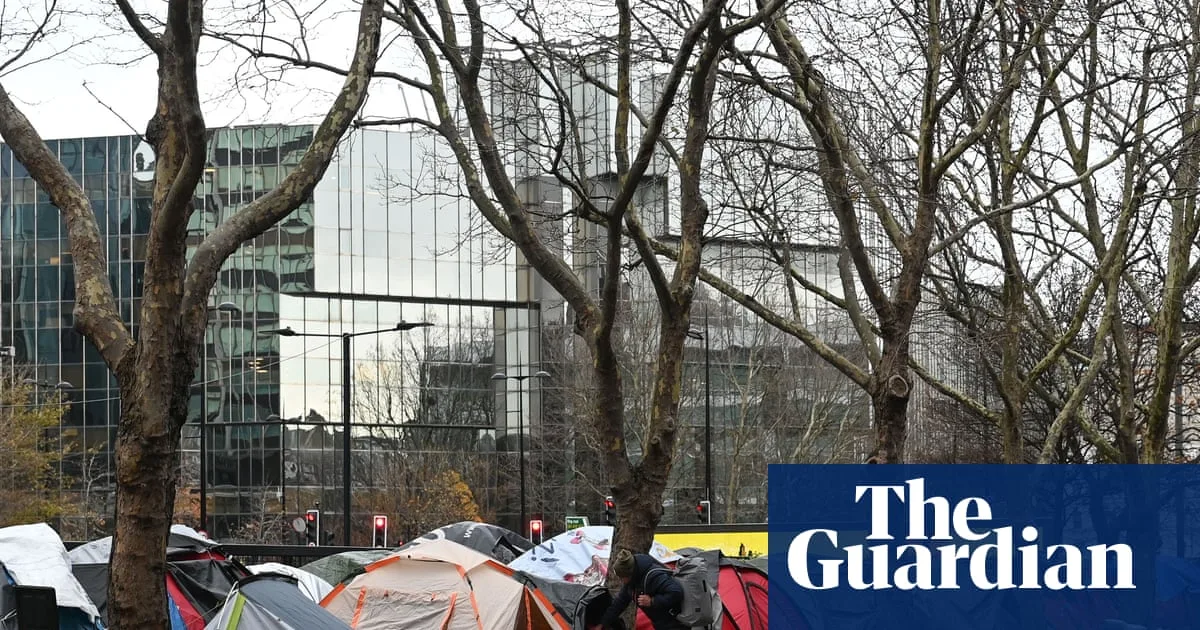
Record Rough Sleeping Figures in England Spark Charity Outcry Over Crisis
Record Rough Sleeping in England, Charities Warn of Underestimation

Charities across England are raising alarm bells, asserting that official government figures significantly underestimate the true magnitude of the nation's escalating homelessness crisis. This warning comes as new data reveals a distressing milestone: a record number of individuals were forced to sleep rough on the streets last year.

Official Statistics Paint a Grim Picture

According to the latest official statistics, an estimated 4,793 people spent a night in tents, doorways, or parks during a single autumn night in 2025. This figure represents a 3% increase compared to the previous year and surpasses the previous peak of 4,751 recorded in 2017. Notably, this marks the fourth consecutive year of rising rough sleeping numbers across England.

The data also highlights a parallel crisis in temporary accommodation. The number of children residing in homeless families within such housing surged to the highest levels ever documented, with an increase of 12,020 in just one year, reaching a total of 175,990.

Wide Pickt banner — collaborative shopping lists app for Telegram, phone mockup with grocery list

Charities Challenge the Official Narrative

Leading homelessness organizations have expressed deep skepticism regarding the accuracy of these official counts. They argue that the real scale of rough sleeping is far more severe than the statistics suggest. For instance, more detailed monthly estimates indicate that over 9,000 people slept rough during October and November, with figures exceeding 8,000 in December.

Calculations conducted by the prominent charity Crisis in 2025 suggest the actual number could be as high as 15,000 individuals. Sarah Elliott, chief executive of Shelter, condemned the situation, stating, "It is a national scandal."

A Historical Context of Rising Hardship

The crisis has deep roots. Rough sleeping more than doubled following the introduction of austerity measures in 2010. A significant decline occurred only during the pandemic years of 2020 and 2021, thanks to the "Everybody In" initiative, which provided hotel accommodations for thousands.

After hitting a low of 2,443 in 2021, rough sleeper numbers surged by over 20% annually for the next three years. The increase moderated to 3% in 2025, which was the first full year under the current Labour government.

Vulnerable Groups at Heightened Risk

Separate figures reveal a sharp rise in homelessness risk among older populations. Data from the charity Independent Age shows that 15,690 households headed by older people faced homelessness due to housing benefit failing to cover rent costs—a staggering 79% increase over five years.

Joanna Elson, chief executive of Independent Age, explained, "Some of the older private renters we speak to are really struggling with affording their rent, which can lead to being evicted."

Government Response and Charitable Criticism

In response, the government launched a strategy in December aimed at halving rough sleeping by the end of the current parliamentary term. Recently, it announced a £50 million fund to support homelessness charities and target areas with high rough sleeping rates. Additionally, the Renters' Rights Act, which bans "no fault" evictions in the private rented sector, is set to take effect in May.

However, charity leaders remain unconvinced that these measures will suffice to reverse the trend without more substantial action to address high private rents and a shortage of social housing.

Matt Downie, chief executive of Crisis, lamented, "The new figures paint a bleak picture of the state of the nation. People are being forced to sleep on the streets at unprecedented levels, exposed to danger and violence."

Rick Henderson, chief executive of Homeless Link, described the statistics as "devastating," adding, "There can be no question that ending this atrocious situation must be a political and social priority."

Pickt after-article banner — collaborative shopping lists app with family illustration

Ministerial Acknowledgment and Funding Pledges

Alison McGovern, the homelessness minister, acknowledged the severity of the crisis, stating, "We have to get our kids out of B&B accommodation, and it is good that today we see progress against this target. There are simply too many people facing life on the streets or in temporary accommodation. While today's statistics show progress in some areas, it is clearly not good enough."

She highlighted the government's commitment, noting, "We are investing a record £3.6 billion funding to tackle homelessness, including £50 million announced today to help councils and voluntary groups often on the frontline of helping the most vulnerable people and creating real change for those that need it most."

Despite these assurances, charities continue to urge for more decisive and effective interventions to address the root causes of this deepening national emergency.




