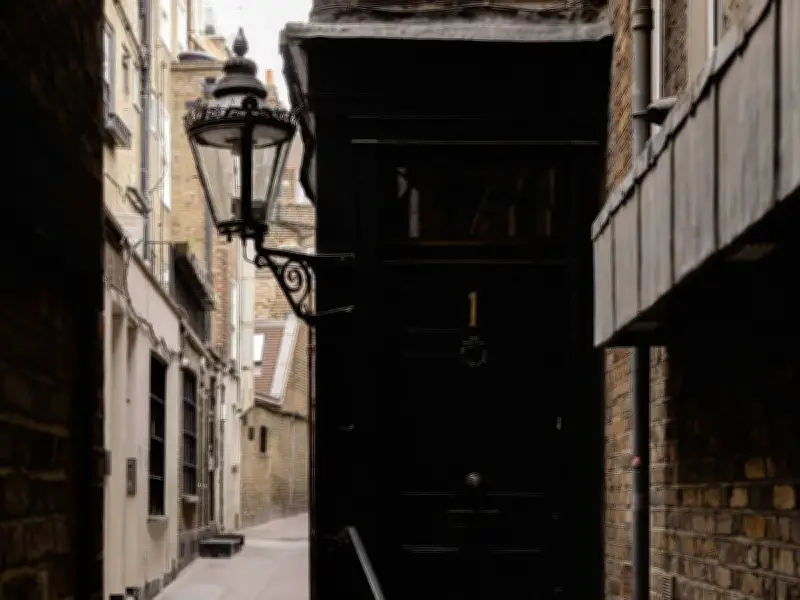
A property on Goodwin's Court in Covent Garden, central London, a street widely thought to have inspired Harry Potter's Diagon Alley, has been listed for £1.6 million. The Unique Property Company, which is handling the sale, said the home may also have served as inspiration for the wand shop Ollivanders and the more sinister Knockturn Alley from the film series.
A Home With Three Centuries of History
Constructed around 1700, shortly after the Great Fire of London, Number 1 Goodwin's Court boasts over three hundred years of heritage. The property began its life as a haberdashery and retains several original features, including one of the capital's last remaining gas lamps positioned above the entrance steps to the black front door.
The location attracts devoted Potter fans from across the globe, with the estate agents noting that numerous themed walking tours include the street on their daily routes.
Price Reduced and Relisted
Initially put on the market for £2 million towards the end of last year, the owners withdrew it due to challenging market conditions before relisting it last month at £1,595,000. The Unique Property Company reports there has been significant interest since relisting, particularly from Americans.
In its listing, the firm stated: "[The property] is a rare survivor of a building type reflecting the conditions of London's Georgian working-classes and a living piece of London's rich history as well as more recent fame as the inspiration for Ollivanders Wand Shop in the Harry Potter film franchise."
Distinctive Features and Origins
The residence features four weathered stone steps positioned just beneath the impressive front door. While the origins of the ancient staircase remain unclear, experts believe it's improbable that such significant wear could have resulted solely from patrons visiting a modest haberdashery in Covent Garden. Instead, it's thought more probable that the steps were salvaged from a historic structure demolished during the construction of the alleyway itself, suggesting the gentle climb to the property could potentially trace its roots to Medieval times or perhaps even earlier.
A reclaimed door from the kitchen leads to a Georgian-inspired tiled shower room featuring an antique WC and wash hand basin, occupying what was originally known as the 'Night Soil Alley', where human excrement was once transported. The raised ground floor reception room is dominated by an elaborate bow window, a genuine survivor from the early 1700s that has remained largely unchanged from its original condition. In recognition of its previous life as commercial premises, two gently-worn areas in the floorboards indicate precisely where a shopkeeper would have once stood.
Simon Stone, managing partner at Unique Property Company, said: "Number 1 Goodwin's Court is such a rare find in London these days. It's a home that's been conserved rather than have the history erased. It's so atmospheric. It's a property that takes you to another time entirely and it's so quiet, you forget that just five seconds away, you're in the thick of one of the worlds busiest capital cities."