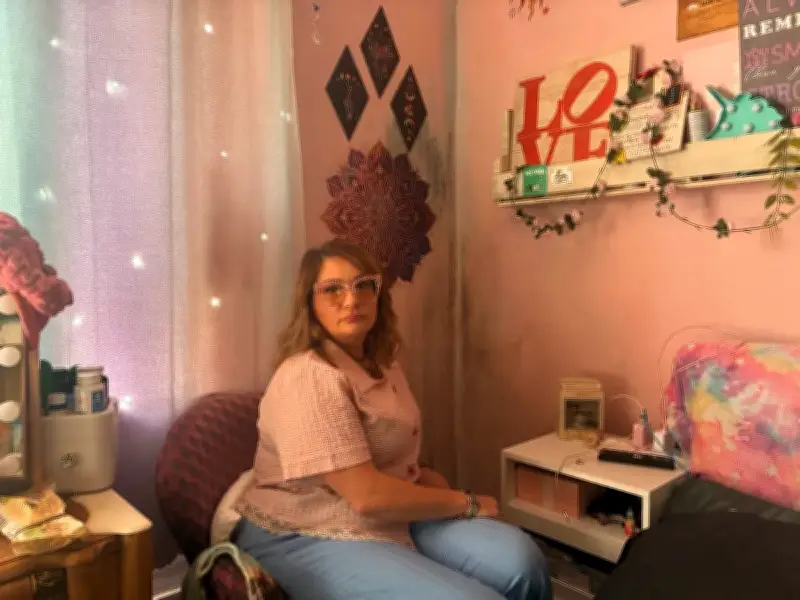
A single mother living in Cardiff claims she and her two teenage sons have been dealing with damp and mould in a “rotten” flat for more than two years. Melinda Ban, 41, says the state of the property has forced her youngest son, who has asthma, to sleep in the living room.
In January 2024, a house fire broke out on Trecastle Avenue in Llanishen, causing substantial damage to the property and neighbouring houses. While it was dealt with quickly and without any injuries, one family within the building are still feeling the effects of the damage.
Melinda has privately owned her flat for the last 16 years, but it is a leasehold building owned by Cardiff Council, meaning the land and the structure of the building are still owned by the council.
Impact on daily life and health
Melinda told the Local Democracy Reporting Service (LDRS) about the extensive water damage within the property due to the fire damage and the resulting mould and damp within her home, which she called “rotten”.
“I spend so much on different cleaning products. I had to replace all of my children’s furniture. Their wardrobes were ruined. I had to buy them new beds because they used to have bunk-beds but the beds were ruined,” she said.
“[The damp and mould] is constant, it’s not going away… I just need my home back.”
The state of the flat has also affected the social lives of the family. “Our wellbeing is down – we’re not socialising with people anymore,” she said. “My boys don’t want to bring people back to the house – it’s like our lives are on-hold.”
As well as the mental toll the conditions are having on Melinda and her two sons, she is worried about the impact on her health that long-term mould exposure could have. Melinda’s youngest son suffers from asthma, and she said she has had no choice but to convert the property’s living room into another bedroom.
“We’ve got no space anymore to socialise like family. I hate my property, it’s disgusting, and I feel suffocated because I can’t sell it like this,” she said.
Communication struggles with council
For Melinda, living with those conditions is one part of the problem, but she said getting someone to listen to her is another. She described to the LDRS what she claimed was “bad communication” not just between her and the council but between different departments within the council that she has reported her issues to.
She said the process of sending emails, replying to emails, reporting damage, following-up, arranging occasional visits, and chasing responses is exhausting. “This is my everyday life. I wake up, I look at the mould, I clean the mould, I email the council, I flag it on the app. They don’t listen to me,” she said.
Melinda said she also has ADHD, which makes the process even more of a struggle. “I’m sick, I’m emotionally drained. It literally feels like a fight I’m not winning at all. I just can’t see the light at the end of the tunnel,” she told the LDRS.
Council response
A council spokesman said: “We recognise the frustration and disruption the resident and her family have experienced and understand the impact this has had on their daily lives.
“Cardiff council has investigated the concerns on a number of occasions. Most recently an independent survey carried out in July and August 2026 identified some black mould but found no evidence of structural damp, water penetration, or building defects. The roof was also found to be in satisfactory condition.
“As the small amount of mould was because of lack of ventilation in the property this was a matter for the leaseholder to resolve.
“Prior to the survey the council’s dry homes team carried out two inspections and agreed ventilation improvements to support the condition of the property. While such work would not normally be provided in a leasehold property these steps were taken in response to the concerns raised.
“Unfortunately there have been some issues with communication, however the council has worked to provide a clear and coordinated response, including appointing a single point of contact to support the resident and her family.
“The council has also supported the resident and her family by identifying measures to promote safety and independent living. The council remains committed to responding to residents’ concerns and will take appropriate action where investigations identify the need for further work.
“Any matters relating to compensation, damaged possessions, or fire reinstatement would need to be pursued through the relevant insurance or legal processes.”