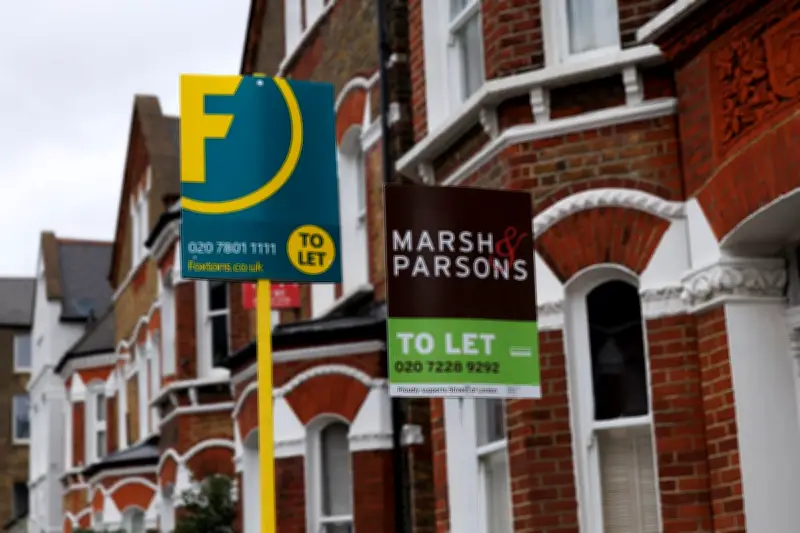
Average rents in London have surged past £2,200 per month, with some boroughs experiencing annual increases of nearly 5%, according to new data from property website Zoopla. The findings highlight a growing rental crisis in the capital, driven by rising demand that bucks a national trend.
Rental Inflation Accelerates
The average rent in London now stands at £2,206, marking a 2.2% annual increase. This acceleration comes despite the Renters Rights Act coming into force on 1 May, which was intended to provide greater protections for tenants. However, the growing scramble for homes has fuelled further price rises.
Richard Donnell, director at Zoopla, said: "London is the only region of the UK which has registered an increase in demand for rented homes, which is 6% higher than a year ago. This is down to higher mortgage rates hitting would-be first time buyers in higher value markets and keeping them renting for longer. Rental inflation has also increased to 2.2%, up from 1.9% a year ago, as there has been no change in the number of homes to rent."
Borough-by-Borough Breakdown
The highest annual rent increase was recorded in Bromley, where rents rose by 4.9% to £1,705 per month. Richmond-upon-Thames followed closely with a 4.7% rise to £2,228, while Bexley saw a 4.5% increase to £1,630. Other notable rises include Islington (4.4% to £2,537), Merton (4.2% to £2,089), and Enfield (4.2% to £1,784).
At the top end of the market, Kensington and Chelsea remains the most expensive borough, with average rents of £3,569, up 1.6% year-on-year. Westminster follows at £3,296, a 2.4% increase. The only borough to see no change was Hammersmith and Fulham, where rents stayed flat at £2,664.
The lowest average rents were found in Sutton (£1,593), Croydon (£1,589), and Bexley (£1,630).
National Context
Outside London, the North East saw the strongest rental growth at 3.8%, followed by the North West (3.3%) and Yorkshire and the Humber (2.8%). However, London remains the only region where demand for rental properties is increasing, driven by high mortgage rates that are keeping potential first-time buyers in the rental market.
The rental crisis is compounded by a slump in housebuilding. The Government and Mayor of London Sir Sadiq Khan have pledged to build 1.5 million new homes this Parliament, but reports warn of the scale of the challenge facing the capital.
Donald Trump's trade policies have also been cited as a factor, pushing up borrowing costs and mortgages, which in turn puts upward pressure on rents.
With no sign of supply increasing, London's renters face continued affordability pressures in the months ahead.