
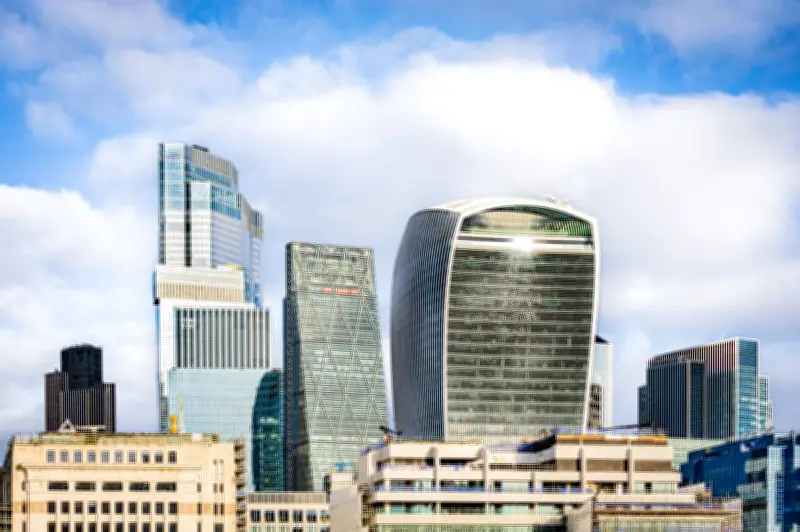
Business leaders have warned Chancellor John Healey against a £1 billion tax increase on London offices, cautioning that such a move could discourage international companies from establishing headquarters in the capital.
The warning comes ahead of Mr Healey's first Budget on October 28, with reports suggesting he is considering raising property levies on expensive office blocks and skyscrapers. Under the mooted proposal, business rates for commercial buildings with a rateable value above £500,000 would increase, potentially raising £1 billion for the Treasury.
London hardest hit
The tax change would inevitably hit London hardest, with the Square Mile and Canary Wharf facing the full brunt. Around 9,000 properties in London and the South East could be affected, according to experts. The high street, hospitality sector and warehouses may be protected from higher tax.
John Dickie, Chief Executive of BusinessLDN, told The Standard: “London competes globally to attract major businesses and corporate headquarters so hiking taxes on large office buildings risks undermining the UK’s ability to attract international investment.
“Rather than making piecemeal changes, the Government should deliver on its manifesto commitment to replace the business rates system in a way that encourages investment and drives growth.”
Budget pressures
The talk of an “office tax” highlights how London could be in the Chancellor’s sights as he seeks to raise billions more for the Treasury rather than cutting spending. New figures showed the UK’s economy slowing, and Mr Healey braced the public for a tough Budget in two weeks’ time.
Attending an International Monetary Fund summit in Bangkok, Thailand, the Chancellor insisted that the British people recognised the difficult nature of public finances due to ongoing global turmoil, and expected Government departments to “manage with the budgets we’ve got”. His words suggest the Treasury may not provide extra cash to cover pay rises for doctors and nurses.
Economic challenges
Mr Healey has promised to help households and businesses with increased costs driven up by Donald Trump’s war with Iran, while inflation continues to erode the Government’s spending power and push up borrowing costs. “It’s a tough time,” he told the BBC. “People can people can see the global economic conflicts, they know the pressure it’s putting on them, they understand it’s putting pressure on the Government.”
The IMF this week praised the UK for its steps to manage its budget deficit over the long term, and said Britain was doing a good job at reducing this compared with other countries. The body also said the UK was weathering the impacts of the Middle East conflict better than had been expected, but warned inflation fuelled by the war was likely to get worse before it gets better.
Mr Healey and Prime Minister Andy Burnham have reportedly rebuffed a request by Health Secretary Yvette Cooper for more cash to cover the costs of a pay deal for nurses, and told her to fund it out of the NHS’ existing budget. This could have an impact on the delivery of frontline services within the NHS.




