
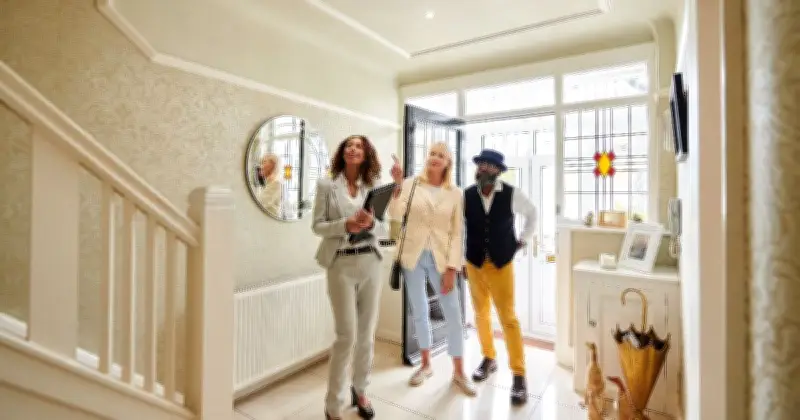
Prospective home buyers make up their minds in just 28 seconds of entering a property, according to a new study. The research, investigating the psychology of home buying, found it takes just under half a minute to form a lasting impression of a home.
Almost nine in ten (88%) homeowners claim they “just knew” their home was right for them the moment they walked through the door.
Features That Capture Buyers' Imaginations
The study reveals the features most likely to capture the imagination of modern buyers, with a kitchen island the most sought-after attribute (36%), followed by a walk-in wardrobe (34%), a window seat (29%) and a concealed utility room (29%).
Almost a quarter would be attracted by a vegetable patch or herb garden (24%), while the same proportion favour a pantry (24%) and 23% appreciate beautifully stocked bookshelves. Other desirable features include a garden office (20%), a wood-burning stove (20%), a tree house for children (17%) and an outdoor fire pit (17%).
An American-style fridge (14%), cinema room (14%) and wine cellar (13%) also feature in the list, according to the survey of 2,000 British homeowners, by SIXT.
Lifestyle and First Impressions
The findings suggest that prospective buyers are not simply assessing the physical attributes of a property, but imagining the lifestyle they could enjoy within it. Four in ten (40%) believe the lifestyle a home appears to offer can be almost as attractive as the bricks and mortar themselves, and 71% agree that certain details can make a property instantly more desirable.
The research also highlights the importance of a home's exterior, suggesting that the psychological process of choosing a property can begin before a potential buyer has even stepped inside. More than half (55%) say the outside appearance of a house has a major influence on their purchasing decisions, while 88% believe kerb appeal plays an important role in the buying and selling process.
More than eight in ten respondents (83%) have rejected an otherwise suitable home because they simply could not imagine themselves living there. On average, respondents reported having done so six times, highlighting the extent to which personal instinct can influence the house-hunting process.
Deterrents and Modest Improvements
Signs of damp or mould emerged as the biggest deterrent (62%), followed by unpleasant smells (52%), a neighbour's rubbish-filled garden (49%) and a busy or noisy road (48%). Dirty bathrooms (46%), insufficient storage (42%), small kitchens (42%) and rooms lacking natural light (42%) were also among the most significant reasons for rejecting a property.
Yet the research indicates that sellers do not necessarily need to undertake expensive renovations to improve their chances of attracting buyers. More than half (57%) believe relatively modest improvements can have just as much impact as major building work when it comes to making a home appealing.
Danny Groom, Associate Director and Estate Agent for Crabb Curtis, said: “As an estate agent I see every day what pulls people into a house - first impressions really do count and those little details, from a premium car in the driveway to freshly cut flowers or the smell of freshly brewed coffee can make all the difference.
"It's no surprise to me that deciding whether a house is right for you can happen in just seconds. Viewing a property is a very personal experience and if buyers see the lifestyle they lead, or want to lead, in a house it can certainly speed along the decision-making process."
The findings come as SIXT encourages homeowners to consider the presentation of their driveway alongside more traditional improvements when preparing a property for sale. Its premium rental service allows sellers to hire vehicles including Mercedes-Benz, BMW and Audi models for a viewing weekend or longer, without the financial commitment of ownership.
Jamie Holt, Operations Director at SIXT, said: “First impressions count when you’re buying a home, and this research suggests they start before you’ve even reached the front door."




