
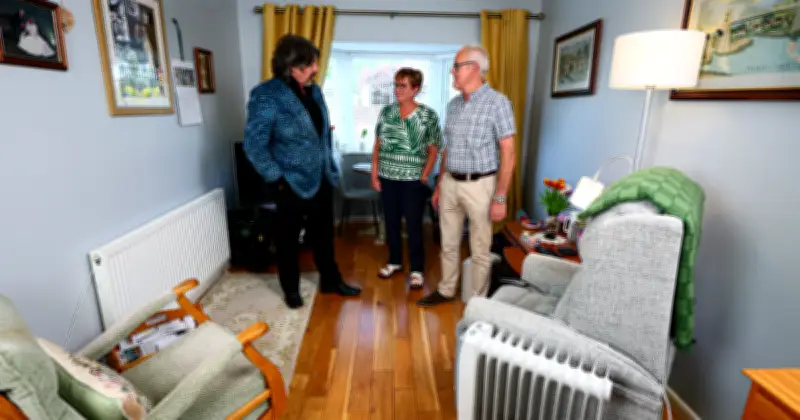
Interior designer Laurence Llewelyn-Bowen meets savvy 'space-stretchers' who are making use of every inch of their current home to meet their changing needs. A new poll of 2,000 property owners found that only one in five (22%) would prefer to move rather than adapt their current home.
Renovation over relocation
As many as 75% of homeowners have considered renovating to make better use of their space, and 58% believe upgrading is far more cost-effective than moving. The research, commissioned by Smart Energy GB, highlights that more than a third (35%) of 'space stretchers' have created multi-purpose rooms, such as a 'guest room office'. Additionally, 21% have invested in loft conversions, and 11% have designated areas for hobbies.
Financial benefits of staying put
The average 'space stretcher' has spent £11,844 on renovations but estimates they have saved £22,106 compared with moving to a new property. This financial incentive is a key driver for many homeowners who are emotionally tied to their current homes.
Laurence Llewelyn-Bowen's insights
Laurence, who has split his own home into three separate living spaces, commented: 'Having split my own home into three separate living spaces, my family set-up has taught us a lot about squeezing every inch out of your space and finding imaginative ways to make it work for everyone.' He added that multi-generational living affects energy use, and a smart meter can help manage these changes.
Energy-saving upgrades
The study found that 40% of 'space stretchers' included energy-saving measures in their renovations. The most common upgrade was installing a smart meter (77%), followed by loft insulation (68%), LED lighting (67%), and solar panels (28%). Nearly six in 10 (59%) of those who installed a smart meter said it helped them better understand and manage their energy use.
Victoria Bacon from Smart Energy GB said: 'Adapting your current home can be a helpful alternative to avoid higher moving costs, while adding long-term value and future-proofing it. But when your living space changes, the way you use energy can change too. Smart meters are available at no extra cost from energy suppliers and give households a simple way to keep track of their energy usage as their home evolves.'




