
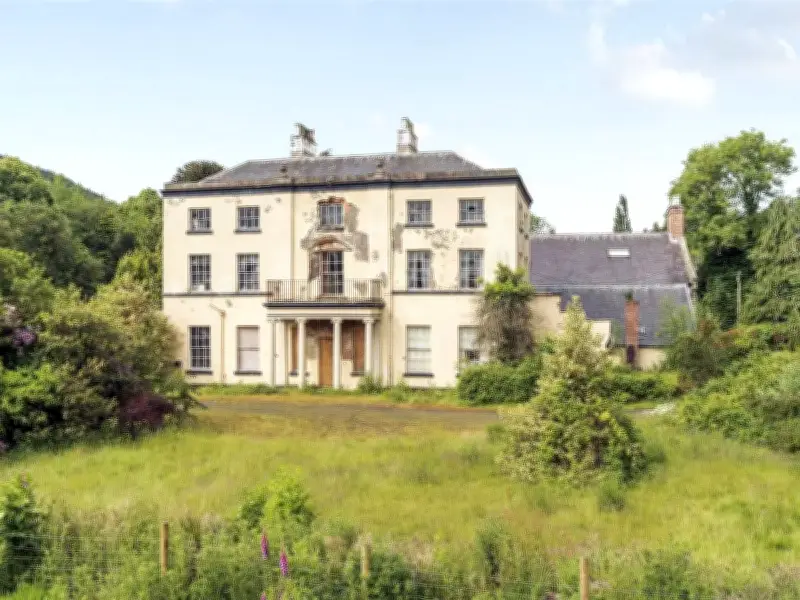
A historic country mansion in Newtown, Wales, has sold at auction for £230,000 – less than the cost of a new build – but the purchaser faces a monumental task. The Grade II listed property, Dolfogan Hall, requires a complete renovation to make it liveable.
Bargain price with a catch
The 18th-century Georgian mansion, set within 1.4 acres of grounds with a sweeping driveway, was purchased on September 25 for £230,000, which is £80,000 above the estimate. Despite this, the property remains approximately £100,000 cheaper than average house prices in the area.
The seven-bedroom property boasts a grand columned entrance, a bespoke staircase, and a period Georgian skylight. The building has been divided into six apartments, each featuring ornate plasterwork and intricate painted ceilings. A grand hallway with soaring ceilings opens into a succession of spacious lounges equipped with fireplaces.
Renovation required
The property is uninhabitable and demands a comprehensive renovation and refurbishment of each of its numerous rooms, including extensive repairs to its external rendering. The exterior offers formal gardens across 1.4 acres and views of the Welsh countryside.
Allen Gittins, Chairman of Halls auctioneers who sold the property, said: "Dolforgan Hall is one of the most important country houses in the Kerry Vale and stands in what was once a substantial landed estate that influenced much of the surrounding parish."
Historic origins
Dolfogan Hall was originally constructed for the Fox family before John Herbert acquired the property and undertook extensive rebuilding and expansion works between 1790 and 1800. Between 1807 and 1818, one of the world's first iron bridges was erected to carry the main driveway leading to the house.
The estate passed through several owners before being sold to John William Willans, chief engineer of Liverpool Overhead Railway. John Bancroft Willans, a historian and photographer, inherited the hall in 1895. The hall accommodated evacuees during the Second World War before John passed away in 1957, after which it was sold to the family of the current owners.
Gittins commented: "The site was occupied by a manor house from the 17th century with much of the older house replaced with the elegant Georgian/Regency mansion seen today. It now requires complete renovation and refurbishment which will require a sympathetic eye and a passion for older buildings. The mature, architecturally landscaped gardens and wood will also require much tender, loving care."




