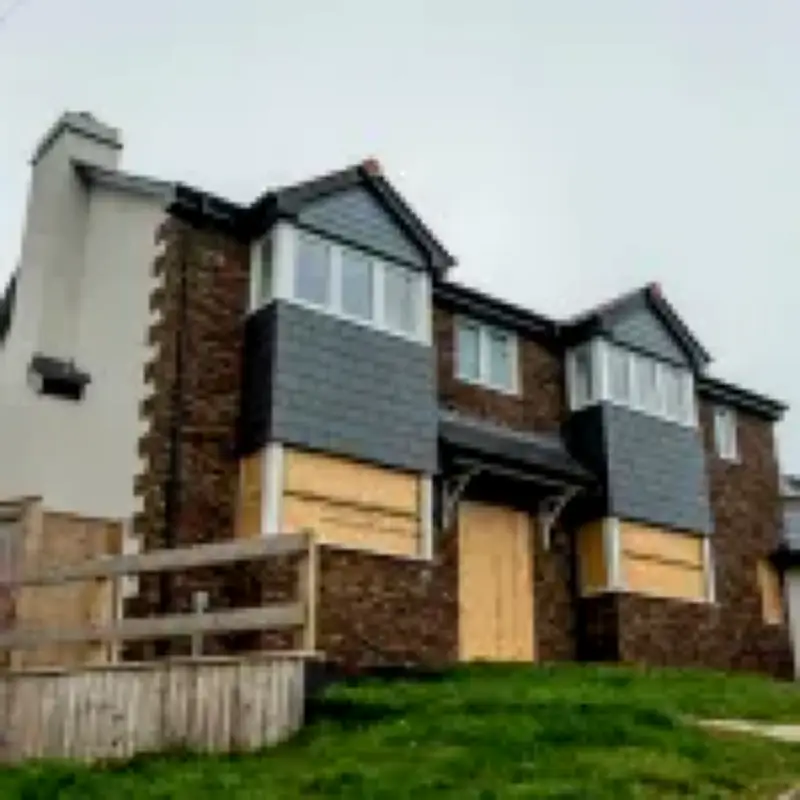
A housing estate in Cornwall has been put up for sale after standing empty for seven years. The 33-home development in Calstock was intended to provide much-needed housing, including 15 affordable properties. Instead, the site has become a boarded-up ghost estate, with just 10 homes built either fully or partially before work stopped.
Unfinished development since 2019
The project has stood derelict since 2019. It ran into financial trouble after costs spiralled, with developers claiming delays by Cornwall Council left them facing £1.2 million in interest payments. The entire Bridge View Nurseries site, in the Tamar Valley, has now been listed for sale by estate agent Stratton Creber Commercial. The asking price has not been disclosed and is available 'on application'.
The 1.55-hectare (3.85-acre) plot includes the 10 existing properties, some completed and others unfinished, along with foundations for further homes and part of a retaining wall. Work had also started on an 11th property, but its condition has deteriorated so badly that it has been described as potentially requiring demolition and reconstruction.
Planning history and affordable homes cut
The estate was first granted planning permission in 2018, with a further application approved in 2025. However, the number of affordable homes was reduced from 15 to 10 following a revised Section 106 agreement with Cornwall Council. The developers said delays in agreeing the changes, alongside additional requirements such as a second road and a retaining wall costing £750,000, had eaten into their budget.
The estate agent's listing says 10 of the 23 planned homes for private sale have been built, eight of which are close to completion. All remain empty, with some still needing finishing touches including flooring, white goods and other fittings. None of the affordable homes have been started.
Buyers face additional costs
Anyone buying the site will also face a Section 106 contribution of almost £100,000 towards education and open space, while roads must be completed to an adoptable standard. The listing describes the development as sitting in an elevated position with views across the surrounding countryside and the nearby viaduct.
Calstock and the surrounding parish form part of a UNESCO World Heritage Site, recognised for their landscape and history of tin and copper mining. But locals say the development has become a symbol of a wider housing problem in the area.
Local anger and calls for action
One resident, whose son's home is next to the site, said: 'It has been frozen for a few years, absolutely ridiculous. At the moment the whole debacle is disgusting. Just give it to the local council to allocate to Cornish locals.'
Another questioned why developers were allowed to leave projects unfinished, saying councils should have the power to impose completion deadlines or revoke planning permission. They added: 'I dread to think how many unfinished properties there are in the UK that could be used to reduce homelessness, overcrowding and people living in substandard accommodation.'
Others called for the homes to be compulsorily purchased and made available to local people at affordable prices. One resident said: 'South east Cornwall is one of the most deprived areas in the country – perhaps building houses for wealthy people from outside the area isn't the best way forward for the community.'
The developers, Michael Wright and Adele Fulner of Construction Partners Ltd, had previously said nearly half of the properties would be affordable. But the number was later cut from 15 to 10, with the company claiming it took years for the revised plans to be approved, by which time construction costs had soared.
Cornwall Council has maintained that 10 affordable homes still met the requirements for the village. A spokesperson said: 'The council is committed to working with developers that have been granted planning permission to ensure that a housing development, and the agreed number of affordable housing homes, are delivered in line with the planning permission. Issues with this development have been ongoing for several years and the council has done all in its power to work with the company. However, we must adhere to local and national planning policy, including local neighbourhood plans. The council remains in active discussions with stakeholders to find a solution to secure the delivery of the development, including the vital affordable housing element.'