

Geri Halliwell-Horner Secures Planning Victory for Pergola at Luxury Oxfordshire Estate
Geri Halliwell-Horner, the former Spice Girl, has emerged victorious in a contentious planning dispute with neighbours, receiving official approval to retain an oak-framed pergola at her £9.2 million Grade II listed mansion in Oxfordshire. The decision comes after local uproar over the structure, which was originally erected without planning permission, sparking accusations of special treatment and disregard for regulations.
Neighbourhood Fury and Accusations of Inequality
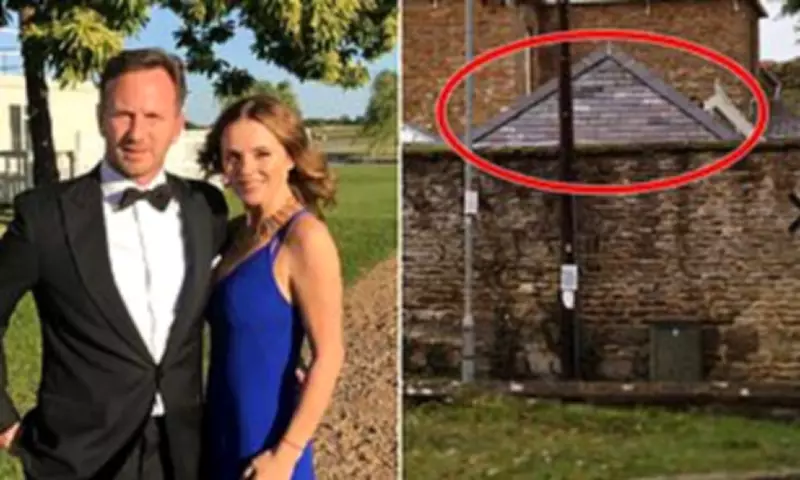
The controversy ignited when Halliwell-Horner, 53, and her husband Christian Horner, 52, the former Red Bull Formula One team principal, constructed the pergola and a separate gazebo in their garden without submitting the required planning applications. Neighbours expressed outrage, claiming the couple's actions were ruining the tranquility of their village and obstructing views of a nearby church. They further alleged being "trolled" after fairy lights were wrapped around the pergola, interpreting this as a blatant show of disregard for planning rules.
One anonymous neighbour voiced frustration, stating, "Any ordinary person would have been forced to tear it all down," and highlighting perceived injustices between the "super wealthy" and average residents. The couple's initial retrospective application was denied, but a fresh submission for the pergola alone has now been approved, while the gazebo's future remains unresolved.

Council's Sympathetic Stance and Heritage Considerations
Local planners justified their approval by citing the pergola's "siting, scale and design," deeming it compatible with the area's character. A planning official noted that the structure "would provide adequate standards of amenity and privacy" for neighbours and emphasized heritage considerations. The council's heritage response indicated that the oak-framed pergola, when covered with planting like wisteria, could serve as a traditional garden feature sympathetic to the site's character.
Despite wood not being historically typical for pergolas—metal was more common—the council ruled the wooden version could integrate into the setting without harm if properly screened. They concluded that the pergola, visible over a garden wall but not above it, would not impact key views or alter the relationship between the listed building and the church, thus preserving the Conservation Area's appearance.
Architectural Intent and Long-Term Integration
In the approved application, representatives for the couple described the pergola as a "modest and visually sensitive garden structure" designed to preserve the property's character. Planned by Riach Architects, it was intended to remain subordinate to the main house, with climber plants to soften its appearance over time, reducing visual impact and reinforcing its role as a garden feature rather than a building. The statement added that the structure is reversible, preserving the heritage asset's integrity while supporting garden enjoyment.
The pergola, an open-framed oak beam structure, sits near a previously approved swimming pool, while the gazebo features oak supporting beams and a pyramidal slate roof. This approval adds to a series of developments at the property, including a second pool approved last year and a first-floor extension, replacement barn, and greenhouse approved three years ago.
Ongoing Tensions and Community Impact
Neighbours have grown weary of what they describe as "industrial-sized" developments, arguing they do not align with the conservation area's purpose. They report daily construction noise and complain that footpaths are being "swallowed up," leading to unsightly views of oversized barns, reduced hedges, horse jumps, and frequent disturbances from quad motorbikes. Many residents feel the village is not enriched by these changes, with one stating, "The landscape is no richer for the input of Mr Horner."
As the couple awaits a decision on an application for a horse walker at their stables, the pergola saga underscores ongoing tensions between celebrity homeowners and local communities, highlighting broader issues of planning fairness and heritage preservation in affluent areas.






