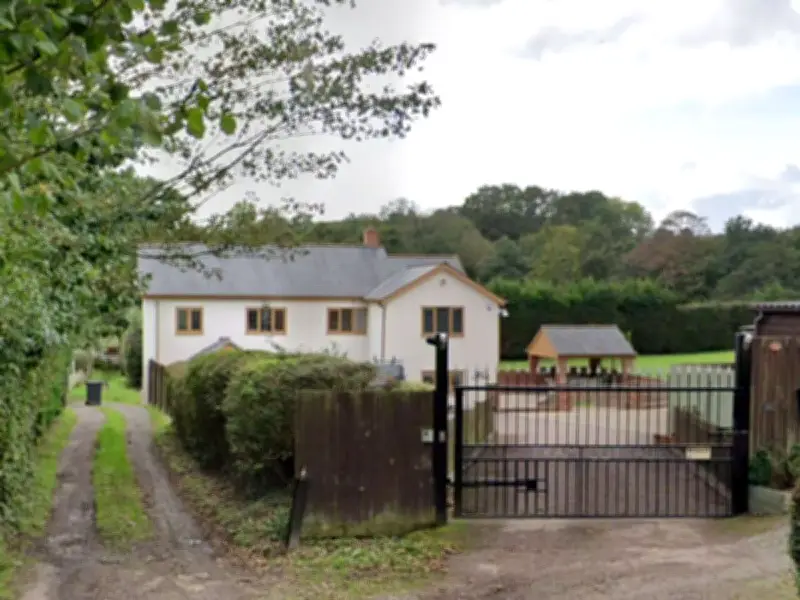
A Welsh homeowner's attempt to extend his garden into the surrounding countryside and build a garage has been refused on the grounds it would damage views from a nearby railway line.
Thomas Hillier had already laid a base for the garage and erected a canopy, a wall and steps on land adjoining his Tram Cottage home in Llanfrechfa, south of Cwmbran.
Protected landscape and green wedge
The main South Wales to Manchester rail line runs past the property, which sits within an area designated by Torfaen Borough Council as the South Eastern Lowlands Special Landscape Area and protected as a green wedge.
Mr Hillier sought council approval to retain the work already undertaken, complete the garage, which would incorporate a first floor home office, and secure a change of use for the land from agricultural to residential.
Planning officer's concerns
Planning officer Mia McAndrew deemed the proposals unacceptable, citing amongst her concerns the loss of views for passengers travelling on the rail line, which carries thousands of commuters between Cwmbran, Newport and Cardiff.
Ms McAndrew's report, which rejected the application, noted that while the site sits at the end of a private lane away from the public highway, it remained in a "sensitive" location safeguarded by both local and national planning policies.
She stated: "The site is part of the special landscape area and immediately visible from the train line and a public right of way. Any visual impact from the proposed development is therefore considered to be significant."
Development beyond existing land
Her report clarified that development within the green wedge can only be allowed in limited circumstances and buildings have to be justified either for agricultural purposes or if essential, and said residential development in the countryside should normally be on existing residential land.
"This development goes beyond this, sprawling into surrounding countryside land," said Ms McAndrew. "The applicant's ownership of the land does not automatically change the use to residential.
"It is also considered that this minor residential development only benefits the occupant and would not have a community value to help justify any impact on the countryside, green wedge or special landscape area."
Ms McAndrew acknowledged that the existing expansion of the garden, driveway and garden shelter, while "not ideal", could be accepted on balance due to their "relatively limited scale and visibility" and the fact they had been in place "for some time". However, she maintained that any further development represented "a considerable step beyond this".
The application had also failed to provide details on how the ecological impacts from development would be managed, while the proposed size and positioning of the garage would prove detrimental to the area's character.