
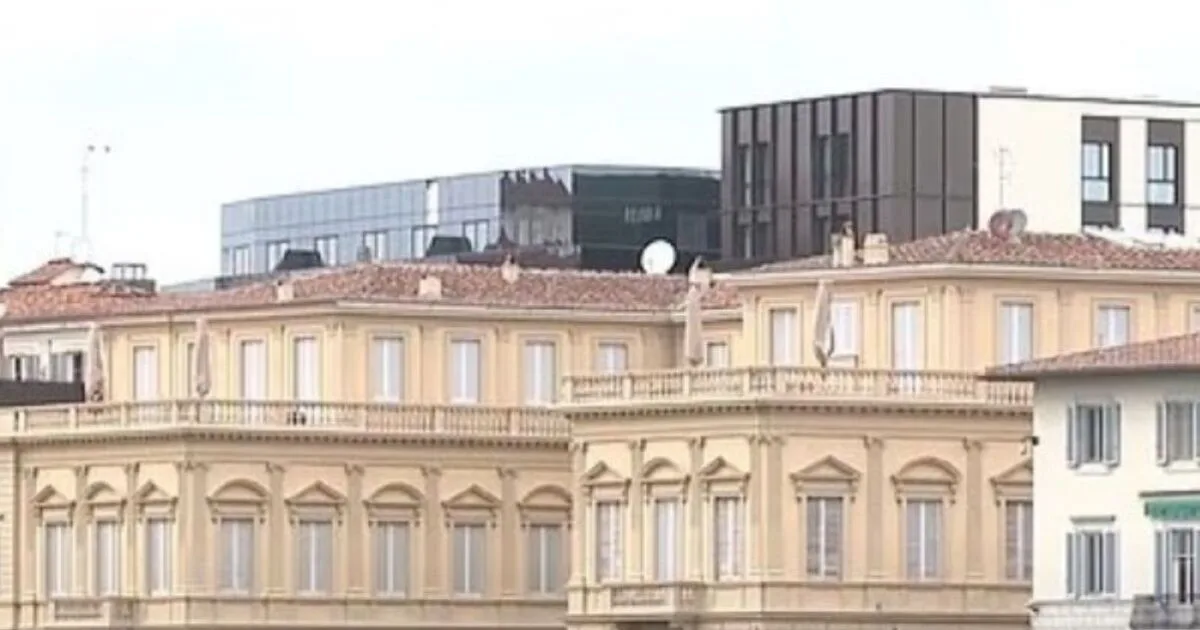
A block of luxury flats in Florence has sparked outrage, with critics warning it could cost the historic Italian city its UNESCO World Heritage status. The angular black and white building, dubbed the 'black cube' by locals, has been condemned as incongruous with Florence's famous Renaissance architecture, including the 14th-century Palazzo Vecchio and Brunelleschi's cathedral dome.
Eike Schmidt, former head of the Uffizi Gallery and a city councillor, said the building was 'totally ugly' and 'totally out of context' with the cityscape. He told The Times he would lodge a complaint with UNESCO, adding: 'We don't want Florence to lose its status, but maybe UNESCO can put pressure on the city to change the building materials and lower the height of the block.'
The accommodation block, built on the site of a former postwar theatre and flanked by Renaissance and baroque villas, includes upmarket flats with a terrace, sunroom, spa, gym and restaurant. Former culture chief Sergio Givone described the construction as a 'slap' in the face of the city's well-established style and light-toned stonework.
Following a backlash from locals, Florence's public prosecutor has opened an inquiry into whether the developer breached heritage rules and planning regulations, particularly regarding the building's height and appearance. A survey by La Nazione found that just 4% of citizens liked the building, while 72.8% called for its demolition.
Florence was granted World Heritage status in 1982, but other cities have lost the designation: Dresden in 2009 after building a four-lane bridge in its historic centre, and Liverpool in 2021 after a waterfront development. Schmidt questioned how the building received permission to be taller than the theatre it replaced, asking, 'Who's responsible for that?'
Former city heritage official Andrea Pessina said he did not remember signing off on the project, adding that years had passed and he could not recall the functionary responsible. Vittorio Grassi Architects, the firm behind the design, declined to comment on the controversy.




