Washington DC Deploys Organised Crime Law in Unprecedented Housing Lawsuit
Washington, D.C. Attorney General Brian Schwalb has initiated a groundbreaking legal action by filing a lawsuit that utilises legislation originally designed to prosecute organised crime syndicates. The target is a landlord operation accused of systematically providing deplorable living conditions to low-income tenants while allegedly defrauding housing subsidy programmes.
RICO Statute Deployed Against Property Owners
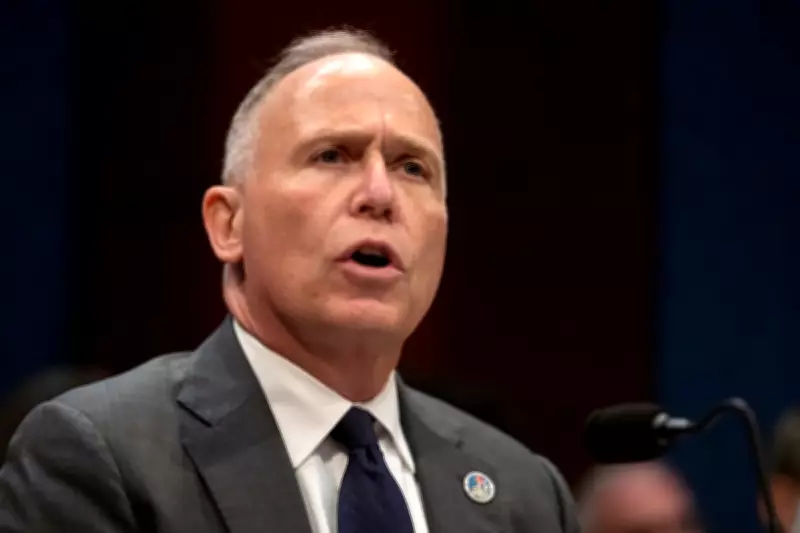
Speaking at a Thursday press conference, Schwalb announced his office was employing the Racketeer Influenced and Corrupt Organizations Act (RICO) to dismantle the real estate operations of Ali "Sam" Razjooyan, his brother Eimon "Ray" Razjooyan, and their mother Houri Razjooyan. This marks the first instance in which Washington D.C. has utilised this powerful statute within a housing context.
The RICO law was specifically crafted for complex investigations involving legitimate entities such as limited liability companies or corporations that allegedly mask criminal activities. Its application proves particularly valuable when tracing through multiple corporate layers and legal structures to identify the ultimate source of purported illegal operations.

Alleged Web of Deception and Fraud
Schwalb described what he characterised as a "sprawling illegal enterprise" involving "a complex web of shell LLCs, unlicensed property management and construction companies and straw purchasers." According to the Attorney General, this elaborate structure was deliberately designed to conceal true property ownership while defrauding lenders and exploiting Washington D.C.'s affordable housing subsidy programmes.
The lawsuit contends that the family owns approximately seventy primarily rent-controlled properties. It further alleges they deceived lenders with false renovation promises while intending to rent these properties to tenants receiving government housing subsidies. Subsequently, the buildings were allegedly permitted to deteriorate into severe disrepair, leaving hundreds of residents enduring terrible living conditions.
Tenant Conditions Described as Dire
The legal filing paints a disturbing picture of tenant experiences, describing rodent and cockroach infestations, noxious odours emanating from basements filled with standing water that accumulated for days, and residents enduring entire winters without functional heating systems. In one particularly egregious allegation, Razjooyan reportedly attempted to obtain refinancing by claiming to have constructed ten new units in a property, presenting photographs of new doors and apartment numbers to lenders. These doors allegedly opened directly onto concrete block walls, apparently intended to deceive appraisers and generate inflated property valuations.
Schwalb emphasised the broader housing crisis context, noting that "for every 100 extremely low income renters in the District of Columbia there are only 32 affordable and available homes." He asserted that some apartments had become completely uninhabitable, thereby exacerbating Washington D.C.'s affordable housing shortage.
Defendant Response and Legal Significance
Ali Razjooyan responded via text message, stating: "I strongly disagree with the Attorney General's allegations. These claims have not been proven, yet they are being represented to the public as though they already have been. That is not how our legal system is supposed to function." He added that Schwalb's actions were imposing substantial costs on property owners and the housing system without producing meaningful solutions, vowing to address the allegations properly within the courtroom.
Palmer Heenan, a respected housing expert and civil rights attorney, characterised the RICO application in this housing lawsuit as "novel and important." He explained that determining actual property ownership becomes exceptionally complicated when multiple corporate ownership layers are involved. "One of the advantages is it lets you go backwards into these networks, so it makes it easier to go after all of the companies involved," Heenan noted. "It will also make it easier for tenants to obtain justice for the horrific conditions they're all too often been exposed to."

Legal Proceedings and Objectives
Thursday's lawsuit represents a continuation of action initiated by Schwalb's office in 2024, when it filed lawsuits on behalf of residents at two specific properties. The subsequent investigation reportedly uncovered an intricate array of LLCs, unlicensed property management and construction companies, and straw purchasers allegedly designed to conceal true property ownership.
Schwalb explained that the racketeering statute enables his office to move beyond individual properties and target "the foundation of the Razjooyan's vast operation, the web of fraud and deception that is core to their business model." The lawsuit seeks both restitution for impacted tenants and to "enjoin the defendants from doing business in the District," potentially setting a significant precedent for how municipalities might combat fraud and actions that diminish already-limited affordable housing inventories nationwide.