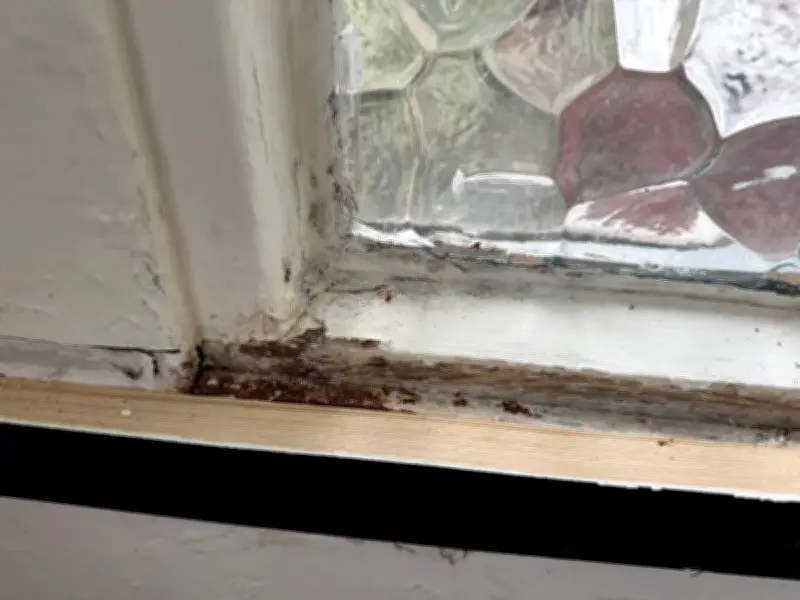
When Hannah Britt bought a dilapidated doer-upper three years ago, damp and mould became two of her most used words. The main area where these problems moved in was in her porch. She decorated the hallway in Farrow & Ball, only for damp to soak through and make the paintwork bubble. Her wallpaper became patchy with black, and coats that touched the walls went green.
Trying Everything to Banish Damp
Hitting up a mixture of ChatGPT and their parents, Hannah and her partner tried everything to banish the damp. A damp proof course seemed to fix the issue for a while, but then the damp came back. Sprays rubbed off the surface level, leaving what lay beneath. They were tearing their hair out.
Then one day, Hannah realised it was the windows. She called up Clearview Home Improvements to come over. Jonathan Croft, Clearview's window expert, was there in a flash, quickly confirming the home's ancient windows were the culprits. The doer-upper had been built in the 1950s, and the windows were added not long after. Jonathan chipped off some paint from the crumbling woodwork to prove his point.
Upgrading to uPVC Windows
It was time to upgrade, he said, to uPVC. uPVC windows are modern window frames made from Unplasticized Polyvinyl Chloride, a rigid and durable form of plastic. Multi-chambered uPVC frames, like the ones Clearview create, trap air and act as natural thermal insulators, helping keep homes warm in the winter and cool in the summer. Combined with double or triple glazing, they significantly reduce heat loss and lower utility bills.
Unlike timber frames, uPVC will not rot, rust, warp, flake, or require regular sanding, painting, or staining. They simply need an occasional wipe-down with warm soapy water. Hannah and her partner signed up straight away. Jonathan measured up, they chose colours (a timeless white), and their order was sent off to Clearview to complete.
The Result: Damp and Mould Gone
A couple of weeks later, the windows were ready and the Clearview team arrived. Three hours later, the rotten, decades-old wooden windows had gone. In their place were shiny new uPVC windows, which looked sleek and stylish—a massive improvement.
Within days, the porch began to dry out. The bubbling stopped, and the walls dried up. After a few weeks, they redecorated, and the walls have remained pristine ever since. The wind no longer whistles through the windows, and the thermostat is able to heat up. The damp and mould were gone, kicked to the curb by uPVC. Hannah said she only wishes they'd done it sooner.
Martin Roberts, a property expert, offers tips to protect homes from damp and mould. He advises monitoring your home: let fresh air in, check guttering and clean gutters, check for cracks letting water in, and avoid having soil beds pushed up against the house. He says: “Modern houses can seem like they're a bit hermetically sealed so there's no natural airflow. Strike a balance between keeping the house warm and getting fresh air into that house.”
What to look for, according to Martin: “Damp and mould shows itself around the windows, in the back of cupboards, generally lower down on walls. Feel the walls, does it feel damp? Does it feel cold? Does it feel wet? Damp tends to smell musty, like an old pair of socks.”
Locate the problem: “Properties aren't rocket science. Normally you can say, ‘well actually I've got a bit of damp there, what's on the other side of that?’ 'Oh look, there's a drain pipe that's got a crack in it.'”
Check your tumble dryer: “Because the tumble dryer often sits on the top of a washing machine, which is vibrating, these move, so all the damp air from your dryer is spilling out into the house.”