Cornwall's Housing Paradox: A £100k Shed Symbolises Property Wars
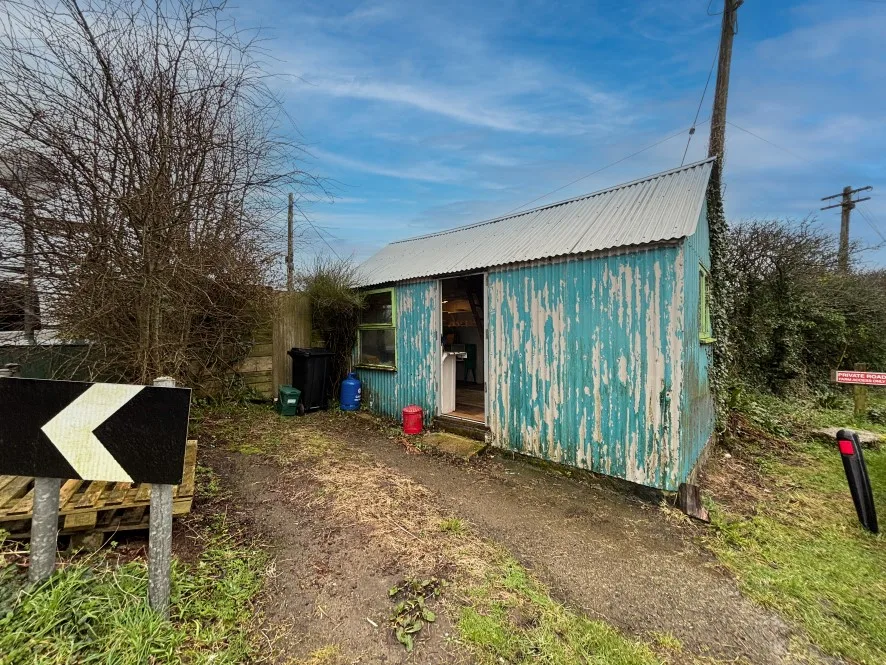
While casually browsing Rightmove last weekend – a pastime I suspect is shared by millions across the nation – one particular listing brought me to an abrupt halt. The sense of familiarity was immediate. I had seen this structure before, featured prominently in the BBC Two documentary Cornwall with Simon Reeve, where it stood as a stark symbol of the county's severe housing crisis and deepening inequality.
From Documentary Emblem to Six-Figure Asset
Now, the same uninsulated tin shed, positioned at a windswept crossroads in west Cornwall approximately 21 miles from Land's End, has re-emerged into public view. This time, however, it carries an auction guide price ranging from £80,000 to £100,000. An expensive shed is, in itself, hardly a rarity in this region. Last summer, my own modest offer of £45,000 for a rusty hut near Portscatho was swiftly rejected by an estate agent whose chilly demeanour implied I had committed a grave social faux pas.
Cornwall's property market is saturated with listings that transform outhouses into potential luxury retreats, market minuscule garden plots as future residential sites, and reframe scraps of land barely sufficient for parking a single car as lucrative development opportunities. It appears almost any space can be reimagined into a substantial financial windfall.
The Shed's Notorious History
This, however, was no ordinary shed. It belonged to the writer Catrina Davies, whose powerful memoir Homesick propelled the humble building from rural obscurity into the heart of a national controversy surrounding Cornwall's second homes crisis. Her public profile intensified further following her appearance in the BBC documentary, where her living situation was presented as emblematic of widespread local anger over skyrocketing house prices, an influx of outsiders, and the pervasive issue of second-home ownership.
As the BBC's synopsis still states, Reeve 'meets a woman who lives in a shed and who blames the thousands of outsiders who own second homes'. In a striking twist of irony, that very same shed is now being marketed as a potential holiday retreat or a 'snug, tucked away place to enjoy the peace of reading, writing or crafting', according to auctioneer Katie Roberts of Auction House South West.
The narrative arc is almost poetically perfect: a structure that helped fuel national outrage about the damaging impact of second-home ownership is itself being promoted as a potential second home. This represents a fascinating subplot in Cornwall's ongoing property wars.
Reflecting Cornwall's Deep Contradictions
This story illuminates the profound contradictions that define Cornwall's housing debate and the local economy it sustains. There persists a romanticised belief of Cornwall as a land of scenic hardship and quiet struggle. In reality, it is a place of sudden financial windfalls, rapidly escalating land values, and fierce disputes over who ultimately benefits from this economic activity.
This paradox was vividly displayed in Mawgan Porth earlier this year. Local residents mounted fierce opposition after owners of a disused shed – originally constructed to house a model railway – secured planning permission to convert it into five holiday lets. Cornwall's relationship with tourism is deeply ambivalent; the county simultaneously depends on it and resents it. In a region where stable, year-round employment is scarce, holiday lets bring vital visitors, inject cash into the economy, and offer the tantalising prospect that even the most unpromising parcel of land might one day fund an escape.
Yet, each new Airbnb listing frequently triggers public outrage, as if prosperity itself has become a social transgression. Cornwall is a peculiar place where many locals vocally criticise the very economic forces that sustain their communities – until, of course, an opportunity arises for them to personally capitalise.
A Debate That Permeates Daily Life
The housing debate in Cornwall extends far beyond council chambers or local newspaper columns. It surfaces in everyday interactions – while queueing for an oat-milk latte or navigating a crowded pub. For unsuspecting newcomers, these conversations can resemble a subtle trap. A casual chat about the weather can swiftly pivot to probing questions about a specific planning application, transforming small talk into an unspoken test of loyalties and local belonging.
I experienced this directly a few summers ago after publishing a column expressing frustration about attitudes towards second-home owners in St Mawes. For weeks afterwards, it felt as though half the county had metaphorically sharpened their pitchforks in readiness. My apprehension peaked upon entering a packed St Ives pub and noticing the grandson of a prominent Cornish nationalist politician fixing a stern gaze in my direction, his arm adorned with a tattoo of the nationalist figure An Gof.
Surprisingly, later that evening, he confided – somewhat inebriated – that he had been compelled to leave his hometown of Bude after locals discovered his family owned a portfolio of holiday homes in Spain. He was promptly denounced as a 'fake freedom fighter' and stripped of his symbolic status as a defender of Cornish identity. He did not find the situation remotely amusing.
Economic Reality Versus Social Theatre
Encounters like this reveal that Cornwall's housing debate functions as much as social theatre as it does economic reality. While public rhetoric against second-home ownership often appears clear-cut and morally unambiguous, the issue becomes significantly more complex when personal livelihoods, family finances, and rising property values enter the equation.
In a county where well-paid employment opportunities are limited, property has become both a fierce battleground and a critical lifeline. People argue passionately about sheds, second homes, and new developments, often with sincere conviction. Yet, when land values surge or a chance to secure their own financial future materialises, those firmly held positions can soften remarkably quickly.
This is precisely why the spectacle of a six-figure shed near Penzance feels so profoundly revealing. It encapsulates the central contradiction of modern Cornwall: a deep-seated resentment of tourism's impacts existing side-by-side with an undeniable dependence on the revenue it generates. There appears to be an unspoken, widely understood rule at play: protest loudly in public, but profit quietly when the opportunity arises. The humble shed, once a symbol of deprivation, now stands as a stark monument to this enduring and complex dilemma.




