
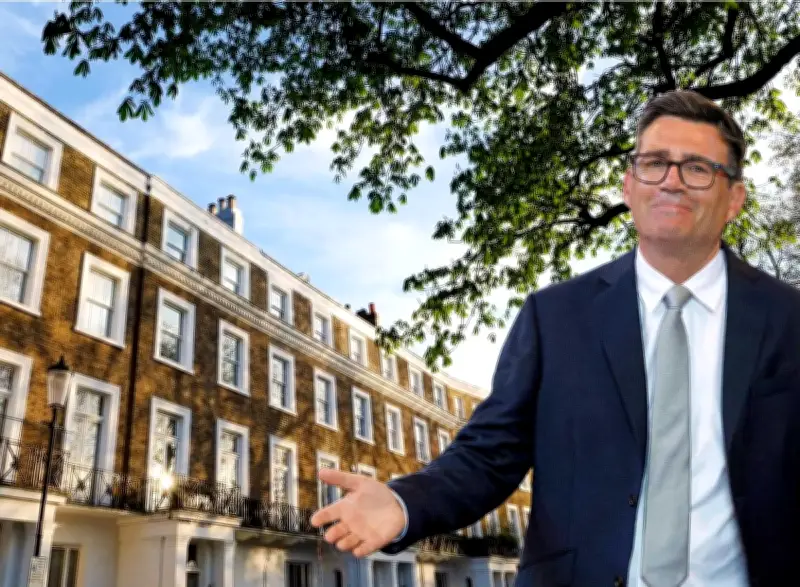
Prime Minister Andy Burnham has long expressed support for a landmark property tax shake-up, including a Proportional Property Tax (PPT) that would replace stamp duty and council tax. Under the proposals advocated by campaign group Fairer Share, homeowners would pay a flat 0.48% tax on their property's current value, with an initial cap of £1,200 per year. Second homeowners, foreign owners and empty properties would pay double that rate at 0.96%.
How would the tax work?
The PPT is a variation of a Land Value Tax (LVT), which Burnham proposed in 2010 during his first Labour leadership bid. The LVT would be an annual tax on the market rental value of land, allowing for the abolition of stamp duty – which Burnham described as a tax on young people's aspiration to put down roots.
Under Fairer Share's model, stamp duty and council tax would be scrapped. The 0.48% rate is calculated to match the revenue from the current system. Homeowners moving house would no longer pay stamp duty. The revenue would be centrally distributed to local councils, which David Fell of Hamptons says could be more efficient than the current system of 300 separate councils collecting independently.
Impact on Londoners
According to Fairer Share, the average London homeowner would pay £260 more per year under the PPT. The reason: London properties have seen the greatest increase in value since 1991, meaning homeowners currently pay proportionately smaller council tax bills. Owners of the most expensive properties would see the biggest increases. In Kensington and Chelsea, where the average property costs £1.273 million, a homeowner would pay £6,110.40 under the new tax, but the initial cap limits it to £1,200 – compared to the current average council tax of £3,286.88.
Fell warns: “Lower income homeowners in higher value areas like London would be hit hard. Typically, they can currently avoid paying stamp duty by staying put. Renters, who don’t currently pay stamp duty, may end up paying more, either in tax or via higher rents.”
Arguments for and against
Proponents argue that the PPT would benefit 77% of UK households – 18 million people – with an average saving of £556. Scrapping stamp duty would remove a barrier to home ownership and make it easier for older households to downsize. However, Tom Bill, head of UK residential research at Knight Frank, points out: “Annual revaluations will turn house price growth into an ongoing tax liability, which would inevitably affect decision-making. The psychological difference between a one-off stamp duty bill and a recurring tax charge means up-sizers could think twice, particularly in London and the south-east where payments are likely to be a proportionately larger share of income.”
Concerns also include implementation challenges – some homeowners have already paid stamp duty – and accurate property valuations. Fell notes: “Changes in values could mean uncertain income for councils and will be open to challenge.” Bill adds that raising taxes for landlords and developers could reduce stock and increase rents at a time when housebuilding is needed. “The concept of taxing the asset rather than the transaction is sensible as it would improve social and economic mobility, generate tax revenue in other areas like VAT, get rid of a universally disliked tax and ultimately generate a more stable flow of revenue,” Bill says. “However, cross-party support or not, proposals should feel politically neutral to avoid replicating the unintended consequences seen with stamp duty changes in the last decade.”
Burnham has played down the likelihood of immediate reform, stating: “It's just not the case that we are bringing forward plans, on that scale, at this moment in time.” He stopped short of ruling out a new property tax. Other options he might consider include lowering the threshold for the existing “mansion tax” or introducing higher council tax bands for expensive properties.




