
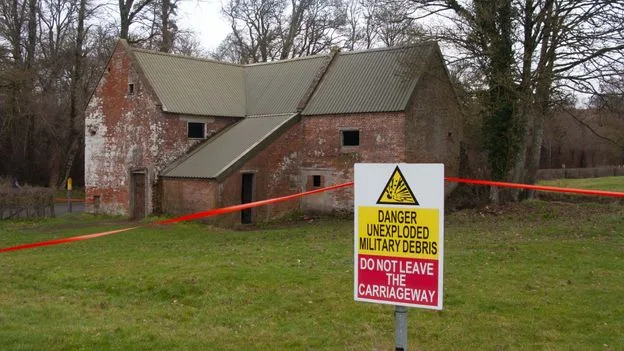
In 1943, residents of the English villages of Imber and Tyneham were given just a month to evacuate their homes to make way for military training. Eighty years on, both remain uninhabited ghost villages, serving as a poignant reminder of the communities that vanished.
Imber, located on Salisbury Plain in southern England, was known as 'the loneliest village in England' due to its remote location. On 1 November 1943, villagers were called to a meeting and told they had 47 days to leave. While some accepted it as a necessary sacrifice for the war effort, others were heartbroken. The village blacksmith, Albie Nash, was found crying over his anvil the next day and died a few weeks later.
After World War Two, the Ministry of Defence decided to retain Imber for military training, despite assurances villagers had been given that they could return. A 'Forever Imber' campaign gained public interest and the matter was raised in the House of Lords, but the decision was deemed final.
Today, Imber has no inhabitants, no postcode, and is open to the public for a maximum of 50 days a year, though the full allocation has never been granted. The village's 13th-century St Giles Church has been restored and continues to hold an annual Remembrance Day service. Visitors can explore the church and its churchyard on open days, which attract around 16,000 people annually.
One of the most popular events is Imberbus, where classic Routemaster buses ferry passengers from Warminster to Imber each summer, raising money for charity. Organiser Lord Hendy of Richmond Hill said the village was chosen because it was 'such an unlikely place to operate a bus service to'.
Access to Imber remains precarious. Custodian Neil Skelton noted that trespass incidents once reduced public access days to three, but he persuaded the training area commandant to increase it to 12-plus days. For now, these limited openings allow thousands to experience one of the UK's least-accessible villages.




