

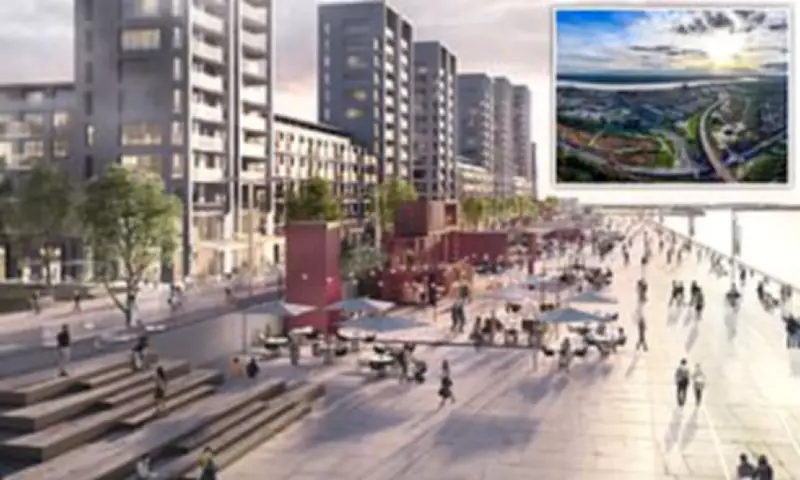
Massive 'Barkalona' Development Approved Amid London Housing Crisis
Planners in Barking and Dagenham have granted approval for a revised scheme to create a new town at Barking Riverside in east London, a project dubbed 'Barkalona' or 'Barcelona-on-Thames' by locals. The development, supported by London Mayor Sir Sadiq Khan in a joint venture with housing association L&Q, will involve 20,000 new homes, nearly doubling the previously allocated 10,800 properties across the 443-acre brownfield site beside the River Thames.
Infrastructure Promises and Local Apprehensions
The masterplan includes two public parks, three additional schools, a new health facility, commercial space, enhanced walking and cycling routes, and riverfront access. Of the 20,000 homes, 4,000 are earmarked for affordable housing, with the potential to house 50,000 people across the area. Supporters, including Deputy Mayor for Housing Tom Copley, emphasize the delivery of much-needed homes and community amenities.
However, local reaction has been mixed, with residents expressing significant concerns about infrastructure lagging behind construction. Mehak Yasir, a 36-year-old local resident, highlighted the lack of primary and secondary schools, local markets, parking, GP surgeries, and supermarkets. "We don't have any GP surgery or supermarket like Tesco – we only have two small Co-ops here," she said, noting that residents must travel to Thames View, a 10-minute drive away, for medical appointments.

Councillor and Resident Voices Echo Broader Issues
Labour Councillor Sabbir Zamee, representing the nearby Thames View estate, shared concerns that health needs have not been adequately addressed. "I'm calling my GP, 30 minutes of waiting and then the call is disconnected," he explained, pointing out that existing facilities are already overwhelmed. Lifelong Barking resident Stephen, 72, criticized the density and traffic implications, dubbing the area 'Barkalona' and questioning where all the vehicles will go.
Despite these worries, some residents see the development positively. Mike Press, a 29-year-old software engineer, purchased a two-bedroom flat for £330,000 three and a half years ago, citing the area's affordability compared to commuter towns. "There is a housing shortage in this country. Here is a great place to do it because it's all pretty much brownfield," he said, adding that he sees only positives from the project.
Broader Housing Context and Government Targets
The approval comes amid national efforts to tackle Britain's housing crisis. The Labour government has updated planning rules to prioritize brownfield developments, with Prime Minister Sir Keir Starmer positioning himself as a 'yimby' to counter 'nimbys' and 'blockers'. The government aims to build 1.5 million new homes by the end of the current Parliament in 2029, but industry fears persist about meeting this target.
Official figures from January revealed that only 47,600 new homes have been built in London since Labour came to power in July 2024, far short of the annual target of 88,000 needed to meet national goals. Across England, 115,700 homes were started in Labour's first year, just 39% of the 300,000 required annually. The Construction Industry Training Board warns that 61,000 new workers each year are needed to hit the 2029 target, amid a 25-year low in construction workforce numbers.
Developer Commitments and Future Plans
Barking Riverside Limited (BRL) managing director Leigh Johnson outlined commitments to social infrastructure, including £6 million for on-site healthcare and up to £4.2 million for new community centres. The development already features five schools, transport links like the London Overground station and Uber Boat pier, and community spaces. L&Q's group chief executive Fiona Fletcher-Smith described the project as a potential blueprint for brownfield development nationwide.
More than £170 million in grant and loan funding has been provided by Homes England over the past five years. The revised proposals, given outline planning permission last week, emphasize additional health infrastructure and shops, with BRL prioritizing delivery of up to three new primary schools and at least two new community centres.






