
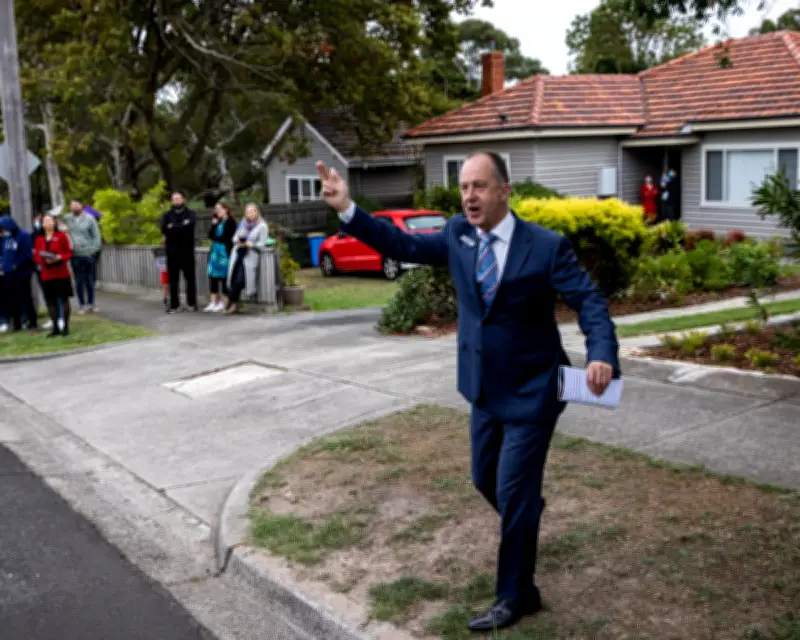
Australia's long-standing love affair with house auctions may be cooling, as new data reveals a significant drop in auction listings while overall property listings have surged. According to SQM Research, total property listings across Australia have risen by 22.8% over the past 12 months, yet auction listings have fallen by about 20% compared to the same period last year.
Shift Towards Private Treaty Sales
Louis Christopher, managing director at SQM, highlighted the trend: "The rise in total listings should also be contrasted against the fall in auction listings, which is actually down by about 20% compared with the same period last year. Vendors in this market are increasingly preferring to sell via private treaty."
This marks a notable shift in how properties are being sold, as auctions have traditionally been a staple of the Australian property market, often associated with competitive bidding and higher prices.
Auctions Becoming Less Popular
Data from Cotality shows that in the four weeks ending 28 June, 6,895 properties – accounting for 30.3% of home sales – across Australian capital cities were sold via auction. However, auctions have been losing popularity this year, with clearance rates dropping from around 70% in September last year to below 50% in June and July.
Gerard Burg, head of research at Cotality, attributes this to "weakening in market conditions across the country," citing affordability pressures, interest rate rises, hits to household incomes, and confidence related to the Iran conflict and policy changes in the federal budget.
Do Auctions Push Up Prices?
The impact of auctions on house prices is a subject of debate. Research from UNSW and the University of Sydney, analyzing over 480,000 residential property transactions in New South Wales and Victoria between 2007 and 2019, found a premium of only about 0.7% compared to private treaty sales.
"It's probably less than what people think," says UNSW's associate professor Kristle Cortés. "And if you consider that there's an additional cost to auctions between hiring the auctioneer and the staging process, it's actually quite expensive."
One in five auctions ends without a sale, and homes that failed to sell at auction subsequently sold for about 1.3% less than comparable properties sold by private treaty, a loss of roughly $9,000 to $10,000 based on average home prices.
Regulation and the Future of Auctions
Michael Fotheringham, an independent housing expert, cautioned against a ban on auctions, as they can be a more transparent sales method. However, he called for tighter regulations, including addressing "the use of dummy bids and vendor bids, the use of the relationship between a reserve and when it's actually for sale and an advertised price range."
In Victoria, the Greens party has proposed banning street auctions altogether, arguing the current system is "designed to push up house prices by pressuring buyers into paying more." Victorian Greens housing spokesperson Gabrielle de Vietri said the goal is to move away from an auction culture towards a more transparent, fair system.
Ultimately, the underlying issue, according to Fotheringham, is price speculation and the treatment of real estate as a financial investment rather than a social need.




