Locals are celebrating a victory against one of Britain's wealthiest aristocrats after proposals to construct cottages on historic farmland in the Northumberland countryside were thrown out.
The Duke of Northumberland's firm, Northumberland Estates, had sought permission to erect three properties on the outskirts of the market town of Alnwick, but encountered fierce opposition from residents.
Objections raised over landscape and wildlife
Some objectors argued that the three-bedroom stone and slate cottages would cause harm to a historic former farmsteading and its surrounding rural landscape within a Site of Special Scientific Interest (SSSI). Others raised concerns that the development would pose a threat to wildlife, heighten the risk of flooding, and voiced worries over disruption caused by construction work — including noise, pollution and increased traffic.
Last week, Northumberland County Council's planning committee voted to reject the scheme near Greensfield Farm, having heard that the plans fell outside the settlement boundary and would have an adverse impact on the landscape.
Duke's background and local opposition
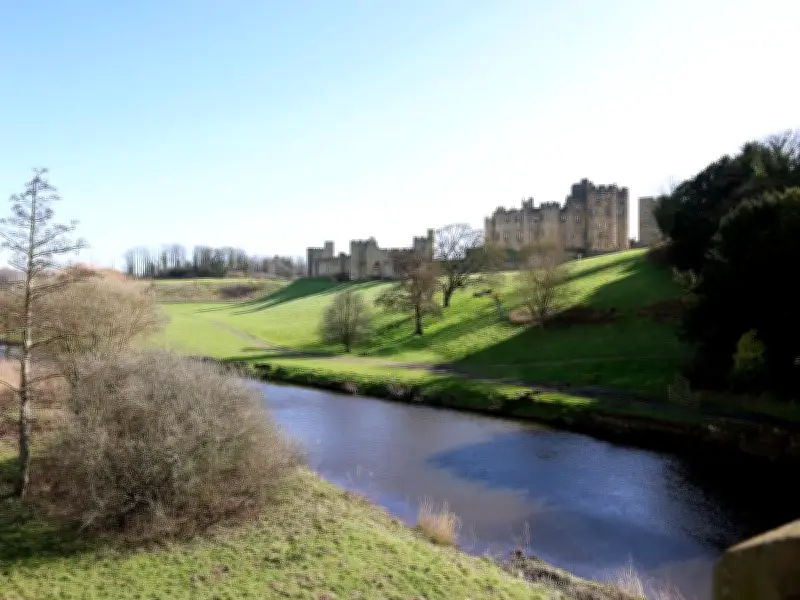
Northumberland Estates manages the business affairs of the Duke of Northumberland, Ralph Percy, 69, who has an estimated net worth of £509 million and is known to be a close friend of King Charles. He resides with his wife, Duchess Jane, 68, at the nearby Alnwick Castle, which has featured in the television productions Downton Abbey and Blackadder.
One local resident who opposed the proposals, Bradley Martin Greensfield, said: "I object strongly on what could be just the tip of the iceberg looking to generate a precedent for further development of the land beyond the proposed properties which currently and historically has been a paddock or agricultural land."
"Flooding over the last few years has caused significant runoff and damage to 200-year-old dry stone walls which had to be protected by tonnes of stones and gravel deposited to slow down the deluge prior to building on the old cow sheds. Further property expansion may take away the beauty of the historic Greensfield Farmsteading and diminish its visual appeal."
Sarah Quinlan added: "The loss of this open green space would negatively impact the wellbeing and enjoyment of many local residents. I also have concerns regarding the likely disruption caused by construction. Previous nearby developments have resulted in prolonged periods of drilling, excavation noise, vibration, and dust."
"As nearby residents who have only recently established family life in what is currently a peaceful area, we are extremely concerned about the impact prolonged construction activity would have on our home environment and quality of life. In addition, I have personally observed curlews nesting within this greenbelt area."
"Curlews are an increasingly threatened species, and I am concerned that development of the site, alongside associated construction activity and increased human disturbance, could damage or destroy valuable nesting habitat and negatively impact local wildlife and biodiversity more generally. Overall, I do not believe this application sufficiently addresses the impact on local amenity, wildlife habitat, public access, highway safety, or construction disruption. I strongly object to the proposal as currently submitted."
Committee decision and developer response
Jamie Kavanagh remarked: "My objections are grounded in material planning considerations covering cumulative residential amenity impact, highway access, geological constraints, green infrastructure and the diversion of a public right of way."
"Residents in this area have experienced significant and sustained disturbance from the neighbouring Steadings development for over two years and the Fairways development more recently. That disturbance has included construction noise, heavy vehicle movements, dust and general disruption to daily life. I would ask that the committee weigh not just the standalone impact of this proposal, but the total burden placed on existing residents over an extended and continuous construction period."
Louise Thomas stated: "This is an amazing location, this small field is a wonderful location for the thousands of insects and butterflies that make it their home. I'm always amazed at all the caterpillars and insects that we see as we journey this short path which is the gateway to further walks towards the Greenway."
"The area is alive with small birds, warblers, thrushes, goldfinches, house sparrows and linnets with skylarks overhead. Many of the small trees have been lost from this area, the orchard from the farm was dug up, which has been a great loss to the living variety within this ecosystem. This is an amazing field with stunning views along the footpath which is a joy for all who use it. Why ruin this small area which is a haven for biodiversity in the local area for three houses."
The application had initially been put forward for approval by council planners, however concerns were raised that the proposals sat outside the settlement boundary of Alnwick's neighbourhood plan, which is presently under review. Alnwick councillor and committee chairman Councillor Martin Swinbank put forward a motion for refusal, highlighting a detrimental impact on the landscape and the character of the "historic" neighbouring farmsteads. The application was turned down by four votes to one.
Emily Andrews, development planners at Northumberland Estates, said: "The development responds to identified local housing need for two and three-bedroom homes in Alnwick. The design of the scheme is a particular strength - the proposed homes are 1.5 storey cottages designed to reflect the buildings around them so it sits comfortably beside the existing farmstead. This is a modest development in a sustainable location and all matters have been carefully considered."
Northumberland Estates also challenged the neighbour's assertion that the land was a Site of Special Scientific Interest, noting the nearest SSSI is more than four miles away. They also stated their proposals complied with the existing Alnwick Neighbourhood Plan, while the town council had raised questions about whether the application ought to be rejected on the grounds it fell outside the proposed future settlement boundary. Their officers and legal advisers maintained this could not yet be cited as grounds for refusal as the application had to be judged against the current adopted plan, and they contended the proposed site lay within that boundary.