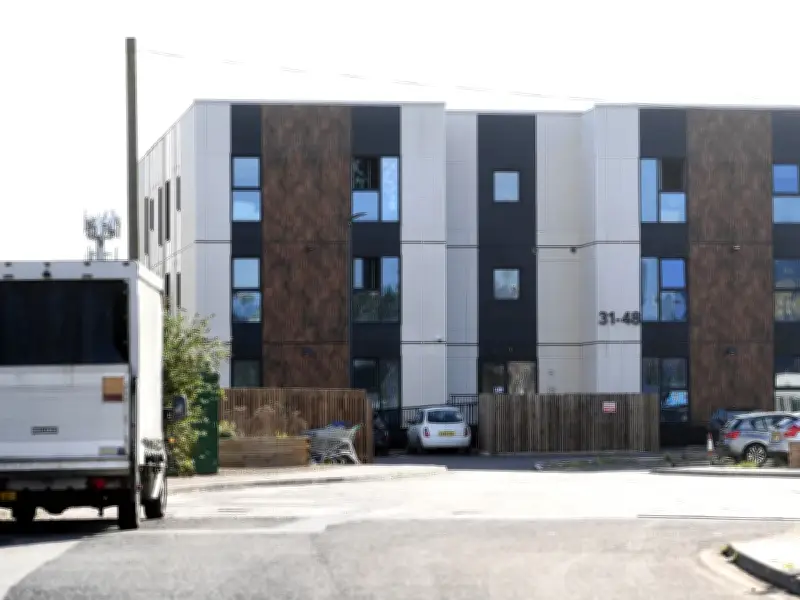
A freedom of information (FOI) request has revealed that 776 children, defined as under-16s, are currently living in temporary accommodation provided by Cardiff council. Of these children, 431 are members of single-parent households.
Temporary accommodation is typically used by councils to house people at risk of homelessness and requiring immediate or interim places to live while being assessed for longer term housing. The figures were obtained by the Local Democracy Reporting Service (LDRS).
Council response to housing pressures
A spokesman for the council said: “Cardiff, like many other cities across the UK, continues to face significant housing pressures with high numbers of households presenting as homeless and requiring assistance.

“While temporary accommodation provides an important safety net for those experiencing homelessness, our priority is always to prevent homelessness wherever possible. We have a strong track record of helping families remain in their own homes and many households who approach us at risk of homelessness receive support that enables them to avoid entering temporary accommodation altogether.
“Where temporary accommodation is needed we have invested in increasing the supply of good quality accommodation for families. We know that any time spent in temporary accommodation can be challenging, particularly for those with children, which is why our focus is on helping people move into settled accommodation as quickly as possible.”
Charity warns of consequences for children
Robin White, head of campaigns at Shelter Cymru, a Welsh homelessness charity, said: “No child should be growing up without a home. It's a situation that we know from our work providing advice and support has huge consequences for their mental health, access to education, and much more.”
According to a study on children in temporary accommodation in Swansea, published by the Welsh Government in 2021, becoming homeless or being at risk of becoming homeless was associated with a 7% increase in the total sessions absent from school. Mr White added that because of a “long-term” failure to build social housing across Wales thousands of children are “currently trapped in temporary accommodation that can often be wholly inadequate for their needs”.
Cardiff Council said it is increasing the supply of social housing available in the city through both its housing development programme and buying back council properties, but “demand for housing remains extremely high”.
Calls for national effort and new legislation
Mr White continued: “This has to change and making that happen will require a national effort driven by the new Welsh Government. An effort that needs to include accelerating the implementation of the new Homelessness and Social Housing Allocations Act, while also prioritising plans to increase the delivery of social homes and significantly reform our private rented sector which is too often not fit for purpose.”
The Homelessness and Social Housing Allocations Act became law in Wales on April 1 and aims to reform the Welsh housing system towards early prevention and targeting those most at risk.
The Children’s Commissioner for Wales, Rocio Cifuentes, called the figures a “stark reminder” of the housing pressures facing many families in Wales and the number of children “growing up without the stability of a permanent home”. While she said temporary accommodation can play an important role in preventing homelessness, she added “it should not become a long-term reality for children”. Ms Cifuentes said through her work she has directly heard from children dealing with housing insecurity.
She said: “Children have described feeling anxious and unsettled, struggling with overcrowded or unsuitable living conditions, and finding it harder to focus on school, maintain friendships, and feel safe and secure.
“The reasons behind these figures are complex and I recognise the pressures facing housing services. However, every child has the right to a good standard of living and we must not lose sight of the impact that prolonged periods in temporary accommodation can have on children's wellbeing and development. Every effort should be made to help families access suitable, stable housing as quickly as possible.”

Measures to reduce stays and support families
A spokesman for Cardiff council said: “Alongside our prevention work we regularly review households in temporary accommodation to help keep stays as short as possible and have introduced a range of measures to improve move-on rates.” This includes using the private rental sector, other accommodation outside the city, and making permanent housing offers wherever suitable social housing becomes available.
“Families in temporary accommodation are supported throughout their stay by a dedicated support worker while council services regularly visit our larger family accommodation sites to ensure residents can access advice, welfare, and other support services,” they said. “At larger sites families can also access a range of activities and wider support aimed at promoting wellbeing, building connections, and providing positive opportunities for children and parents.
“Temporary accommodation is not intended to be a long-term solution and our focus remains on preventing homelessness wherever we can and supporting families to move into settled housing at the earliest opportunity.”