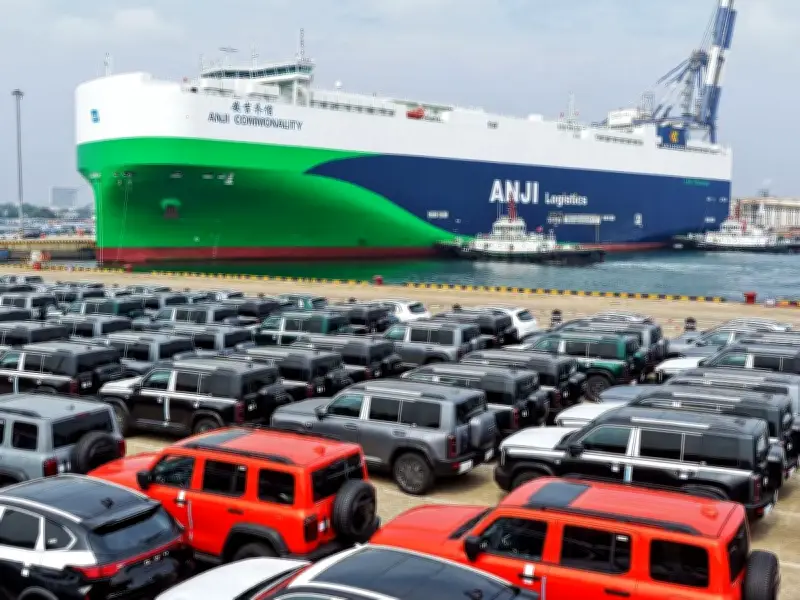
The UK government is keeping tariffs on Chinese electric vehicles under review, a move that could end the current boom in sales of Chinese-made cars in Britain. The review comes as the EU pushes the UK to align with its trade policies to secure access to the proposed Made in Europe industrial scheme.
Chinese-produced electric cars and hybrids now account for around one in four new vehicle purchases by British motorists, according to recent data. The Jaecoo 7, dubbed the 'budget Range Rover', topped the UK new car sales charts in September. Unlike the US and the EU, Britain currently imposes no additional tariffs on Chinese EVs, charging only its standard 10% duty on cars built in China.
Government review and potential tariffs
Business Secretary Jonathan Reynolds announced the government was keeping the measures "under review". Reports suggest the EU is pressing the UK to act to secure access to its proposed Made in Europe industrial scheme. If the UK is locked out, British-made EVs from brands like Range Rover, Nissan, and Bentley could face heavy barriers when sold to the EU, the nation's largest export market.
According to The Times, tariffs of up to 45% may be placed on EVs from China imported to the UK to secure the deal, in line with the EU's current policy. A government spokesperson said: "We have not put tariffs on Chinese EVs. We continue to engage closely with industry so that our approach reflects the sector’s and UK’s national interests."
Expert view on the impact
Professor David Bailey of the University of Birmingham said tariffs had the potential to "slow" the current rate of growth, though he believes British drivers would continue to buy Chinese EVs. He told the Mirror: "It's not the end of the boom, but potentially the end of the easy ride."
Chinese brands have built momentum in the UK through competitive pricing, technology and rapid model launches. Tariffs would slow that advance, but they are unlikely to stop it completely. Bailey added: "If manufacturers pass it on, Chinese EVs become more expensive and the price gap with European brands narrows. But Chinese manufacturers may absorb much of the cost to protect market share, so consumers could see a squeeze rather than a dramatic price jump."
Broader implications for the industry
In the short term, tariffs would give European manufacturers some breathing space from increasingly aggressive Chinese competition. However, Bailey noted: "Protection buys time, it doesn’t solve the underlying competitiveness problem of Europe’s car industry. The Chinese threat is still existential."
The EU does not want the UK to become an easy back door into the European market. If Chinese EVs face barriers in the EU but not in Britain, the UK could become an attractive dumping ground for Chinese production, putting pressure on European manufacturers. Bailey warned: "The danger is that tariffs protect existing manufacturers without encouraging them to become more competitive. The UK could end up with higher-priced EVs without securing a stronger domestic industry."