

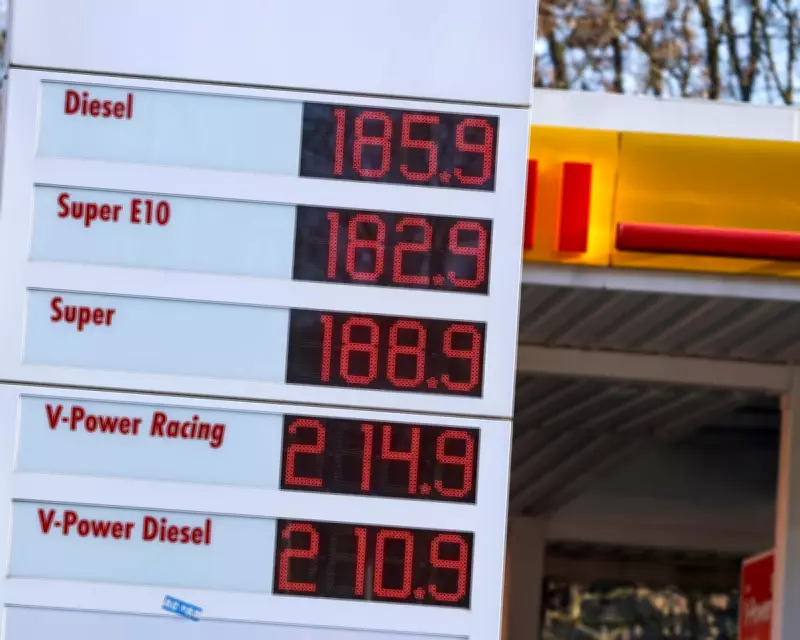
Global oil prices have continued their upward trajectory amid escalating tensions in the Middle East, with Brent crude surging by 3.3% to reach $84 per barrel. This sharp increase follows reports from Iran's Tasnim news agency indicating that a missile launched by Iranian forces struck a US-registered oil tanker in the northern Persian Gulf. The incident has intensified fears over supply disruptions in a region critical to global energy markets.
Asian Stock Markets Stage a Remarkable Recovery
In a contrasting development, stock markets across Asia have rebounded strongly after several days of significant losses driven by the ongoing conflict. South Korea's KOSPI index, which recorded its largest ever single-day decline of 12% on Tuesday, soared by almost 10% on Thursday. Japan's Nikkei index climbed by 1.9%, while MSCI's Asia-Pacific index excluding Japan jumped by 2.7%.
This recovery comes despite continued volatility in the Middle East, where the Abu Dhabi stock market fell by 2.6% and the Dubai exchange declined by 2.2%. Both exchanges have implemented temporary measures, setting a 5% lower price limit on securities to curb excessive selling pressure.

Gas Prices Follow Oil Higher as Qatar Halts Exports
Natural gas prices have also moved upward, with UK gas rising by almost 1% and European natural gas futures climbing by 2%. The increase follows Qatar's declaration of force majeure on liquefied natural gas exports, effectively suspending contractual obligations to customers. As the Gulf's largest LNG producer, Qatar halted activity at its facilities on Monday, with sources suggesting a return to normal production volumes could take at least a month.
Stephen Innes, managing partner at SPI Asset Management, commented on the volatile situation: "The geopolitical backdrop remains as combustible as ever. President Donald Trump continues to project confidence in the military campaign against Iran even as the timeline for operations remains murky. Missiles are still flying across the region, and bombs are still falling."
Airline Industry and Global Supply Chains Feel the Impact
The ripple effects of the crisis are being felt across multiple sectors. Wizz Air has cancelled flights to and from Israel, Dubai, Abu Dhabi, and Amman until March 15, warning of a €50 million (£43 million) hit to annual profits due to higher jet fuel costs and operational disruptions. The Hungarian airline now expects net profits to fall below its previous range of a €25 million loss to a €25 million profit, with its London-listed shares dropping by as much as 6%.
In China, the government has instructed the country's largest oil refiners to halt exports of diesel and gasoline immediately as they face potential crude supply disruptions. Bloomberg reported that officials from the National Development and Reform Commission met with refinery executives to coordinate this temporary suspension of refined product shipments.
Semiconductor Industry Expresses Supply Chain Concerns
South Korean lawmaker Kim Young-bae has warned that the US-Israeli conflict with Iran, now in its sixth day, could disrupt supplies of critical semiconductor manufacturing materials. South Korea's chip industry, which supplies two-thirds of global memory chips, is particularly concerned about prolonged conflict leading to higher energy costs and increased prices for essential components.
Meanwhile, London's FTSE 100 index experienced mixed trading, initially slipping by 0.3% before recovering to gain 60 points, approximately 0.5%. Asian markets received an additional boost from China's announcement of a five-year roadmap to accelerate scientific breakthroughs and integrate artificial intelligence across its industrial economy.
Innes also noted some positive economic indicators, pointing to "solid" US economic data, including a strong ADP jobs report and increased service sector activity. However, he emphasized that "the strategic calculus on trading desks has begun to shift subtly but importantly" as intelligence suggests Iran's conventional military capacity is deteriorating following significant naval losses and sustained airstrikes on missile-launching capabilities.






