

London and European Markets Close Sharply Lower Amid Geopolitical Turmoil
Stock markets in London and across Europe ended Thursday's session deep in negative territory, as investors grappled with escalating tensions in the Middle East and assessed recent interest rate decisions from major central banks. The FTSE 100 index closed down 241.79 points, a decline of 2.4%, settling at 10,063.50. Similarly, the FTSE 250 fell by 520.73 points, also 2.4%, to 21,560.04, while the AIM all-share index dropped 25.36 points, or 3.4%, to 727.85.
Central Banks Hold Steady as Inflation Concerns Mount
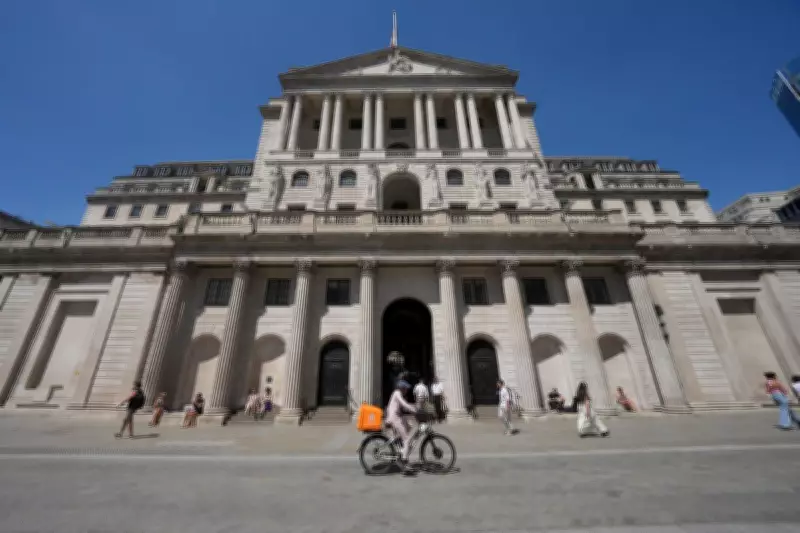
The Bank of England, following the lead of the US Federal Reserve and the European Central Bank, opted to keep UK interest rates unchanged on Thursday. This decision comes amid heightened worries over inflation, driven by surging energy prices linked to the conflict in Iran. The People's Bank of China is set to announce its own rate decision early Friday UK time, adding to the global monetary policy landscape.
Bas Kooijman of DHF Capital commented, "While geopolitical tensions remain elevated, the resulting increase in energy prices has raised inflation concerns, reducing the likelihood of near-term rate cuts. This has temporarily weighed on gold, as higher yields make non-interest-bearing assets less attractive." He noted that this movement reflects short-term market dynamics and profit-taking after record highs, rather than a fundamental shift in gold's long-term outlook.

Energy Prices Soar and Trade Warnings Emerge
Brent crude oil prices climbed to $110.46 per barrel at the London close, up from $108.21 the previous day, following attacks on energy infrastructure in Qatar by Iran. In response, US Treasury Secretary Scott Bessent suggested Washington might "unsanction" Iranian oil already in transit, and the US government could release more oil from strategic reserves. However, the Trump administration confirmed it is not considering a ban on oil exports as it seeks to manage rising energy costs.
Meanwhile, the World Trade Organisation (WTO) issued a stark warning, with chief Ngozi Okonjo-Iweala stating that the Middle East war could severely impact global trade, potentially limiting merchandise trade volume growth to just 1.4% this year, down from 4.6% in 2025. "Sustained increases in energy prices could increase risks for global trade, with potential spill-overs for food security and cost pressures on consumers and businesses," she cautioned.
Commodities and Corporate Performances Reflect Market Volatility
In the commodities sector, gold prices retreated to $4,603.53 per ounce from $4,875.60, impacting gold miners significantly. Endeavour Mining fell 7.9%, Fresnillo dropped 6.7%, and Antofagasta declined 5.0% on the FTSE 100. Conversely, oil major BP rose 4.3%, while Shell edged down 0.3%.
On the AIM market, Central Asia Metals reported a 2025 pre-tax loss of $58.5 million, down from a $77.2 million profit the previous year, despite revenue increases, and saw its shares fall 5.6%. In contrast, Sancus Lending surged 49% after announcing a jump in pre-tax profit to £1.2 million from £130,000, with revenue up 32% to £22.1 million, citing factors like housing undersupply and growing appetite for private credit.
Global Market Movements and Economic Indicators
European equities mirrored the downturn, with the CAC 40 in Paris closing down 2.0% and the DAX 40 in Frankfurt ending 2.8% lower. In New York, stocks were also lower, with the Dow Jones Industrial Average down 0.8%, the S&P 500 down 0.7%, and the Nasdaq Composite down 0.8%.
Currency markets saw the pound strengthen to $1.3367 against the dollar, up from $1.3334, while the euro rose to $1.1527 from $1.1517. The dollar weakened against the yen, trading at 158.09 yen compared to 159.45. US Treasury yields showed mixed movements, with the 10-year yield widening to 4.27% from 4.22%, and the 30-year yield narrowing to 4.84% from 4.86%.

Political and Defence Developments Add to Uncertainty
In political news, Prime Minister Sir Keir Starmer maintained his stance on EU relations despite calls from London Mayor Sadiq Khan for Labour to pledge rejoining the bloc, while Chancellor Rachel Reeves outlined plans for closer alignment with EU rules to combat inflation. On the defence front, the Pentagon is reportedly seeking an additional $200 billion for the Iran war, with Defence Secretary Pete Hegseth emphasising the need for funding to support military efforts.
Economic data from the US showed resilience, as new jobless claims fell to 205,000, below expectations of 215,000. Looking ahead, Friday's economic calendar includes UK public sector net borrowing and eurozone trade data, with corporate results expected from JD Wetherspoon and Smiths Group.





