

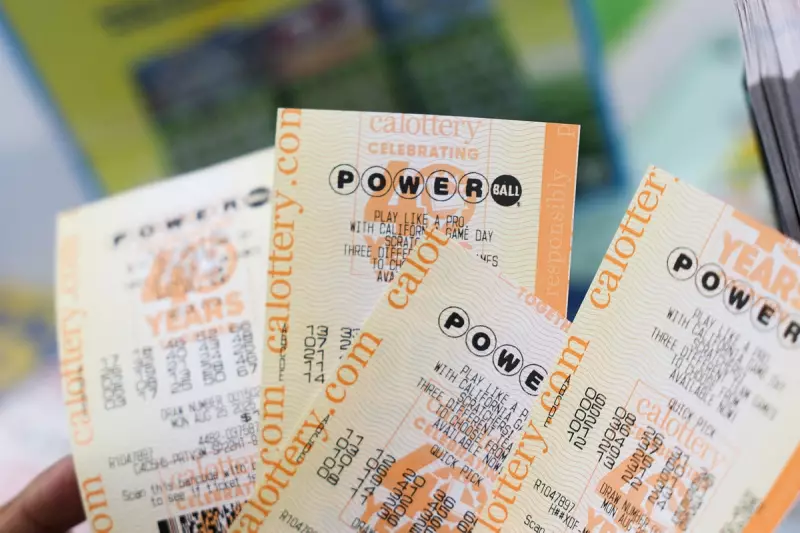
The American Powerball lottery has reached a staggering milestone, with the jackpot for Monday's draw climbing to an estimated $1.6 billion. This colossal sum positions it as one of the largest lottery prizes in United States history.
A Jackpot Forged by Rollovers
This monumental prize pool was triggered after no ticket managed to match all six numbers in Saturday's draw. The winning numbers from that draw were white balls 4, 5, 28, 52, 69 and the red Powerball 20. The consecutive rollover has now set the stage for Monday's drawing, which is officially ranked as the fifth-largest U.S. jackpot ever and the fourth-largest in the specific history of the Powerball game.
Staggering Odds and Payout Options
While the dream captivates millions, the mathematical reality is daunting. The odds of a single ticket securing Monday's historic jackpot stand at 1 in 292.2 million, as confirmed by Powerball officials.

The eventual winner will face a monumental choice regarding how to receive their fortune. They can opt for a lump-sum cash payment estimated at $735.3 million. Alternatively, they may choose the annuitised prize, which delivers the full $1.6 billion estimate through an initial payment followed by 29 annual instalments that increase by 5% each year. It is crucial to note that both prize values are quoted before the deduction of applicable taxes.
Historical Context and Game Structure
The current jackpot chase recalls the record-setting win of 2022, where a single ticket from California claimed the all-time U.S. record of $2.04 billion. The winner in that instance took a lump-sum payment of $997.6 million.
Powerball is a multi-state lottery game available for play in 45 states, as well as Washington D.C., Puerto Rico, and the U.S. Virgin Islands. The game is overseen by the Multi-State Lottery Association, a non-profit organisation comprised of state lotteries. Revenue generated from ticket sales is typically directed by individual states to fund vital public services, most notably public education.
As the clock ticks down to Monday's drawing, anticipation builds across the nation, with countless participants daring to dream of instantly joining the ranks of the world's wealthiest individuals.






