

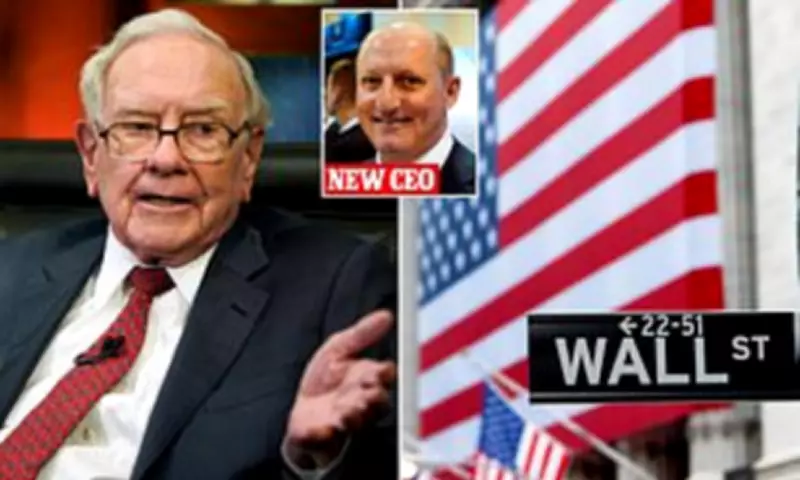
Warren Buffett’s successor, Greg Abel, has stunned Wall Street by remaking Berkshire Hathaway’s legendary portfolio of stocks. Abel gave investors a taste of the company’s new focus under his leadership in a regulatory filing on Friday, disclosing fascinating new purchases and a raft of puzzling exits.
New Investments and Major Exits
Among the most discussed moves are the company’s return to airline stocks with a new stake in Delta Air Lines, a much bigger stake in Alphabet, and added exposure to Macy's. Buffett has in the past admitted he 'blew it' by not buying Google years ago. Berkshire sold off positions in 16 companies, including stakes in Amazon, Visa, Mastercard, and UnitedHealth, and tripled its Alphabet position to 58 million shares, boosting the tech giant to one of its top five holdings.
All in all, Abel oversaw $16 billion in purchases and $24 billion in sales in the first quarter of the year, sharply reducing the overall number of holdings — an unprecedented level of activity for Berkshire. After the first-quarter adjustments, Berkshire now has a much more concentrated portfolio of 29 stocks, down from 41 before.

Leadership Transition
Abel took over leadership of Berkshire Hathaway as chief executive officer on January 1, as Warren Buffett transitioned to board chairman, where he maintains influence over investment strategy. The biggest move in the quarter was Berkshire’s significant expansion of its position in Alphabet, the parent of Google and YouTube, making it the company’s fifth-largest equity investment. Alphabet has dominant positions in advertising and media — and when your flagship product has become a verb, that's exactly the kind of buy-and-hold-forever stock that Buffett loves best.
Return to Airlines
The new $2.6 billion stake in Delta Air Lines is the company’s 14th largest holding, as the company returns to owning airlines for the first time in six years. Back in 2020, Buffett sold off positions in Delta, American Airlines, Southwest, and United — the so-called big four US carriers — because the pandemic had fundamentally altered the travel industry. The other new holding is a $55 million bet on retailer Macy’s, although this is a relatively small stake for Berkshire. During a March CNBC appearance, Buffett had alluded to making ‘one tiny purchase,’ which was likely the Macy's position.
Sales and Cash Pile
Berkshire sold a slew of stocks in the quarter, most notably payments giants Mastercard and Visa, plus all of the company’s stake in Amazon. Buffett has always been wary about owning tech stocks, and by the time the company had sold its shares in Amazon, the online retailer had seen massive gains since the oracle of Omaha bought his first bit of the company in 2019, allowing Berkshire to lock in substantial profits. With the company’s stock sales outstripping new purchases, Berkshire’s cash pile is likely now well over $400 billion. Two weeks ago, the company disclosed with first-quarter earnings that cash on hand had grown 6 percent to $397 billion since the end of 2025.
Berkshire’s cash position has always reflected the state of the wider stock market: When markets decline and stocks are cheap, the pile shrinks — but when markets surge higher and stocks get expensive, it grows. The pattern has held for decades, but this time around the cash pile is unlike anything we’ve seen before — and that has made many on Wall Street very nervous that it’s just one more sign of a giant crash on the way.






