

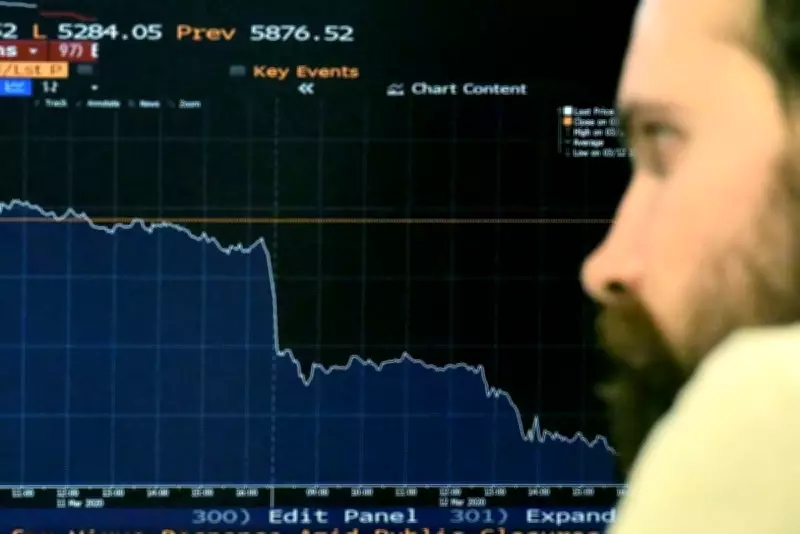
The FTSE 100 Index has officially entered correction territory on Monday, following a sharp decline of more than 2% in early trading. This drop marks a cumulative fall of over 10% from recent highs, as investors react to escalating tensions in the Middle East and fears of a prolonged conflict involving Iran.
Market Correction Triggered by Geopolitical Unrest
A market correction occurs when an index or stock falls by 10% or more from its peak, often after periods of overvaluation or in response to sudden external events. In this case, the ongoing war in the Middle East, now in its fourth week, has prompted a significant sell-off across global markets. Investors are increasingly concerned about the economic fallout and the potential for further destabilization.
FTSE 100 Performance and Milestones
London's premier benchmark, the FTSE 100, had been hovering near 11,000 points at the end of February, reflecting the collective performance of its 100 constituent companies. However, by last week, it dipped below the 10,000-point threshold for the first time since early January. The situation worsened on Monday, with the index plummeting to 9,710 points within the first two hours of trading, representing an 11% decline from its recent high point, which coincided with the initial strikes on Iran.

This downturn has also pushed the FTSE 100 into negative territory for the entire year of 2026, a notable shift after it outperformed the US S&P 500 throughout 2025. A further drop of 20% from recent highs would signal a bear market, or crash territory, highlighting the severity of the current market anxiety.
Global Market Reactions and Economic Implications
The sell-off is not confined to the UK. In Europe, Germany's Dax index fell by 1.8%, while France's Cac 40 dropped 1.4%. Asian markets also experienced heavy losses overnight, with Japan's Nikkei ending down more than 3%, as rhetoric from the US and Iran showed little sign of a peaceful resolution to the conflict.
Commodity markets have been similarly affected. Brent crude oil prices rose by 1% to nearly $114 per barrel after Iran warned it would retaliate against US threats by striking electrical plants across the Middle East. This escalation follows US President Donald Trump's 48-hour deadline, set to expire just before midnight UK time on Tuesday, demanding Iran release its grip on the Strait of Hormuz or face attacks on its power stations.
Political Responses and Investor Sentiment
Prime Minister Sir Keir Starmer is leading an emergency Cobra meeting on Monday, after a Sunday call with President Trump to discuss reopening the Strait of Hormuz shipping route. Both leaders agreed that this move is "essential" for stabilizing global energy markets. However, Iran's threat of retaliation has added to the uncertainty, fueling investor fears.
Chris Beauchamp, chief analyst at IG, commented on the situation, stating, "Investors who have spent the weekend watching fresh strikes in the Middle East are now waiting to see what will happen when Trump's 48-hour deadline expires tonight. But they are in no mood to hang around, and have continued to sell stocks and precious metals. Each day that the war goes on does more damage to the global economy and drives inflation higher, with recession chances rising by the hour."
The combination of geopolitical risks, inflationary pressures, and recession concerns has created a perfect storm for financial markets, with the FTSE 100's correction serving as a stark indicator of the broader economic anxiety gripping investors worldwide.






