

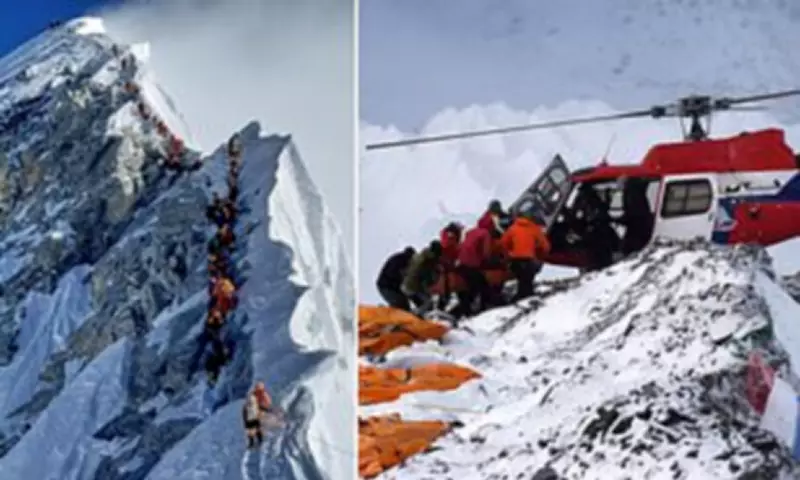
Everest Guides Accused of Lacing Food in £15 Million Helicopter Rescue Scam
A shocking new investigation has uncovered that guides leading tourists on Mount Everest are allegedly secretly drugging climbers' food to induce medical emergencies, part of a widespread £15 million insurance fraud involving costly helicopter rescues. While the world's highest peak has grown more accessible since Sir Edmund Hillary and Tenzing Norgay's historic 1953 ascent, the climb remains perilous due to harsh weather, unreliable communications, and brief seasonal windows. These conditions often force rapid rescue decisions, with helicopters dispatched before insurers can verify claims, creating a loophole exploited by unscrupulous operators.
How the Fake Rescue Racket Operates
According to the Kathmandu Post, the scam typically begins with a climber staging a medical emergency, prompting a helicopter evacuation to a nearby hospital, followed by an insurance claim that misrepresents the actual events. Nepal Police's Central Investigation Bureau (CIB) has identified two primary methods. First, some tourists, unwilling to endure the arduous two-week descent on foot, are coached by guides to fake illnesses to secure a helicopter ride. However, the second method is far more sinister, involving guides deceiving climbers into believing they are experiencing genuine medical crises.
At altitudes above 3,000 meters, altitude sickness is common, with symptoms like headaches, tingling extremities, and low blood oxygen saturation. Usually manageable with rest, hydration, or gradual descent, but the CIB reports that guides and hotel staff deliberately terrify tourists into thinking hospital evacuation is their only salvation. If persuasion fails, investigators found guides administer tablets and excessive water to exacerbate mild symptoms. In at least one instance, baking powder was mixed into tourists' food to cause physical illness, with rescuers targeting multiple individuals to maximize fraudulent payouts.

Financial Manipulation and Document Forgery
The fraud extends beyond the mountainside into financial and administrative deceit. Although helicopters often carry several passengers per trip, invoices are falsified to charge as if each required a separate charter, inflating a £3,000 flight to £9,000 or more. To support this, manifests and load sheets are forged, while hospital medical officers prepare reports using digital signatures of uninvolved doctors, often without their knowledge. In some egregious cases, fake admission records were created for tourists who were merely drinking beer in hospital cafeterias during supposed treatment periods.
Scale of the Scandal and Failed Reforms
Between 2022 and 2025, over 300 confirmed fake cases led to £15 million in fraudulent losses. Alarmingly, the issue was first identified by local media in 2019, sparking a government investigation and policy reforms, but the CIB found the fraud not only persisted but expanded. Manoj Kumar KC, head of the CIB, told the Kathmandu Post, 'The scam continued due to lax punitive action. When there is no action against crime, it flourishes. The insurance scam too flourished as a result.' Recent government efforts have seen the CIB charge 32 people earlier this month, including operators and staff from three helicopter companies, plus doctors and administrators from three hospitals, with nine arrests made and others believed to have absconded.
Future Outlook and Enforcement Challenges
Whether this rampant scam will cease depends heavily on Nepal's newly sworn-in government and its commitment to enforcing reforms established nearly a decade ago. The case highlights systemic vulnerabilities in high-risk adventure tourism, where insurance fraud can thrive without robust oversight and strict penalties. As authorities grapple with this complex web of deception, climbers and insurers alike await decisive action to restore integrity to Everest's treacherous slopes.






