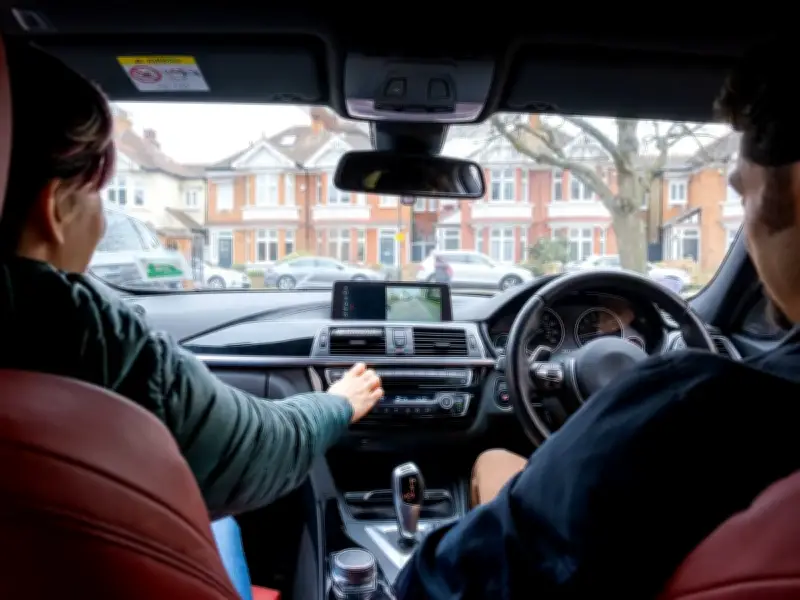
Almost half (47%) of UK drivers risk invalidating their insurance because they incorrectly believe that as long as all drivers are named on the policy, it makes no difference who uses the vehicle most, according to new research from temporary car insurance provider Tempcover.
Survey reveals widespread 'fronting' confusion
The survey of more than 2,000 UK motorists also found that one in seven (15%) have at least one vehicle in their household predominantly driven by someone other than the named main driver, a discrepancy that could constitute 'fronting'.
Fronting occurs when an individual is registered as the main driver on a policy despite another person actually being behind the wheel most of the time. It can be deliberate, such as a parent falsely declaring themselves as the primary driver of their teenager's car to reduce the cost of cover, which can be treated as insurance fraud.
It can also happen unintentionally when day-to-day household routines change. In either case, it can render a policy void and leave motorists driving without valid insurance.
Who is most at risk
While fronting is typically associated with younger drivers, 79% of cases identified in the research involve a partner or spouse, with the remainder largely concerning children, parents and other relatives. For many, it is unintentional: 14% of those with a car mostly driven by someone other than the named main driver attribute it to 'lifestyle creep', as family members gradually took over driving duties.
This reflects a broader shift towards car-sharing within households. Government figures show single-car households outnumber multi-car households by 10 percentage points, with 44% of UK households owning just one vehicle compared to 34% with two or more. Earlier Tempcover research also revealed that four in ten car owners have downsized over the past two years, with 39% of one-car households deciding who drives by 'whoever needs it most that day'.
Why policies lag behind
With fewer vehicles to go around, habits can change gradually. When a 'named' driver ends up at the wheel most frequently, common reasons include shopping and errands (26%), daily commuting or study (25%), or the school run (11%).
Often, the policy never catches up, with 18% stating the car's buyer or owner was listed by default. For others, fronting is more deliberate, with one in six (17%) doing so to secure a cheaper premium, while 15% wish to take advantage of someone else's larger No Claims Bonus.
Jon Radford, Head of Intelligence, Investigations and Data Services at the Insurance Fraud Bureau, said: "Not all insurance fraud is sophisticated, sometimes it's deceptively simple and surprisingly common, yet it still drives up premiums for honest motorists across the country."
Whether deliberate or accidental, misrepresenting who the main driver of a vehicle is could invalidate a policy, result in claims being declined and mean that the individual ends up on the Insurance Fraud Register (IFR), making it more difficult or expensive to obtain insurance in the future.
Radford added: "The Tempcover research highlights there is still significant confusion around fronting and main-driver rules. Motorists should regularly check that their policy accurately reflects who uses the vehicle most often, particularly if driving habits change over time. Helping people understand the rules can reduce mistakes, prevent fraud and protect honest customers."
Legal consequences of fronting
More than two in five motorists (43%) incorrectly believe it is acceptable to register a parent as the primary driver on a young person's car to reduce premiums, a figure that climbs to 52% amongst Gen Z. Nearly half (47%) are under the impression that it makes no difference who drives the vehicle most frequently, provided all drivers are listed on the policy, while 31% either wrongly believe that naming an experienced driver as the main driver when someone else drives more often does not constitute fronting (10%), or are simply unsure (20%).
Motorists are legally obliged to ensure they are properly insured. If an insurer discovers that a policy lists the wrong main driver, it can render the cover void, meaning the motorist has effectively been driving without insurance.
The consequences can include a £300 fixed penalty, six penalty points, an unlimited fine, possible disqualification, the vehicle being seized, and the driver being liable for the full cost of any claim. Deliberate fronting can result in prosecution for insurance fraud and a criminal record.
Jake Lambert, temporary insurance expert at Tempcover, said: "When a household shares one car, lifestyle creep can mean a named driver becomes the main driver quietly over time. But insurers don't just look at who owns the car, they look at who drives it most. Failing to update your policy when routines shift could invalidate your insurance, leaving you unknowingly driving uninsured."
Lambert added: "For households that share a car, standalone temporary insurance is a way to make sure whoever is behind the wheel is properly insured in their own right, keeping everyone legal and protecting the main driver's No Claims Bonus."