New state pension payments could be worth £1,052 less per year than they would have been within three years of the end of the triple lock, according to financial analysis commissioned by the Express.
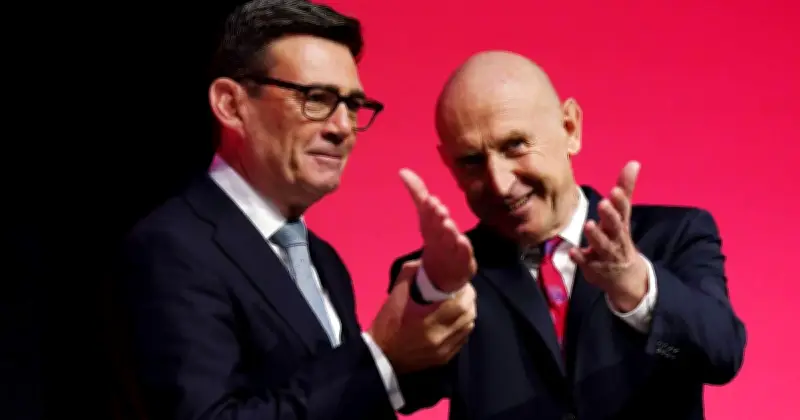
The triple lock currently increases state pension payments each April by whichever is highest of inflation, wage growth or a flat 2.5%. However, Andy Burnham announced at the Labour Party Conference this week that the triple lock is set to be modified to remove the automatic wage growth link. Instead of uprating on the three metrics each year, it will only use inflation or a flat 2.5% each April.
Earnings will still be indexed against the state pension, and if it falls significantly behind earnings, it could be brought back in line later, but it will not be automatic. The change is set to free up an estimated £15 billion in taxpayer cash, which the Prime Minister wants to invest into a new National Care Service to provide free-at-the-point-of-use social care for state pensioners.
Forecast based on past averages
Ed Monk, Pensions and Investment Specialist at Fidelity International, cautioned that the exact figures will be difficult to nail down so far in advance, with so many variables in play. But taking averages of wage growth and inflation over the past decade could provide a baseline for what the triple lock increases may be in the next three years to 2030, and how they may change beyond once automatic wage growth is removed from the equation.
He told the Express: “Trying to forecast future rates of increase for inflation and earnings is notoriously difficult. The fact the triple lock has proved so much more expensive than planned is proof of that. We can, however, use the experience of the 16 years since the introduction of the triple lock to speculate what future rises could look like.
“We can see how the triple lock has increased the state pension more quickly than any of the three measures that it comprises. Across the lifespan of the triple lock, the average annual increase in the state pension has been 4.1%. That compares to 3.3% for earnings growth and 3% for CPI inflation.
“What would happen to the state pension if this level of increase continues for the rest of this parliament, as the Government has committed to? And what could be the result if an adjusted triple lock is then applied?”
Projected payments under both systems
He explained that by 2030-31, the state pension would be worth £282.75 per week for a new post-2016 state pensioner with a full National Insurance record, having increased by an average of 4.1% in the three years between now and then. He added: “Were the same rate of increase to carry on through the next parliament, the payment could hit £331.95 by 2034/35.” This would equal payments of £17,621 per year.
But without the triple lock mechanism in place, a simple inflation-based increase would, based on average inflation rates, produce a £318.65 per week payment. This would equal payments of £16,569 per year, or £1,052 less than the triple lock system. However, one caveat to the figures is that the government could apply an adjustment if the state pension falls too far below wage growth, so the gulf between the hypothetical forecasts could still be closed if the government chose to.
Mr Monk continued: “The Government has announced, however, that - if re-elected - it would apply an adjusted triple lock. This would promise to increase the payment by the highest of: CPI inflation; 2.5%; the amount needed to ensure the state pension keeps up with average earnings growth since the introduction of the new policy.
“This will mean that the state pension rises by at least inflation or 2.5% each year. If these increases cause the state pension to grow faster than wages, it will effectively build up a cushion over earnings. Wage growth would only trigger a higher increase if the level of the state pension starts to fall below its 2030 level relative to average earnings. For example, if the value of the state pension is around a third of average earnings in April 2030, that ratio must not drop over time.”
Funding concerns raised
The Prime Minister said his proposed changes to the triple lock would be sufficient to fund his new care provisions nationally, if the care system is progressively introduced. However, in the aftermath of Mr Burnham’s address, the Institute for Fiscal Studies’ deputy director Jonathan Cribb suggested savings would not be enough.
On the same evening, Culture Secretary Lisa Nandy appeared to acknowledge it could require “additional funding” in interviews after Mr Burnham’s speech in an interview with LBC. Yet speaking to Sky News on Wednesday, Mr Burnham said: “Savings on that scale would be enough to pay for social care, but obviously they’re not released immediately.”
He went on to deny tax increases would be needed, adding: “There’s a different way of doing it. If you delay the date of introduction and you introduce a national care service progressively, but you could do it in a different way. You could do it earlier.” Mr Burnham had said during his speech the care plan would be “fully funded – and not through borrowing” where “everyone contributes and everyone is covered”.