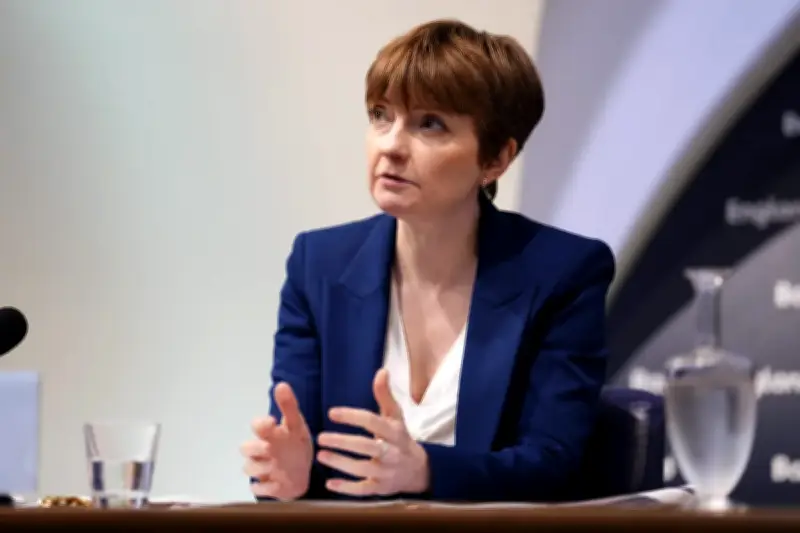
The Bank of England's deputy governor, Clare Lombardelli, has said a rise in interest rates is looking "increasingly likely" if energy prices remain high.
Speaking during a speech in Warsaw, Ms Lombardelli said energy price pressure could drive rate-setters to tighten fiscal policy unless there is particular weakness in the economy.
Ms Lombardelli, who has been a deputy governor at the Bank since 2024, was one of the six-to-three majority who voted to maintain UK interest rates at 3.75% earlier this month.
Policy tightening warning
On Thursday, she said: "The longer higher energy prices persist, the greater the risk that indirect effects build and that inflation expectations, wage bargaining and price-setting behaviour begin to adjust in response."
"On that basis, policy is increasingly likely to need to tighten if elevated energy prices persist, absent clear evidence of disinflation or weaker activity," she added.
She added: "The key issue is not the spot price of energy itself but the interaction of the underlying economy, higher energy prices, and the nature of their transmission. That, ultimately, is what will determine whether the Bank rate needs to rise."
Inflation outlook
It comes after inflation lifted to a five-month high of 3.1% last month, moving further away from the Bank's 2% target rate.
Inflation is widely predicted to keep rising over the coming months as higher energy costs continue to filter through, with households set to witness a roughly 4% rise in the energy price cap from next week.
The Bank has predicted that inflation will increase to around 3.7% in the fourth quarter of this year and 4.2% in the first quarter of 2027.
Energy shock effects
Ms Lombardelli said: "There remains material uncertainty about the size and duration of the shock and how it will pass through the economy. But the larger the energy shock becomes and the longer it persists, the more likely it is that we will eventually see significant pass-through of higher energy costs to other prices."
She also pointed towards a predicted rise in food price inflation as manufacturers pass higher energy costs on to consumers. Food inflation recently hit a two-year-low of 1.3% but is predicted to move towards 4% in the first quarter of next year, according to the Bank.