

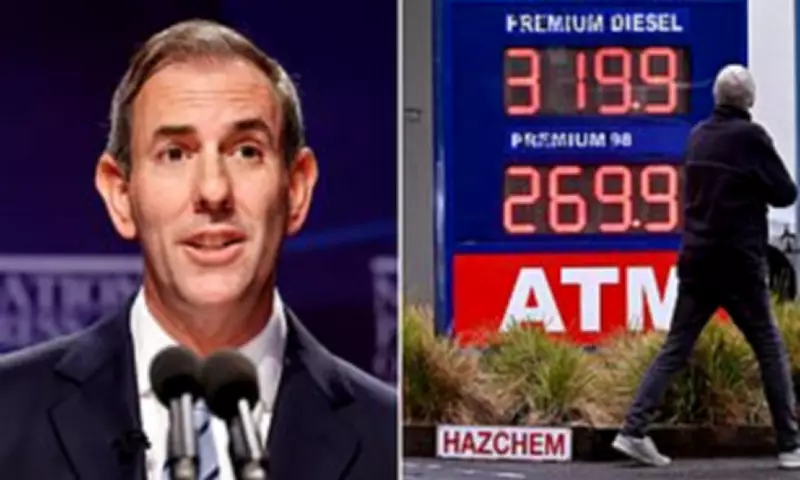
Australia's headline inflation rate declined more sharply than anticipated in April, driven by a government fuel excise cut, but an uptick in the underlying measure is set to raise concerns at the Reserve Bank of Australia (RBA).
Headline Inflation Drops to 4.2%
The Australian Bureau of Statistics reported on Wednesday that the annual consumer price index (CPI) fell to 4.2% in April, down from 4.6% in March. This was below the 4.4% forecast by economists. The decline was primarily attributed to a 7% month-on-month drop in petrol prices following the government's temporary reduction in fuel excise.
Underlying Inflation Edges Higher
However, the trimmed mean—a measure that excludes volatile items and provides a clearer picture of underlying inflation—rose slightly to 3.4%, in line with consensus expectations. This increase suggests that core price pressures remain persistent, even as headline inflation eases.

AMP economist My Bui noted that while the softer-than-expected headline reading reduces the case for further rate hikes, the RBA board will be cautious not to overinterpret a single month's data. 'Disruptions from the closure of the Strait of Hormuz continue to impact global supply chains, and the underlying impulse of price pressures, excluding the temporary easing in fuel prices, was still growing,' she said.
Fuel Prices and Supply Chain Impacts
Fuel prices fell 7% in April after spiking 32.8% in March, but they remained 23.5% higher compared to February, before the Middle East conflict escalated. ABS head of prices statistics, Sue-Ellen Luke, highlighted that higher oil prices have also affected products and services with significant freight and logistics costs, such as parcel delivery and building materials. 'This is reflected in price increases of 12.4% for postal services and 4.7% for new dwelling construction compared to 12 months ago,' she said.
Housing Inflation in Focus
Housing inflation remains a key concern for the central bank, as it often serves as an early indicator of broader inflationary pressures. Housing costs rose 6.3% annually, with rents up 3.5% amid persistently low vacancy rates across capital cities.
Market Reactions and Economic Resilience
Following a weaker-than-expected employment report for April, markets have scaled back bets on rate hikes. Traders are now pricing in only 4 basis points of rate increases for June, though they still anticipate at least one 25-basis-point hike by the end of 2026. Meanwhile, construction work done rose 3.4% to $83.4 billion in the first quarter, indicating that the economy remains resilient despite two interest rate hikes and the early impacts of the Iran war.
Treasurer Jim Chalmers acknowledged the progress but cautioned: 'Inflation came down more than expected in April, and that's a good thing, but we know that inflation is still too high in our economy.' He attributed the previous inflation challenge to the war in the Middle East, which has exacerbated price pressures. 'These are encouraging numbers, but also we understand that inflation is too high, and that's why it's a big focus of the government,' he told reporters in Canberra.






