
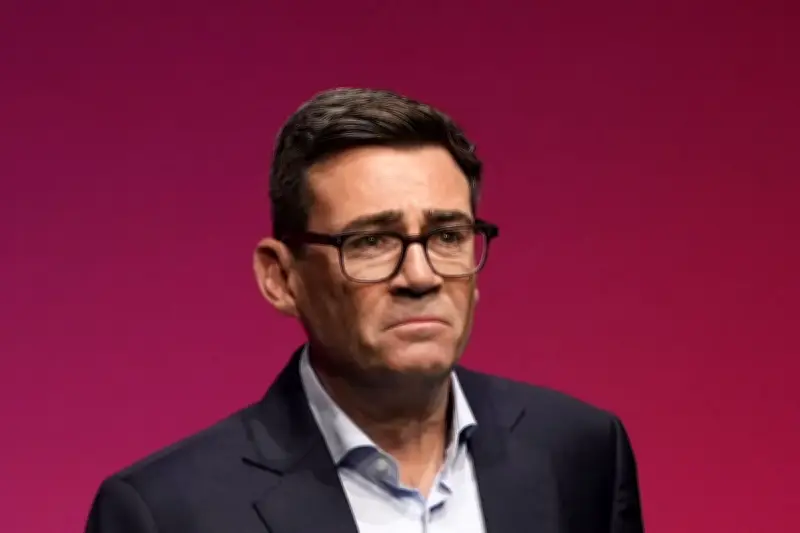
Prime Minister Andy Burnham has unveiled plans to change the way state pension increases are calculated from 2030, as part of efforts to help fund “landmark” social care reforms.
Under the proposals, pensions would rise either by CPI (Consumer Prices Index) inflation, or a minimum of 2.5%, which Mr Burnham said would generate “significant savings” by removing the link to average earnings.
How the triple lock currently works
State pension increases, which take place in April, are currently based on the triple lock policy. Under the guarantee, the state pension rises in line with whichever is the highest out of three figures: total earnings growth in the year from May to July of the previous year, CPI inflation in September of the previous year, or 2.5%.
In his first Labour conference speech as party leader and Prime Minister, Mr Burnham said he would honour the manifesto promise to keep the triple lock unchanged throughout this Parliament. But he said that in April 2030, this will be adjusted.
What would change from 2030
The state pension will continue to rise every year at least by prices or 2.5%. Mr Burnham said the change “will generate significant savings which we will use to build up our National Care Service”. He added that the state pension “will hold its value relative to earnings over time so that pensioners will always share in the rising prosperity of the nation”.
Jonathan Cribb, deputy director at the Institute for Fiscal Studies (IFS), said: “For pensioners, the reform means that state pensions will still rise in real terms over time but more slowly than under the current system, and in the long run their pensions will keep pace with growth in employees’ average earnings.”
Impact on pensioners and costs
According to a report from wealth manager Quilter, for retirees aged 65 to 79 with below-average retirement incomes of £25,000 or less, the state pension provides 57% of retirement income, while for those aged over 80 with below-average retirement incomes it accounts for 54%. The state pension accounts for nearly a quarter (24%) of income across all retirees, the analysis indicated.
The IFS has previously said that public spending on the state pension in 2026–27 is expected to be around £154 billion and that the triple lock has increased annual spending by around £16 billion, compared with uprating in line with average earnings growth since 2010. Mr Cribb said: “To give a sense of the scale of possible future savings: if the new policy had been in place since 2011, state pension expenditure this year would £9 billion lower than it is today, more than halving the £16 billion annual cost in 2026-27 of having retained the unreformed triple lock for the last 15 years.”
People relying solely on the full new state pension currently look on course to breach the personal tax allowance next year, as recent Office for National Statistics (ONS) figures showed total wage growth, including bonuses, stood at 3.9% in the quarter to July. While still to be confirmed, this implies the full new state pension could top £13,000 next year. The personal tax allowance has been frozen at £12,570 since 2021.
Reactions and future pensioners
The leader of trade union Unite said reforming the pensions triple lock to fund social care would be “morally wrong”. Speaking before Mr Burnham’s speech, Sharon Graham told BBC Radio 4’s Today programme: “Instead of going and trying to pick the pocket of pensioners, we need to move over to the other side of the equation and look at things like wealth taxes, way before we try to stop something like the triple lock.”
Kate Smith, head of pensions at Aegon, said: “For millions of people, the state pension is the bedrock of retirement income and will continue to be so. Increases in earnings will still have a role to play, so pensioners are able to share in the relative prosperity and won’t lose out if UK earnings significantly outperform price increases. However, it’s unclear how this will work in practice… We await the detail.”
In May, the Pensions Commission said around 15 million people are thought to be under-saving for their retirement. Women, low and middle earners, and the self-employed are among those who could be particularly at risk, according to the commission, which warned the number of people under-saving for later life could reach 19 million without action.




