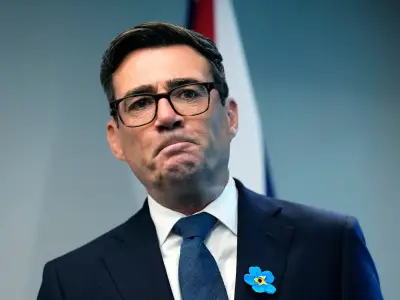
Londoners underpay £3.1 billion of property taxes each year, according to the Resolution Foundation. The think tank urged Prime Minister Andy Burnham to use the Budget to raise bills for the capital's residents further as huge council tax hikes for millions of Londoners loom.
England's council tax system, which is based on property valuations from 1991, is "regressive" and fails to account for the sevenfold property price rises seen in the city, the think tank said. The Home Economics report also called for stamp duty to be scrapped, arguing it prevents 100,000 home purchases every year.
£3.1 billion subsidy
When stamp duty and council tax were combined and the true value of homes taken into account, the Resolution Foundation calculated that in 2024-25 Londoners paid £3.1 billion too little in property taxes.
Policy analyst Hannah Aldridge said: "Our housing taxes fall heaviest on those least able to afford them and have turned into a huge £3.1 billion subsidy for those living in London paid for by households across the rest of England."
Council tax hikes loom
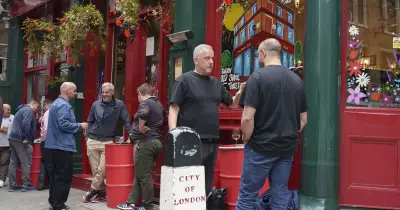
Under Labour's Fair Funding Review, five boroughs with historically very low council tax levels - Kensington and Chelsea, Westminster, City of London, Wandsworth and Hammersmith and Fulham - were given permission by ministers to hike bills by more than 5%, the usual ceiling for increases.
Wandsworth has already braced residents for a 94% rise in bills from April as it, along with the four others, will see its funding significantly slashed from next year. Westminster has said council tax will have to go 200% unless there are major cuts to services. Meanwhile, Bromley council has asked the Ministry of Housing, Communities and Local Government to be given the ability to exceed the 5% cap, and Lambeth is expected to make the same move.
Wandsworth council's deputy leader Peter Graham, who is cabinet member for finance, said it did not take the decision to impose a record council tax rise lightly. He said: "We promised that we'd be honest with residents. Council tax will need to rise unless Government thinks again. And it must think again."
Mansion tax concerns
It comes as nearly 62,000 more London homeowners could be forced to pay the new "mansion tax" if Mr Burnham decides to lower the threshold for paying it to £1.5 million, according to experts. Such a controversial move is said to be a "live" discussion within the Treasury as Chancellor John Healey prepares to deliver the Budget on October 28.
The original plans unveiled by his predecessor Rachel Reeves, which apply to properties worth over £2 million, will hammer homeowners with additional annual charges of between £2,500 and £7,500 from April 2028. But if Mr Healey decides to lower the threshold to £1.5 million it will be even more punitive on the capital.
Hammersmith and Fulham, Wandsworth, Kensington and Chelsea, Westminster and Camden would be the boroughs hardest hit by extending the reach of the levy. Wandsworth, Kensington & Chelsea, Westminster, and Richmond councils have written to Chancellor John Healey urging him to reverse the planned levy. They say residents will be forced to pay over £270 million each year, which would be more than half of the £400 million which is expected to be raised.
Pensioners who purchased their homes many years ago and are asset rich but cash poor would be hardest hit, they argue. In response to the councils' criticism of the wealth tax, a Treasury spokesperson said: "This tax is expected to raise more than £400 million a year to help to fund public services and it will address a longstanding unfairness in our country, where a Band D home in Darlington or Blackpool pays more in council tax than a £10 million mansion in Mayfair."