
A senior European Central Bank policymaker has warned that the climate emergency and the breakdown of nature pose a dramatically growing risk to the global economy. Frank Elderson, a member of the ECB’s executive board, said the eurozone lender was intensifying its scrutiny of financial risks tied to the destruction of “ecosystem services” — nature-related processes or assets that underpin human activity.
“These services are not stable but they are in rapid decline. That’s why we talk about the climate and nature crises,” he said. “So knowing that dependency, and knowing those exposures by the banks, we come to the conclusion that this is relevant.”
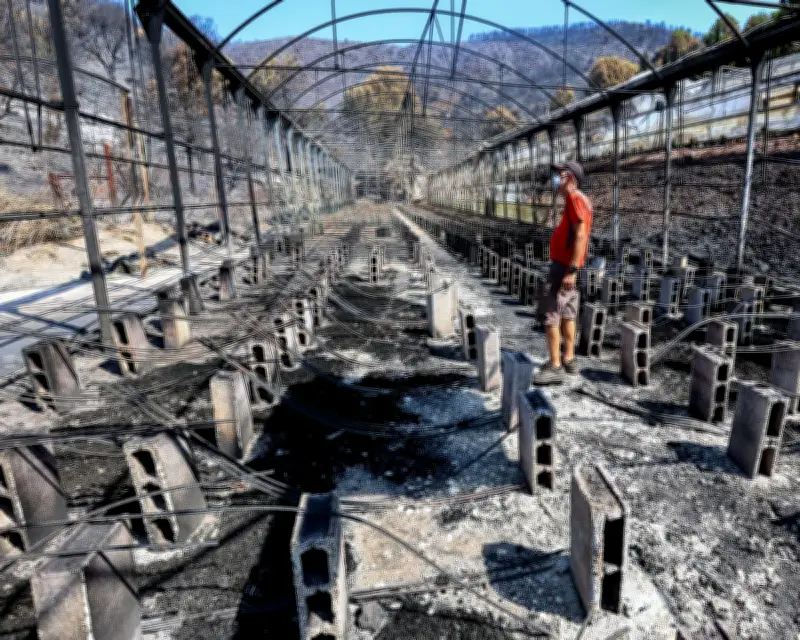
The warnings come as wildfires burn across France and Spain amid record temperatures, laying waste to land, businesses and homes. The emergency will bring a heavy economic cost on top of its direct human toll.
Nature-related risks can hit banks
Speaking to the Guardian before the current devastation unfolded, Elderson said the increasingly frequent natural disasters caused by global heating posed a clear threat to financial stability. He said more work was still needed to evaluate the danger of ecosystem collapse, because dependence on nature is harder to map than the impact of a single extreme weather event.
“Nature-related risks can pose material economic and financial risks, including through their impacts on credit risk, growth, inflation and – over the long-term – potential financial instability,” Elderson said.
Ecosystem services are the benefits that people obtain from natural structures or processes. Water, for instance, serves as a raw material, an energy source through hydropower, or a transport route; it also provides habitat for marine life crucial to food production and supports recreation.
Core economics, core stability
“I did interviews [previously] saying, you know, if you destroy nature, you destroy the core on which our economies depend. And that got people’s attention. This is not some kind of a flower-power, tree-hugging exercise. This is core economics. This is core financial stability, core price stability.”
ECB supervision and political backdrop
In its role as supervisor of Europe’s biggest banks, the ECB has launched a programme to examine how worsening damage to ecosystem services might expose the financial system to risk. Later this year, it plans to release analysis exploring how “ecosystem degradation pathways” could translate into credit losses for lenders in the eurozone.
Elderson, a Dutch lawyer and central banker, helped create the Network for Greening the Financial System (NGFS) in 2017 alongside Mark Carney and François Villeroy de Galhau, then the chiefs of the Bank of England and Banque de France. He was the founding chair of the body, which now groups 114 global central banks and financial supervisors working to develop climate risk management.
The green agenda in financial services has met resistance under Donald Trump’s presidency, with some businesses keen to stay engaged in the fossil-fuel economy. Trump pulled the US out of the NGFS last year, leaving Europe to drive climate-related risk work without the world’s biggest economy.
Banking industry remains committed
Elderson said the banking industry remained convinced that climate and nature-related risks had to be dealt with. “I would think it’s very difficult to find a bank in Europe that will honestly tell you that they think this is not relevant,” he said. “I think that time has passed.”




