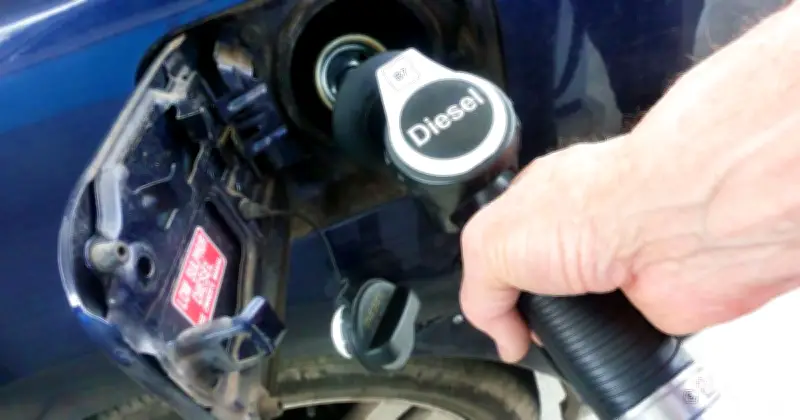
The average price of a litre of diesel in the UK has passed £2 for the first time, the RAC said on Friday. A litre now costs an average of 200.01p, up from 199.79p on Thursday.
Record high and possible further rises
Prices have risen steadily in recent weeks and reached a new record high on Monday, surpassing the previous peak set in June 2022 in the wake of Russia’s invasion of Ukraine, a record which has already been broken today. But with US President Donald Trump urging Europe to drain its diesel reserves as he threatens to impose a diesel export ban, there is still a strong possibility that prices may rise even further in the next few days.
Moody's Analytics economist Kamil Kovar said on X on Friday that the squeeze on diesel refineries may continue and get worse heading into the winter: "On length, refinery squeeze on diesel might last well into the next year, and might even increase in near term as we enter holiday season."
Impact on households and businesses
The RAC’s head of policy, Simon Williams, said £2 a litre was a threshold that ‘no-one wanted to cross’. "This will be very challenging for households and companies that drive a lot of miles, from commuters, haulage and delivery firms, businesses with large fleets all the way through to sole traders. In a cruel twist, it’s diesel vehicles, which were once considered the most cost-effective option for lengthy journeys, that are now burning a hole in people’s pockets."
Petrol prices have also been on the rise, with a litre of unleaded now standing at 174.71p on average, around 42p more than at the start of the conflict. It means that the cost to fill an average-sized petrol car now stands at £96 overall.
Williams added: "For an average 45mpg diesel car, the cost works out at an extraordinary 20p per mile, so a driver covering 10,000 miles a year is now spending £2,020 on fuel a year. Households will be tightening the purse strings, while businesses may have no option but to pass these additional costs onto customers.
"The previous highest price of 199.09p seen in June 2022 is already becoming a distant memory as the conflict in the Middle East continues with no sign of a deal to reopen the critical oil and gas shipping route through the Strait of Hormuz."
Government response
The RAC said that drivers will be looking to the Government to assist with the rising fuel bills by ‘lowering fuel duty further or reducing VAT in October’s budget’.
Earlier on Thursday, US President Donald Trump had said he “may” call for European countries to draw down from their reserves. Britain joined crisis talks with Brussels on Thursday on whether to release fuel stocks amid soaring prices.
Transport minister Keir Mather said the UK had a wide range of sources of fuel, and that the Government is working with European countries over supply. Mr Mather told Sky News: "I want to reassure people this morning that the United Kingdom has got a diverse range of supply when it comes to diesel.
"We have resilience built into our system for that reason. We are working very closely with our US counterparts to stress the importance of that relationship, and the importance of sustaining flows of diesel around the world, but also working through international fora in the International Energy Agency and partners in Europe from whom we get a proportion of our diesel imports as well."
He added: "Although prices have gone up at the pump, the Government is aware of that and the freeze in fuel duty is still in place. People shouldn’t be concerned about shortages because of the inherent resilience that is built into that system."
Under questioning from Nick Ferrari on LBC on whether he agreed with President Trump about European diesel reserves, he said: "We’re working closely with our European partners on diesel supply. It means we’re continuing those discussions about how we retain our resilience and robustness of our supply chains.
"President Trump is welcome to make those comments, we’ve got to focus here at home about ensuring that we have diversity of supply into our economy. Our European partners are absolutely central to that, particularly the flows of diesel coming through the Netherlands."
A Department for Energy Security and Net Zero spokesperson told the Express: "We have a diverse and resilient supply. We continue to engage with our international partners and the UK fuel industry."