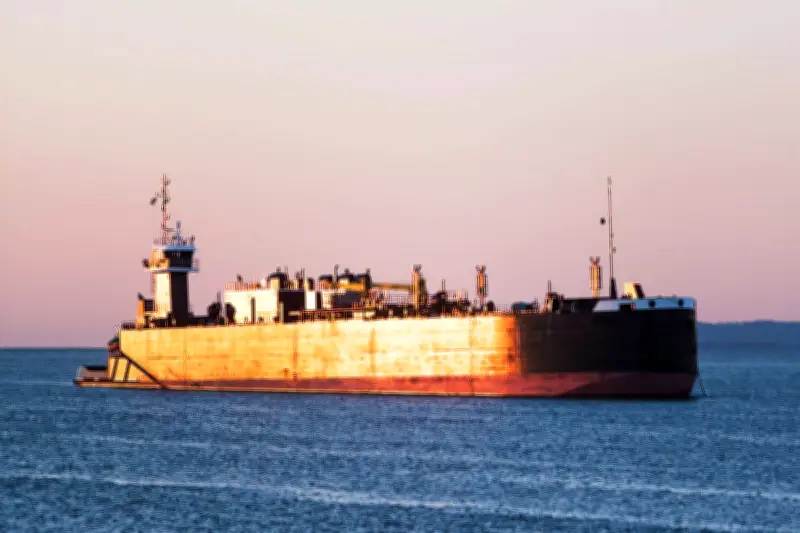
Britain's economy could be pushed into recession next year if the Strait of Hormuz remains closed into 2027, according to the latest EY economic outlook. The report warns that gross domestic product would slow to 0.5% this year and contract by 0.2% next year if the Middle East conflict is not resolved and the vital waterway – through which a fifth of the world's oil and gas is normally carried – stays shut until early or mid-2027.
The warning comes as oil prices have rocketed above 100 US dollars a barrel for the first time in nearly four years, with the escalating conflict in Iran sparking a mounting crude supply crisis.
Recession scenario and inflation
In this adverse scenario, inflation could soar to 6.4% by the end of 2026 due to surging oil and energy prices, the report cautions. An extended closure of the Strait of Hormuz would raise inflation and could push the economy into contraction next year.
If the Strait reopens by the end of the third quarter of this year, however, EY's base case forecast suggests growth will remain fairly resilient. The firm has upgraded its outlook to 0.9% expansion in 2026 and maintained its prediction for 1.2% growth in 2027, compared with a previous forecast of 0.8% growth in 2026.
Interest rates and Bank of England
The report also expects interest rates to remain at 3.75% for the rest of 2026, followed by two cuts in April and July next year, leaving rates at 3.25% by the end of 2027.
This follows the Bank of England's latest rates decision last week, when it voted to hold at 3.75% but signalled it stands ready to hike rates if the Iran war continues for many months and sends inflation rocketing. The Bank suggested that Consumer Prices Index (CPI) inflation – recorded at 2.6% in June – is likely to peak around 3.2% later this year, before steadily easing back towards the Bank's 2% inflation target.
Business and consumer impact
Peter Arnold, EY UK chief economist, said: “The UK economy has proved more resilient than many expected this year, prompting a modest upgrade to our growth forecast. Ongoing disruption to global energy markets will now start to test this economic resilience. If the Strait of Hormuz reopens in the coming months, we expect the UK to avoid a more pronounced downturn, but an extended closure into 2027 would raise inflation and could push the economy into contraction next year.”
The report cut its prediction for business investment to a fall of 0.7% in 2026, down from a previous forecast for it to remain stable. Household spending is also set to remain subdued as consumers face higher prices and delayed interest rate cuts, with consumer spending expected to grow by 0.3% in 2026 before improving to 0.9% in 2027.