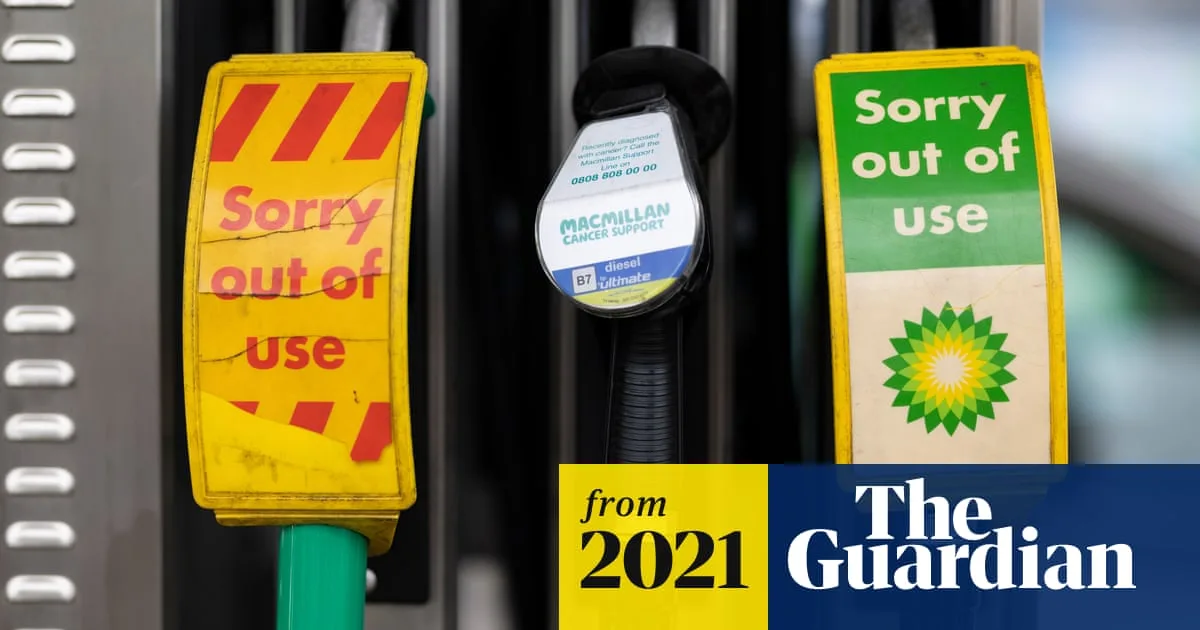
Up to 100 BP forecourts in the UK are short of at least one grade of fuel, with several forced to close entirely due to a lack of deliveries, the company confirmed on Thursday. The shortages stem from a nationwide lack of HGV drivers, which has disrupted supply chains across multiple industries.
Esso reported that a handful of its petrol stations operated alongside Tesco Express stores were affected, while some of the supermarket chain’s own-branded sites also experienced outages. Queues formed at petrol stations in London and Kent on Friday as motorists rushed to fill up, despite Downing Street insisting there is no fuel shortage.
Rod McKenzie of the Road Haulage Association accused ministers of “government by inertia”, allowing the situation to worsen gradually. He called for a short-term measure to allow drivers onto the shortage occupation list and for “seasonal visas” for foreign drivers. A BP spokesperson apologised for any inconvenience, attributing the issues to a lack of both unleaded and diesel grades at some sites.
Boris Johnson’s spokesperson acknowledged issues across several industries but stressed there was no need for concern, stating: “It’s important to restate that there’s no shortage of fuel, so people should continue to buy it as usual.” Opposition parties criticised the government’s response, with shadow transport secretary Jim McMahon condemning “a rapidly worsening crisis that the government has failed to heed the warnings of for a decade”.
Meetings between the government and food industry executives were expected on Friday, with company bosses hoping for action on driver shortages. One Conservative MP urged dramatic steps, including drafting in the military and cutting fuel taxes. Details of the disruption emerged after a meeting where BP’s head of UK retail, Hanna Hofer, described the situation as “bad, very bad”, noting that forecourt stock levels were at two-thirds of normal and declining rapidly.