

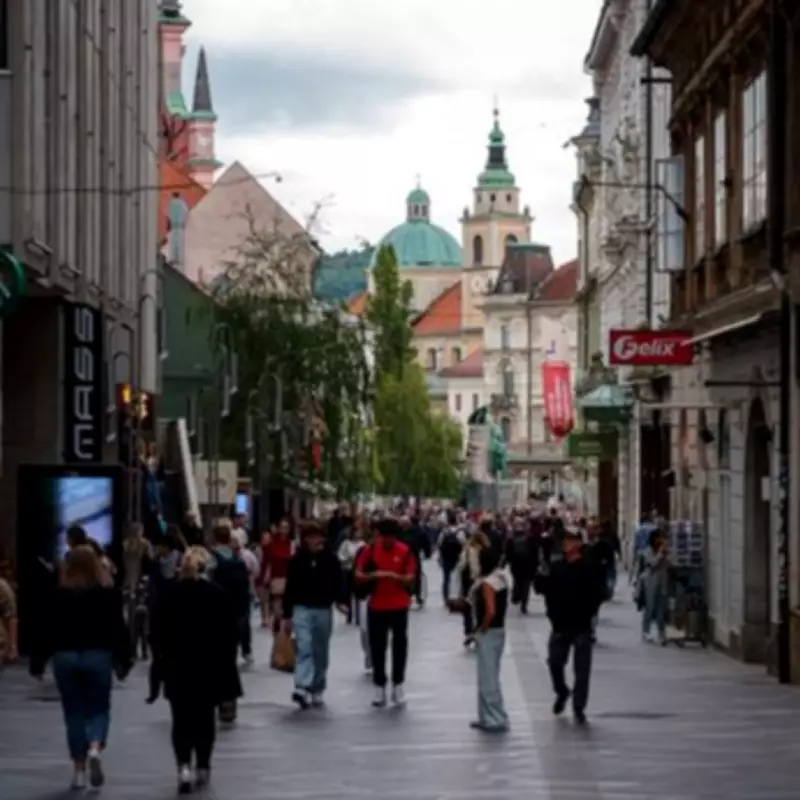
Slovenia has made history by becoming the first member state of the European Union to implement nationwide fuel rationing measures. This unprecedented move comes in direct response to the escalating conflict in the Middle East, specifically involving US-Israeli attacks and Iranian counterstrikes in the Gulf region, which has severely disrupted global energy markets.
Drastic Measures Amid Market Volatility
The ongoing military confrontations have triggered a dramatic surge in fuel prices across numerous countries, creating significant market volatility that shows no signs of abating. This instability has particularly affected European nations, with Slovenia finding itself at the epicentre of what has been termed "fuel tourism" as motorists from neighbouring countries seek cheaper alternatives.
Specific Rationing Limits Implemented
The Slovenian government has established clear rationing parameters that took effect immediately. Private drivers within Slovenia are now restricted to purchasing a maximum of 50 litres of fuel per day. In contrast, businesses and agricultural operations receive more generous allowances, permitted to acquire up to 200 litres daily to maintain economic activity.

Prime Minister Robert Golob addressed the nation over the weekend, attempting to reassure citizens about fuel availability. "Let me reassure you that there is enough fuel in Slovenia, the warehouses are full and there will be no fuel shortages," Golob stated emphatically, though his words came as many Slovenians witnessed unusual scenes at petrol stations.
Enforcement and Cross-Border Challenges
Enforcement of these new restrictions falls primarily to petrol station staff, who are now responsible for monitoring purchases and ensuring customers do not exceed their daily limits. The government has specifically urged fuel retailers to impose stricter limitations on foreign drivers, who have been crossing borders in significant numbers to take advantage of Slovenia's comparatively lower, regulated prices.
This cross-border phenomenon has become particularly pronounced with Austrian motorists, where fuel prices have reached considerably higher levels. In Austria, a litre of Euro-super 95 petrol currently costs approximately €1.80 (£1.56), while diesel approaches the €2 threshold. Meanwhile, Slovenia maintains price ceilings of €1.47 for petrol and €1.53 for diesel respectively, though these prices are anticipated to increase further.
Regional Context and Political Reactions
Slovenia is not alone in implementing restrictions, with Hungary's MOL petroleum company having already introduced a 30-litre daily limit at its nationwide stations. However, Slovenia represents the first EU country to implement such measures at a national government level.
The situation has sparked political commentary, particularly from Austrian far-right Freedom Party leader Herbert Kickl, who has documented refuelling excursions as political propaganda. Sharing photographs of Austrian-registered vehicles queuing at Slovenian filling stations, Kickl posted: "Isn't this sad that we live in a country where it has become necessary for many to go abroad so that life is cheaper?"
Mixed Local Reactions
Within Slovenia, reactions to the influx of "fuel tourists" have been decidedly mixed. Many Slovenians view the visitors as a nuisance, contributing to lengthy queues and creating perceived shortages for local residents. A lorry driver at Sentilj, near Slovenia's northern frontier with Austria, expressed the prevailing uncertainty to local media, questioning whether his country was effectively "at war" given the extraordinary circumstances at filling stations.
"I've never experienced anything like this before," the driver remarked, capturing a sentiment reportedly widespread across the nation according to BBC reports. Yet other Slovenians adopt a more pragmatic perspective, noting that "fuel tourists" frequently extend their journeys beyond mere refuelling, spending money in local restaurants and shops, thereby providing some economic benefit to border communities.

The Slovenian government's rationing measures represent a dramatic response to global energy market disruptions, setting a precedent within the European Union that other member states may need to consider should the Middle East conflict continue to destabilise fuel supplies and pricing structures across the continent.





