

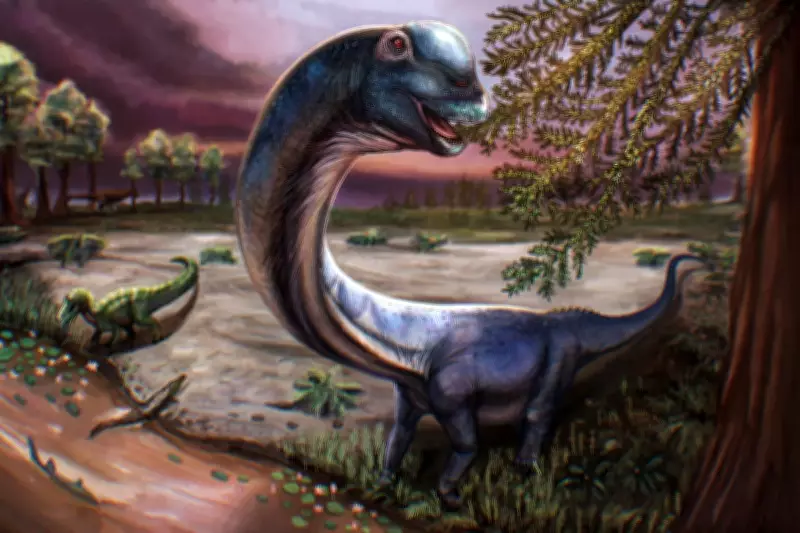
A colossal new species of plant-eating dinosaur has been identified in Thailand, marking the largest fossil ever found in Southeast Asia. The dinosaur, named Nagatitan chaiyaphumensis, measured nearly 90 feet (27.4 meters) in length and weighed an estimated 25 to 28 tons, according to researchers.
Discovery and Significance
The remains were unearthed in Thailand's northeastern Chaiyaphum province after a local villager spotted bones protruding from the ground. Subsequent excavations revealed a largely complete skeleton, allowing scientists to confirm that Nagatitan represents a previously unknown genus and species of sauropod. Sauropods were long-necked, long-tailed herbivores that included some of the largest land animals ever to have lived.
This discovery is particularly significant because it sheds light on the diversity of sauropods in Southeast Asia during the Cretaceous Period, approximately 113 million years ago. At that time, the region was characterized by subtropical landscapes and high global temperatures, with elevated atmospheric carbon dioxide levels.

Physical Characteristics and Lifestyle
Nagatitan was a bulk browser, meaning it consumed vast quantities of vegetation to sustain its enormous body. Its immense size would have provided substantial protection against predators in its ecosystem, which included large theropod dinosaurs. The dinosaur's long neck allowed it to reach high into trees, while its long tail may have been used for balance or defense.
Scientists estimate that Nagatitan's weight was comparable to that of several modern elephants. Its bones were robust and heavily built, supporting its massive frame. The species name, chaiyaphumensis, honors the province where it was found.
Implications for Sauropod Evolution
The discovery provides crucial insights into sauropod evolution and adaptation in Southeast Asia. During the Cretaceous, this region experienced fluctuating climates and sea levels, which influenced dinosaur distribution and diversity. Nagatitan's presence suggests that sauropods thrived in these environments, and its size indicates that they were able to exploit abundant plant resources.
Researchers believe that further excavations in the area could yield additional fossils, potentially revealing more about the ecosystems of the time. The find also underscores the importance of local community involvement in paleontological discoveries.
Future Research
Detailed analysis of Nagatitan's bones is ongoing, with scientists examining growth patterns, diet, and possible relationships to other sauropods. The fossil will be housed in a Thai museum for public display and further study. This discovery not only enriches our understanding of dinosaur diversity but also highlights the paleontological potential of Southeast Asia.






