
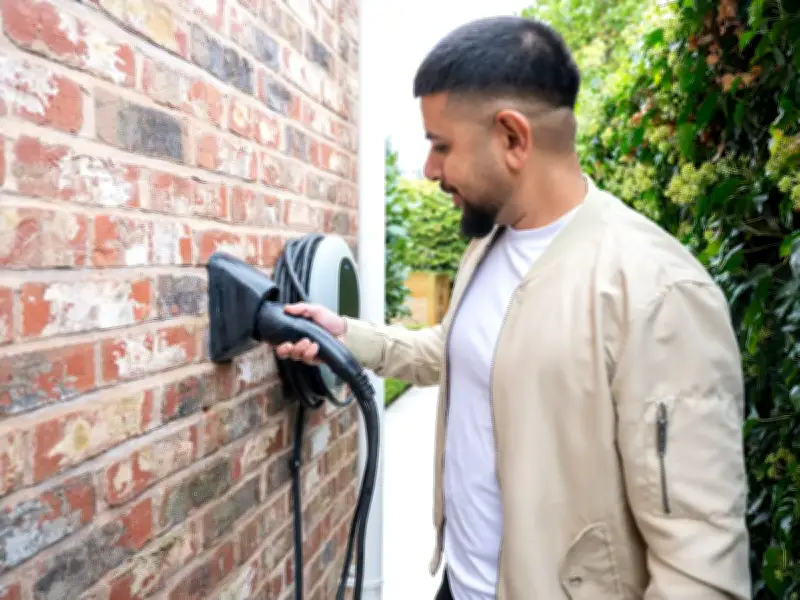
Electric vehicle owners will see a slight increase in home charging costs from Thursday, October 1, following the latest energy price cap change. However, motoring experts say the costs will remain significantly lower than for those using petrol and diesel.
New figures from Carwow show that electric vehicles (EVs) remain cheaper to run than petrol and diesel cars, as the cost of filling up continues to rise.
Energy price cap rise and its impact on charging
The energy price cap is set to rise by 4% from October 1, taking the average annual dual-fuel bill from £1,166 to £1,723. However, electricity prices are increasing far less sharply than gas, meaning the cost of charging an EV at home is set to increase only marginally.
The electricity unit rate will rise by just 0.8%, from 26.11p to 26.32p per kWh, while the daily standing charge will actually fall by 4.1%, from 57.19p to 54.83p, following a cut in VAT. Gas prices, by comparison, are rising much more sharply, with the unit rate increasing by 8.7% and the daily standing charge by 2.2%.
Since the previous energy price cap, petrol has increased by more than 15%, from 151.02p to 174.13p per litre, while diesel has risen by 19%, from 167.12p to 199.18p.
EV running costs compared to petrol and diesel
Siobhan Doyle, consumer writer at Carwow, said: “Despite the rise in electricity prices EVs remain much cheaper to run than petrol and diesel cars – particularly for drivers who can charge at home, thanks to the VAT cut, as most EV charging - around 80% - happens at home, and home charging costs are directly linked to energy prices. A typical electric car travels three to four miles per kWh, meaning that, at the newly announced rate of 26.32p per kWh, driving 1,000 miles could cost roughly £66-£88 in electricity, up by around £1 (less than 1%) from £65-£87.
“Charging a 60kWh battery from empty could cost around £15.79 from October 1, up from £15.57 – that is a rise of just 1.4% compared with the current cap. To drive a petrol car 1,000 miles currently costs around £220 – up £30 from £190 when the previous price cap was in place, while for a diesel it would be £34 more at £211, up from £177.5.”
Tips to reduce EV charging costs
Siobhan shared tips for making your EV as cheap as possible to run.
Switch to an EV energy tariff: “One of the biggest savings opportunities comes from using a specialist EV tariff,” explains Siobhan, “Many suppliers now offer overnight electricity rates designed specifically for electric car owners. For example, a standard daytime rate ranges from around 25p to 45p per kWh, while a typical overnight EV tariff tends to be around 8p-15p per kWh - that means a full charge could cost almost a quarter of the daytime price.
Charge overnight whenever possible: “Even without a dedicated EV tariff, many time-of-use electricity plans offer cheaper rates outside peak demand hours,” said Siobhan. “Peak electricity demand usually happens early in the morning and between 4pm and 7pm, so try and charge overnight – it reduces strain on the grid and, if you’re on the right tariff, lowers your costs.”
Avoid rapid chargers for every use: “While public rapid chargers are convenient, and make sense for long distance journeys, emergencies and for drivers with no access to a home charger, they tend to be the most expensive way to charge an electric car,” says Siobhan. “You’re looking at an average of around 79p per kWh, according to Zapmap, while home charging is roughly 7p-26p per kWh depending on the tariff – that is three to five times more than smart home charging, so avoid them unless you really need to.”
Use smart charging features: “Most modern EVs include features such as delayed charging timers, off-peak scheduling and charge limit settings, all designed to help owners save money automatically,” explains Siobhan, “and some suppliers and apps can even adjust charging times automatically based on live electricity prices. Take advantage of these features where they are available – the less charging you do during expensive peak periods, the better.”
Improve your driving efficiency: “Reducing how much electricity your car uses is just as important as lowering the unit price,” says Siobhan, “and there are a few simple things you can do to improve your EV’s efficiency. For example, driving smoothly, reducing your speed on the motorway, keep your tyres properly inflated, remove any unnecessary roof boxes or weight and use eco driving modes where possible.
“In the colder months, consider pre-heating the car while plugged in or using your heated seats instead of blasting cabin heating - these small efficiency improvements can noticeably reduce charging frequency over a year.
Compare charging networks before long trips: “Public charging prices vary enormously between networks,” warns Siobhan, “so before travelling it is worth checking charging apps, comparing pence-per-kWh prices, looking for supermarket or destination charging discounts and avoiding ultra-rapid charging unless necessary. Just a little bit of planning can save more than you’d think – especially on longer journeys.”
Siobhan concludes: “The latest energy price cap is another reminder that electricity prices remain volatile. But electric car drivers still have more control over their running costs than petrol and diesel motorists. By following a few simple charging habits, you could save hundreds of pounds over the next year.”




