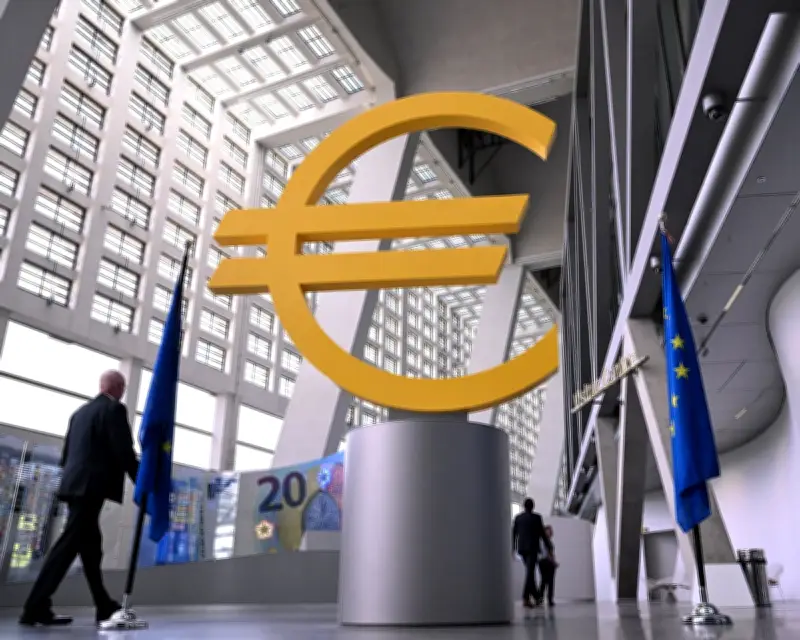
The European Central Bank (ECB) has raised interest rates for the first time since 2023, responding to higher inflation triggered by the war in Iran. The ECB increased its main deposit rate from 2% to 2.25%, a move financial markets anticipate as the first of three rises by next spring.
Inflation Concerns Drive Rate Decision
Eurozone consumer price inflation climbed to 3.2% in May 2026, up from 3% in April, raising fears that the Middle East conflict will compel manufacturers and retailers to push through price increases during summer and autumn to protect profit margins. The ECB’s inflation target remains 2%.
ECB President Christine Lagarde stated that the inflation and broader economic outlook remain uncertain while the war in Iran continues to elevate energy costs. “The full implication of the war for medium-term inflation and growth will depend on the intensity and duration of the energy price shock, as well as the scale of its indirect and second-round effects,” she said.
ECB's Early Intervention
The rate increase is widely viewed as an attempt by the ECB to curb inflation early, following criticism that it delayed rate rises in 2022 after Russia’s invasion of Ukraine. The interest rate on main refinancing operations, used by commercial banks to borrow from the ECB, was also raised to 2.4% from 2.15%.
ECB officials revised their eurozone growth forecasts downward, predicting 0.8% in 2026 and 1.2% in 2027, compared to previous estimates of 0.9% and 1.3%.
Lagarde noted: “The risks to the growth outlook are to the downside, mainly owing to the war in the Middle East, which has added to the volatile global policy environment. Prolonged disruption of energy supplies could increase energy prices further and for longer than currently expected.”
Peace Deal Hopes Fade
The central bank had kept rates unchanged until now, hoping for a US-Iran peace deal that would limit the need for a rate rise to counter inflation. However, no deal has materialized, and oil prices remain above $90 per barrel, compared to about $70 before the war.
Lagarde revealed that in March, the governing council considered “looking through” the energy price rise from the conflict, but it became clear that higher oil and gas prices were already driving inflation upward.
Market Reactions and Forecasts
Mark Wall, chief European economist at Deutsche Bank, commented: “This is a significant moment. Not only is this the first ECB hike since 2023, it is also the first hike by one of the major global central banks in response to the energy shock. The ECB is saying that a ‘look through’ strategy is not a robust response.”
However, Wall argued that financial markets are mistaken in expecting two more rate rises by next March, given the weakening economy with rising unemployment and slowing growth. “The question is how far can this tightening cycle go. Not far is our answer. There is upside risk to inflation, but there is also downside risk to growth. One more hike in September and that’s it.”
Other Central Banks
The Bank of England is expected to keep UK interest rates at 3.75% when it meets next week, assessing the impact of rising energy prices on inflation, which fell to 2.8% in April but is projected to rise this summer. The US Federal Reserve is also anticipated to hold rates steady despite having the highest inflation among G7 economies at 4.2%.