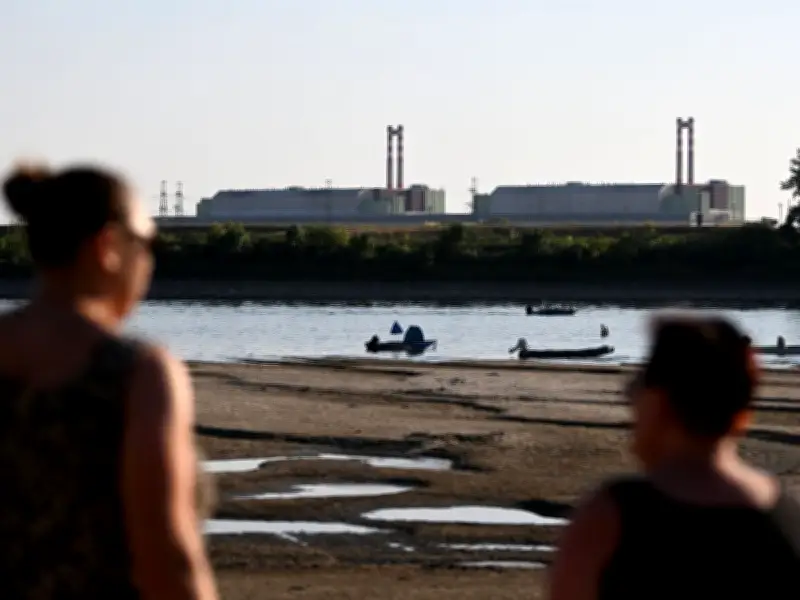
Hungary's only nuclear power plant is set to shut down for the first time in its history after a drought caused record-low water levels on the Danube River, potentially leading to blackouts in the central European nation.
The Soviet-built Paks nuclear plant, located around 50 miles south of Budapest, is currently running at reduced capacity and could be fully powered down by Tuesday or Wednesday, according to Prime Minister Peter Magyar. The plant, which generates about half of Hungary's electricity, uses water from the Danube to cool its reactors, but the river has dried up amid the drought.
Critical Days Ahead
Prime Minister Magyar said the country is facing the "most critical five days ahead" and warned that "an energy crisis situation may arise from Monday." In a Facebook video, he stated, "We are facing the most critical five days ahead. The power grid, our public services and ourselves will all come under enormous strain."
On Sunday, the plant, operational for 44 years, was producing only 965 megawatts of power, less than half its usual capacity of 2,000 megawatts. Magyar, speaking at a news conference at the plant on Friday, said further reductions were imminent and the whole plant would likely be shut down.
Energy Conservation Measures
The government has asked households and companies that use large amounts of energy to voluntarily reduce consumption, especially during peak hours between 5pm and 10pm. Water restrictions have been imposed in over 100 cities and villages, including areas around Budapest.
Magyar also recommended suspending parliamentary sessions on Monday and Tuesday to conserve energy. The vice chairman of the country's leading party said on Facebook that this crisis could cost Hungary between 100bn and 200bn forints (£235m to £470m) due to increased energy import costs.
Regional Impact
The European Commission said it is closely monitoring the situation and could launch an emergency meeting of its Electricity Coordination Group. The Danube crisis has also affected other nations; in Romania, the Navy blasted rocks along the river to divert water toward the Cernavoda nuclear power plant, also due to low water levels.