

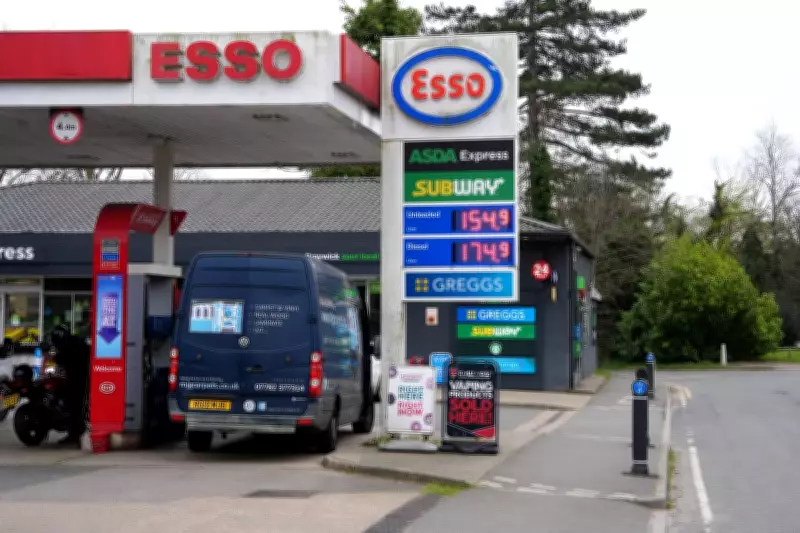
Diesel Costs Surpass £100 Milestone as Oil Crisis Intensifies
The cost of filling a typical family car with diesel has broken the £100 barrier for the first time in over three years, according to new figures released on Tuesday 31 March 2026. Average diesel prices at UK forecourts have surged to 182.8p per litre, marking a sharp 40p increase since the Middle East conflict began on 28 February. This dramatic rise means that refuelling a 55-litre family car now costs £100.52, a milestone not witnessed since December 2022.
Petrol Prices Also Climb as Crisis Deepens
Petrol prices have followed a similar upward trajectory, with the average litre now standing at 152.8p, up 20p since the war started. The UK's most expensive petrol is currently being sold for 199.9p per litre at Avenue Garage in Northwich, Cheshire, highlighting the severe impact on consumers across the nation.
Simon Williams, head of policy at the RAC, commented on the situation, stating: "RAC analysis of wholesale fuel data points towards the price of petrol potentially stabilising if the cost of oil doesn't increase further, although diesel still looks likely to rise." This cautious outlook underscores the ongoing volatility in fuel markets.

Geographic Disparities in Fuel Costs
Data compiled from pump price comparison website PetrolPrices.com reveals significant regional variations in fuel expenses:
- A litre of diesel costs up to 217.0p at some forecourts in rural Scotland.
- The most expensive motorway service area for diesel is Euro Garages' Rivington Services on the M61 in Bolton, Greater Manchester, where the price is 200.9p per litre.
- Welcome Break's Woodall Services on the M1 in Sheffield has the highest price for petrol, at 189.9p per litre.
Economic Impact on Motorists
The motoring research charity the RAC Foundation has estimated that the recent rises in pump prices have led to motorists paying an additional £544 million for petrol and diesel. This substantial sum consists of £409 million for diesel and £135 million for petrol, based on average daily pump price increases and last year's fuel consumption rate.
Steve Gooding, director of the RAC Foundation, warned: "At the current rate that fuel prices are rising, the war will have cost motorists at least a billion pounds at the forecourt within the next couple of weeks." This projection highlights the severe financial strain on drivers.
Supermarket vs Non-Supermarket Price Gaps
The AA reported that the petrol price gap between supermarket and non-supermarket retailers has widened from 5.4p per litre before the war began to 7.6p per litre. Diesel shows an even larger disparity at 8.8p per litre. The AA noted that this widening price difference helps explain why many drivers were "drawn to the supermarkets" last weekend, which led to "pressure" on their fuel supplies.
Government Initiatives and Data Transparency
In response to the crisis, the Government published a list on Tuesday of some third-party fuel-price apps and websites using pump price data from its Fuel Finder scheme. These include:
- Confused.com
- DriveScore
- Fuel Finder UK
- Fuel Spy
- MotorMouth
- PetrolPrices.com
- RAC Fuel Watch
- The AA
Since 2 February, all UK forecourts have been required to report price changes to the Fuel Finder database within half an hour of any adjustment, enhancing transparency for consumers.
Root Causes of the Price Surge
The primary driver behind these escalating costs is the disruption to petrol supplies caused by Iran's stranglehold on oil tankers passing through the key international shipping route in the Strait of Hormuz. Oil prices, which have a significant effect on the cost of wholesale fuel, have soared in response to this geopolitical tension, directly impacting prices at the pumps and pushing the cost of diesel beyond the £100 threshold for family vehicles.






