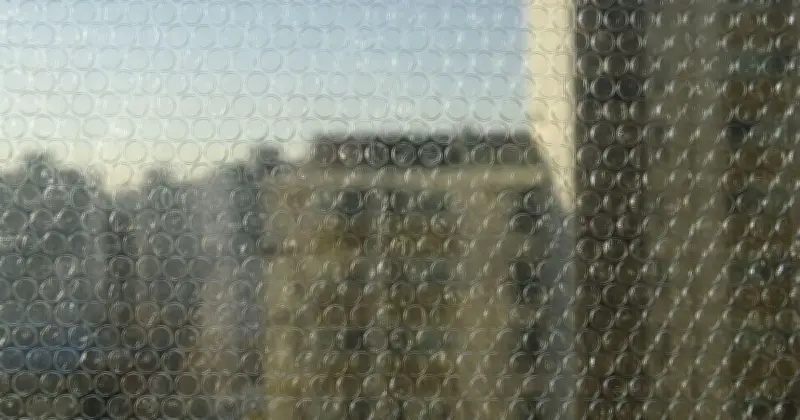
Households are being urged to use bubble wrap on their windows this winter as a cheap and quick way to cut heating bills, according to an expert. The tip comes as energy costs rise, with Ofgem increasing the price cap by another 4% from October to January, and a 28% rise forecast from then.
Mark McShane of Boiler Cover UK recommended the technique, saying: "Leaving your oven door open after cooking allows the residual heat to warm your kitchen, and using bubble wrap on windows can serve as an insulator, reducing heat loss."
How bubble wrap insulation works
Website WF Plastic explains that bubble wrap, often used in greenhouses, can also be applied to domestic windows to boost their insulation rating. The technique works with or without regular or insulating window shades and is suitable for windows of irregular shape, which can be difficult to find insulating shades for.
The view through a bubble-wrapped window is fuzzy, so it is not recommended for windows where a clear view is needed, but it does let plenty of light through. People tend to prefer medium to large size bubbles, though reports of smaller bubbles having the same insulating properties are common. The larger ones appear, from surface temperature measurements, to insulate a little better, and still provide an artistic effect when looking out of them. Small bubble wrap totally obscures the view but still lets in plenty of light.
Applying bubble wrap to windows
To put the tip into action, cut the bubble wrap to match the size of the window with scissors, then spray a film of water onto the window using a spray bottle. After that, apply the bubble wrap to the windowpane while the window is still wet and press it into place, with the bubble side towards the glass. It will not leave a mess or stains on the window when removed after winter is over.