

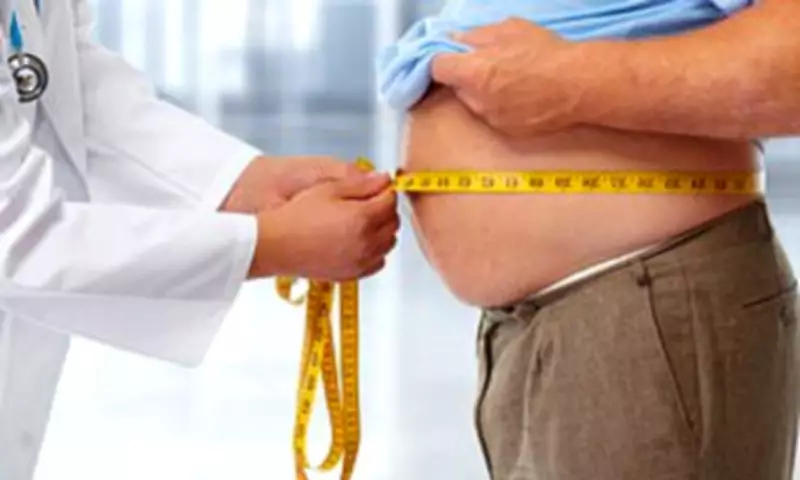
A new study suggests that piling on pounds in adulthood can raise the risk of cancer up to five-fold, even among those who were slim in their teens. Researchers emphasize that avoiding middle-age spread and post-menopausal weight gain is crucial for keeping cancer risk low.
Study Overview
The warning comes after an analysis of over 600,000 men and women who were weighed repeatedly over four decades. The study found that there is no safe age to gain weight. Most previous research on body weight and cancer relied on weigh-ins at a single point in time or changes between two dates. However, this new research, presented at the European Congress on Obesity in Istanbul, Turkey, examined body weight trajectories on multiple occasions from ages 17 to 60.
Steeper weight gain over this period—whether gained steadily or largely towards the beginning, middle, or end—was associated with higher rates of any cancer as well as many specific cancer types.

Key Findings
The researchers from Lund University, Sweden, analyzed weight measurements of 251,041 men and 378,981 women taken in Sweden between 1911 and 2020, with cancer diagnoses tracked until 2023. The fifth of men who put on the most weight (an average of 32 kg) were 7% more likely to develop cancer than the fifth who gained the least weight (an average of 8 kg). This rose to 46% when considering cancers previously linked to obesity. For women, the figures were 17% and 43%, respectively, with the biggest weight-gainers putting on an average of 36 kg and the lowest an average of 7 kg.
Notably, men who gained the most weight were 2.67 times more likely to develop liver cancer and 2.25 times more likely to develop oesophageal cancer than those who gained the least. Meanwhile, women who piled on the most pounds faced a 3.78 times higher risk of endometrial cancer. Smaller increased risks were observed for around a dozen other cancers.
Early Obesity Onset
Further examination revealed a tendency for cancer incidence to be more strongly associated with earlier ages of obesity onset. This pattern was particularly evident for liver and colon cancer among men. Those who became obese before the age of 30 faced a five-times higher risk of liver cancer, a doubled risk of pancreatic cancer and kidney cancer, and a 58% increased risk of colon cancer compared with men who never got that fat. Women who developed obesity before the age of 30 were at a 4.5 times increased risk of endometrial cancer, a 67% higher risk of pancreatic cancer, doubled risk of kidney cancer, and a 76% increased risk of meningioma.
Early, middle, and later adulthood weight changes were associated with overall cancer incidence and established obesity-related cancers among both men and women. Associate Professor Anton Nilsson, a researcher on the study, said the findings highlight the importance of maintaining a stable, healthy weight throughout adult life.
However, among men, associations per 0.5 kg weight increase were stronger for early adulthood weight gain. When women's data was analyzed taking account of female-specific cancers, associations with weight increase were similar across all three age periods. Some cancers were most strongly associated with early adulthood weight changes (particularly renal cell carcinoma among men), others with weight changes in middle adulthood (liver cancer among men and colon cancer among both sexes), and others with later adulthood weight changes (gastric cardia cancer among men and meningioma among women). However, these were mostly non-statistically significant trends.
Conclusions
The authors say: 'Steeper increases in body weight between ages 17 and 60 were associated with higher incidence of several established obesity-related cancers, as well as some for which previous evidence linking obesity to cancer is more limited.' They add that weight gain among women aged 30 years or older was strongly associated with endometrial cancer, postmenopausal breast cancer, and meningioma—cancers for which sex hormones are considered a primary causative factor. Colon cancer was also strongly linked to female weight changes in these ages.

Being overweight at the start of the study, aged 17, was also associated with a higher risk of several cancer types. The 20% who were most overweight aged 17 faced a similar increased lifetime risk of cancer as the 20% who gained the most weight over the course of the study.
Associate Professor Anton Nilsson said: 'While our results do not speak to any specific interventions or behaviours, they highlight the importance of maintaining a stable, healthy weight throughout adult life.'
More than a quarter (28%) of adults in England are obese and a further 36% are overweight. Megan Winter, health information manager at Cancer Research UK, said: 'Overweight and obesity is the second biggest cause of cancer in the UK. Keeping a healthy weight throughout adulthood can help to reduce cancer risk.'
A separate study presented at the conference found that a third of weight lost on weight loss jabs is not fat, raising concerns that users could leave themselves at risk of osteoporosis and frailty in old age. Researchers from the University of Copenhagen compared the loss of 'fat free mass' among those using injections with those relying on diet and exercise. The review of 21 studies found 31.5% of weight lost on obesity drugs came from fat-free mass, which includes muscle, bone, and organs. For those who relied on traditional lifestyle changes, the figure was 14.3%. Experts warned that people using weight loss jabs should do strength training or risk losing bone and muscle mass.





