

US Tailoring Trade Faces Critical Shortage Despite Rising Demand for Custom Sewing
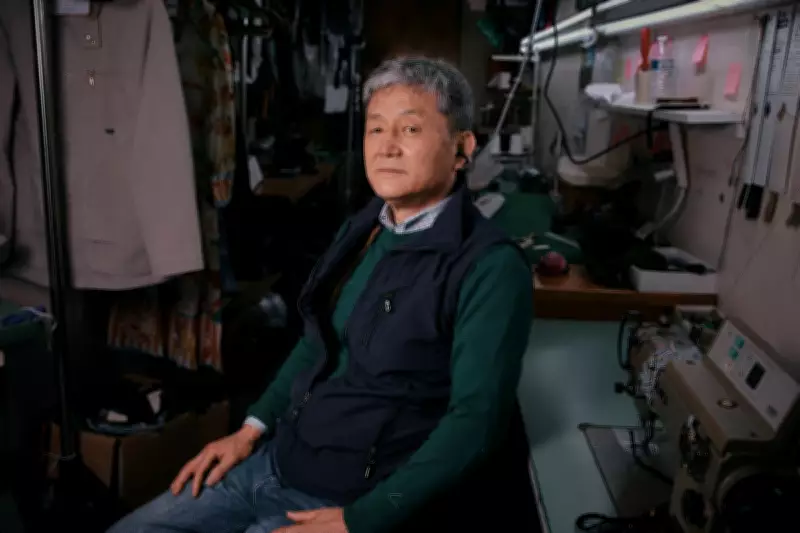
Hunched intently over his sewing machine, Kil Bae meticulously hems a dress inside his Manhattan tailor shop when a new customer arrives with a vintage Tommy Hilfiger jacket requiring alterations. The modeling agent purchased the reversible bomber style, plaid on one side and red on the other, for a mere $20 at a thrift store but is prepared to invest $280 to have it expertly slimmed down. Such significant price disparities for alteration requests would have seemed unusual just a few years ago, Bae notes, yet they now help sustain the operations of his one-man establishment, 85 Custom Tailor.
Bae, who began his tailoring apprenticeship at age seventeen in his native South Korea and is now sixty-three, represents a dwindling demographic within the United States. Professional sewers, dressmakers, and tailors are aging out of the workforce at an alarming rate, precisely as their specialized services experience a resurgence in popularity.
Aging Workforce and Shifting Consumer Trends
According to fashion industry analysts, consumers raised on disposable fast fashion are increasingly turning to tailors and seamstresses to achieve a custom fit for off-the-rack purchases, add personal flair, revitalize secondhand discoveries, or extend the lifespan of their existing wardrobes. Furthermore, the widespread use of weight-loss medications such as Zepbound and Wegovy has led more Americans to seek adjustments like resized waistbands and tapered sleeves, Bae observes.

"I recommend this job to young people because this one cannot be AI’d," Bae asserts, highlighting that while artificial intelligence can automate pattern making, it cannot yet replicate the nuanced handiwork of a skilled tailor. "Different bodies. Different shape. They cannot copy like this."
However, similar to trades like engraving and musical instrument repair, the craft of creating and fitting garments to individual specifications has failed to attract sufficient entry-level workers over recent years to replace seasoned professionals retiring their pincushions after decades of dedicated work.
Statistical Decline and Economic Challenges
The U.S. Bureau of Labor Statistics estimated nearly two years ago that fewer than 17,000 tailors, custom sewers, and dressmakers were employed in business establishments nationwide, marking a stark thirty percent decline from a decade earlier. When including self-employed individuals and those working in private households, the median age for all sewers, dressmakers, and tailors reached fifty-four last year, which is twelve years older than the median for the entire employed population.
Fashion industry experts suggest that the income generated from proficiency with needle and thread, relative to the required skill level and the physical strain of hours spent bent over detailed work, likely dissuades teenagers and young adults from pursuing this career path. As of May 2024, the mean annual wage for tailors, dressmakers, and custom sewers was $44,050, significantly lower than the $68,000 average for all workers, according to BLS calculations.
"Most of fashion training is really aimed at mass production, not spending time in a shop handmaking a garment," explained Scott Carnz, provost of LIM College, a for-profit institution offering degrees in fashion business disciplines. "The work is also tedious."
Immigrant Contributions and Industry Initiatives
Immigrants, including those with and without permanent legal status, refugees, and naturalized citizens, have been the backbone of America's garment industry for well over a century. An analysis of recent census data by the Migration Policy Institute found approximately forty percent of tailors, dressmakers, and sewers were foreign-born, with the largest shares originating from Mexico, South Korea, Vietnam, and China, according to Julia Gelatt, associate director of the think tank's U.S. Immigration Policy Program.
To combat the worsening labor shortage, the fashion sector is actively seeking to cultivate a new generation of master tailors. Nordstrom, North America’s largest employer of tailors and alteration specialists, partnered with New York's Fashion Institute of Technology to introduce a nine-week program focused on advanced sewing and alteration techniques.

"Customarily, tailoring has never been part of the American skill set," remarked FIT instructor and Broadway costume builder Michael Harrell, who teaches the course. The fashion institute received two hundred applications for the inaugural cohort of fifteen students, who commenced the program in October and received certificates of completion in February, said Jacqueline Jenkins, executive director of the school's Center for Continuing and Professional Studies.
Retail Expansion and Personal Dedication
The hands-on training was specifically designed to prepare participants for employment at Nordstrom, where the luxury department store chain employs 1,500 individuals to provide tailoring and alterations, ranging from hemming jeans and repairing rips to fitting suits and reworking evening gowns. Ten members of the first class were hired or are currently in the hiring process, according to Marco Esquivel, Nordstrom’s director of alterations.
"We owe it to the broader industry to ensure that this is an art form that exists for years and years to come and continues to serve customers both within our walls as well as outside," Esquivel emphasized.
Concurrently, other retailers are expanding their tailoring services in response to growing demand. Brooks Brothers, a luxury brand with a history of crafting custom men’s clothing since the 1800s, piloted a similar service for women at five stores last year and has now expanded bespoke women's tailoring to forty additional locations, with prices starting at $165 for shirts and $1,398 for suits.
The Personal Struggle to Preserve a Craft
Back at 85 Custom Tailor, Bae repeatedly questioned whether the customer with the Tommy Hilfiger jacket was certain about proceeding with the alterations. Jonathan Reiss, thirty-three, confirmed his decision, stating he planned to wear the jacket frequently. "I think I fell victim to buying cheap stuff, and then you realize it just falls apart or shrinks or it just doesn’t last long," Reiss reflected.
Bae, whose son is a year older than Reiss, attempted to persuade him to enter the tailoring profession. His son previously worked with computers and now operates a bagel shop. "Young people. They just want to find a job in computers," Bae lamented. "I think that’s too boring. I think this is very interesting. Every time, I am drawing in my head. I am like an artist."
Bae trained under his older sister and brother at their custom apparel shop approximately 93 miles from Seoul. After five years, he relocated to South Korea's capital to work on custom orders and samples for various companies before moving to the New York City area, where he served as a pattern maker for renowned designer brands like Ralph Lauren and Donna Karan. He established his own shop in Connecticut in 2011, but the COVID-19 pandemic forced its closure after a decade. He reopened at his current location a year later, utilizing three distinct sewing machines: a basic model, one for heavy materials such as denim and leather, and an overlock machine that cuts, trims, and finishes fabric edges simultaneously.
Bae expressed his intention to continue working as long as his hands remain steady enough. "I'm always learning," he affirmed, embodying the enduring dedication of a craftsperson in a trade facing an uncertain future despite its growing relevance.





