

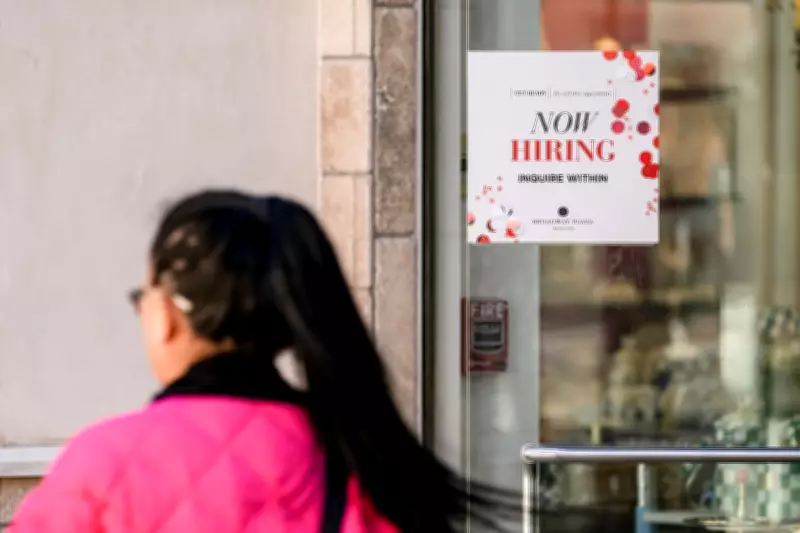
The US jobs market delivered a surprising rebound in March 2026, surpassing economists' forecasts, yet underlying data reveals a concerning trend of stagnation and volatility. According to the latest figures from the US Bureau of Labor Statistics, employers added 178,000 new jobs in March, significantly ahead of the predicted 70,000, while the unemployment rate fell to 4.3%.
Revised Figures Paint a Volatile Picture
However, this positive news was tempered by revised data for earlier months. In February, the economy lost 133,000 jobs, a worse outcome than initially reported. January's job figures were revised upward from 126,000 to 160,000, but overall, total employment for January and February was 7,000 lower than previously stated.
This volatility underscores a broader slowdown in the labor market. Economists describe the current state as a "low-fire, low-hire" environment, where both layoffs and new hires have diminished. Supporting this, outplacement firm Challenger, Gray & Christmas reported that employers announced 217,362 job cuts in the first quarter of 2026—the lowest total for that period since 2022. Conversely, hiring in February slowed to a six-year low, with notable dips in construction and leisure and hospitality sectors.

Workers Hesitant to Change Jobs
The so-called "quits rate" fell to 1.9%, its lowest level since 2020, indicating that uncertainty is prompting more employees to remain in their current positions rather than seek new opportunities. This hesitancy reflects a cautious atmosphere among both workers and employers.
The trend of sluggish growth is not new. In 2025, the US economy added just 116,000 jobs over the entire year—a figure that roughly matches the number added per month in previous years. This dramatic slowdown highlights a shift from the robust job creation seen in earlier periods.
Inflation and Geopolitical Tensions Weigh on the Market
Employer caution is partly driven by fluctuating inflation and geopolitical tensions. Consumer inflation experienced significant swings over the past year, dipping to 2.3% in April 2025 before jumping to 3% in September. Since the start of 2026, price increases have steadied at 2.4%, but the ongoing US-Israel war with Iran threatens to drive inflation higher if the conflict escalates.
Last month, US average gas prices breached $4 per gallon, and the squeeze on oil and gas is expected to ripple through other industries. This oil price shock echoes the situation in 2022 following Russia's invasion of Ukraine, when gas prices hit $5 per gallon and inflation peaked at 9%. Experts warn that every $10 increase in the price of a barrel of oil can lead to a 0.2% rise in inflation, posing a persistent risk to economic stability.
In summary, while the March jobs report offered a glimmer of hope, the broader data reveals a labor market grappling with stagnation, revised losses, and external pressures from inflation and geopolitical conflicts. The significant slowdown in 2025, with only 116,000 jobs added for the year, underscores the challenges facing the US economy as it navigates an uncertain future.






