

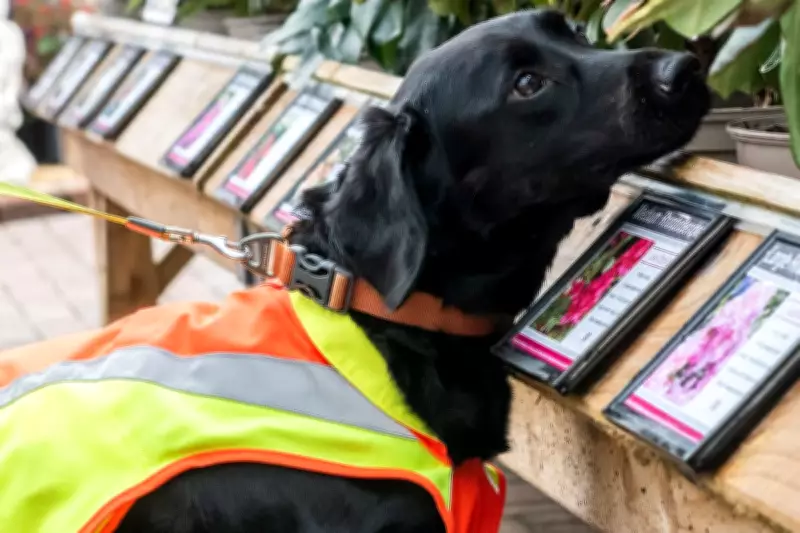
In an innovative effort to protect Britain's gardens, landscapes, and forestry, sniffer dogs are being trained to detect highly destructive plant diseases and pests. Government agencies have partnered with Cape-SPC, a specialist canine detection firm, to harness the acute sense of smell of dogs for identifying plant health threats.
The Threat to British Trees
The dogs are being trained to detect specific threats, including Phytophthora ramorum, a fungal-like organism that causes sudden oak death, and Ips typographus, the eight-toothed spruce bark beetle. Officials warn that an uncontrolled spread of these pests could inflict significant damage on the British forestry and timber industries, potentially costing millions of pounds and devastating natural landscapes.
How the Dogs Are Trained
One of the dogs, named Ivor, has been trained at Bents Garden Centre as part of a proof-of-concept study. The dogs learn to identify the scent of infected plants or beetle infestations, allowing for rapid detection even before visible symptoms appear. This method is far quicker and more accurate than traditional surveying techniques.

Scaling Up the Programme
The initial results have been promising, and plans are underway to scale up the use of these sniffer dogs in operational settings across the UK. The goal is to deploy canine teams in forests, nurseries, and ports to intercept pests before they become established. This initiative represents a cutting-edge approach to biosecurity, leveraging the natural abilities of dogs to safeguard the country's green spaces.
With the success of the trial, officials are optimistic that sniffer dogs will become a key tool in the fight against plant diseases and invasive species, protecting Britain's trees for future generations.






