

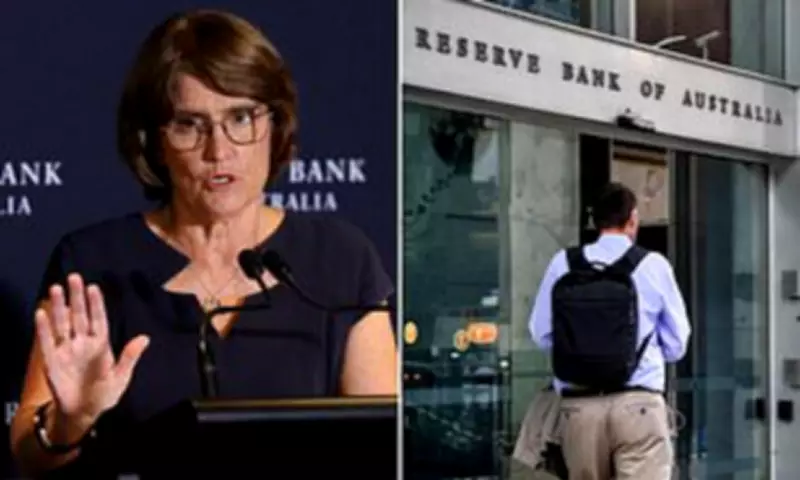
Senior Reserve Bank Employee Denied Confidentiality in Employment Dispute
A senior employee at the Reserve Bank of Australia has been unsuccessful in his attempt to keep details of his employment dispute confidential, after the Fair Work Commission rejected his application for a suppression order. The workplace regulator had previously ruled against Aditya Singhal when he sought $100,000 in backpay for a period during which he claimed he was 'ready and willing to work', provided certain conditions were met.
Medical Restrictions and Work Conditions
Mr Singhal asserted that he suffered a work-related psychological injury in June 2024, following his appointment to a senior role at the RBA in January of that year. He stated that this condition was aggravated in May when he initially went on paid leave. Medical documentation submitted to the Fair Work Commission, including reports from his treating practitioners, indicated that his medical conditions were 'varied' and 'wide-ranging'.
He was certified as medically fit for work with significant restrictions, which included avoiding meetings with the RBA's Human Resources department, led by Karlee Hughes and chief risk officer Keith Drayton. Additional limitations involved steering clear of urgent and high-stress assignments with quick turnaround times, working reduced hours, and only being scheduled on non-consecutive days.

The restrictions also stipulated that he be granted paid or unpaid leave to work remotely from India while accompanying his father to medical appointments. In his submission, Mr Singhal clarified that he was not entirely unfit for work, but rather that his psychological injury constrained the type, intensity, and scheduling of duties he could safely perform.
Dispute Over Backpay and Readiness to Work
Mr Singhal contended that, subject to these conditions, he remained 'ready and willing' to work. However, he alleged that the RBA failed to provide him with suitable duties and to pay his wages accordingly. The Reserve Bank of Australia countered this argument, asserting that he was not entitled to any payment because salary is only disbursed when work is performed, and Mr Singhal did not work at all during the period in question.
The bank further argued that his medical restrictions meant he was not genuinely 'ready, willing and able' to execute the core responsibilities of his position. It maintained that it was entirely reasonable to decline partial duties that did not meet the inherent requirements of the role.
Fair Work Commission's Ruling and Rejection of Suppression
Deputy Fair Work Commission President Tom Roberts noted that, aside from involvement in disciplinary proceedings that were later discontinued and working for two days in December after his medical restrictions were eased, Mr Singhal 'did not actually perform any work' between June 30, 2025, and January 13, 2026.
Mr Singhal's confidentiality application sought 'anonymisation' of the published decision and the removal of identifying references to his employer, his medical condition, and his personal circumstances. He argued that the decision included detailed information about his work-related psychological injury and other sensitive medical material, which had been provided 'under compulsion of the dispute resolution process'.
He claimed that publishing this information would cause ongoing harm disproportionate to any public interest in its disclosure. The RBA opposed the employee's application for suppression.
Emphasis on Open Justice Principles
Deputy President Roberts dismissed Mr Singhal's application to suppress key parts of the commission's decision, emphasizing that the principle of open justice must be given significant weight in decisions affecting the rights of others. He stated, 'Mere embarrassment, damage or distress is not sufficient to justify a non-publication order.'
Mr Roberts pointed out that the employee did not identify with precision the 'personal circumstances' or medical information he sought to restrict. He explained that the decision largely references information from certificates of capacity tendered by Mr Singhal in support of his original claim.

'It is not correct to assert, as he does, that this information was provided 'under compulsion of the dispute resolution process. He initiated the proceedings and supplied the evidence voluntarily in support of his own case,' Mr Roberts said. 'His medical certification as to his capacity to perform suitable work was central to his claim that he should have been paid for the periods in dispute.'
He added, 'It would be difficult to appreciate the nature of the matter the Commission was dealing with and the reasoning process adopted in arriving at the decision if these details were to be redacted.'
Background and Broader Context
Mr Roberts also rejected Mr Singhal's claim that references to disciplinary proceedings should be restricted, noting that the disciplinary process was a key component of his case as he sought payment for seven days of 'disciplinary participation'. Mr Singhal's claim for workers compensation was previously denied in August 2025.
It is understood that Mr Singhal was employed as the executive manager of risk at the RBA, having previously served as a senior manager at Westpac, one of Australia's Big Four banks. According to Glassdoor, a senior executive manager of risk could command a salary of up to $300,000, with an average wage of approximately $245,000. In contrast, RBA governor Michele Bullock earns $1.19 million annually.
This ruling occurs against the backdrop of the Reserve Bank's ongoing interest rate hikes. Westpac has forecast three additional interest rate increases in 2026, levels not seen since the Global Financial Crisis in 2008. The banking giant anticipates the RBA will raise the cash rate by 0.25 percentage points in May, June, and August, totaling five hikes in as many meetings and pushing the cash rate to 4.85 percent.
More concerning for mortgage holders, Westpac predicts no rate cuts until 2028, indicating years of sustained financial pressure for Australian borrowers. The RBA declined to comment on the matter when contacted.





